Wobble-Free: Stop Bathroom Hardware From Driving You Crazy
Fix stripped drywall and secure towel bars that actually stay put
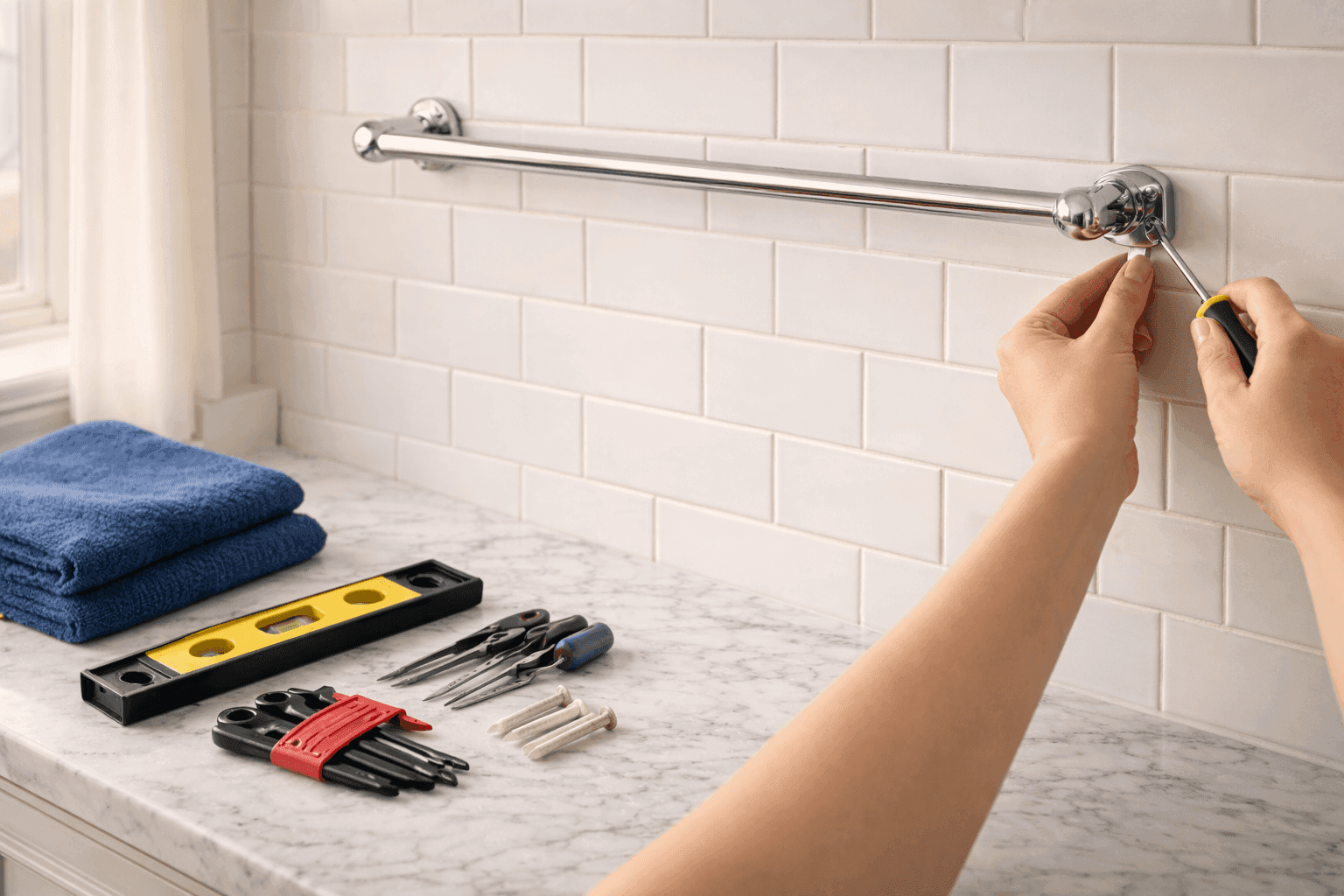
Few things in daily life are more consistently annoying than reaching for a towel only to have the entire bar shift under your hand, or watching the toilet paper holder droop the moment you pull on it. These wobbly fixtures aren't just irritating—they're actively damaging your walls as loose hardware wiggles in stripped holes, making the problem progressively worse with every use. While calling a handyman costs $100-150 for what amounts to twenty minutes of actual work per fixture, this is one of those repairs where DIY saves you serious money while being genuinely satisfying. The root cause is almost always stripped drywall where mounting screws have lost their grip, and the fix involves either reinforcing those compromised holes or finding fresh mounting locations. With basic tools you probably already own and supplies costing under $10, you can permanently solve this frustration and restore that solid, secure feeling bathroom hardware should provide. Once you've fixed one wobbly towel bar, you'll wonder why you tolerated the annoyance for months instead of spending twenty minutes making it right.
What You'll Need
- Basic Tools:
- Screwdriver set (Phillips and flathead)
- Allen wrench set for set screws
- Stud finder for locating wall studs
- Level to ensure proper alignment
- Repair Supplies (under $10 total):
- Toothpicks and wood glue for small holes
- Spackling compound for larger repairs
- Heavy-duty toggle bolts or snap toggles
- Plastic wall anchors for drywall
- For Tile Walls:
- Masonry drill bit appropriate for your screw size
- Tile-specific plastic anchors
- Painter's tape to prevent drill bit slipping
Secure Your Hardware
- Remove the loose fixture completely by loosening set screws with the appropriate Allen wrench, then unscrewing the mounting brackets to fully assess the wall damage you're dealing with.
- Inspect the mounting holes to determine their condition—small worn holes need different treatment than large stripped cavities where anchors have completely failed and pulled free.
- Fix small stripped holes by dipping toothpicks in wood glue, inserting them into the hole until completely filled, letting dry overnight, then trimming flush with a utility knife before re-drilling pilot holes.
- Repair larger damaged areas by removing old anchors completely, filling holes with spackling compound, letting dry according to package directions, then sanding smooth before installing new heavy-duty toggle bolts.
- Locate wall studs using a stud finder and mount at least one side of your fixture directly into solid wood whenever possible—this single connection provides rock-solid stability that drywall anchors alone cannot match.
- Consider shifting the fixture up or down 1-2 inches to use completely fresh drywall if repair attempts seem inadequate or if you want the strongest possible installation without patching.
- Install appropriate anchors for your wall type—toggle bolts for drywall, plastic anchors designed specifically for tile when working with ceramic or porcelain surfaces that require masonry bits.
- Tighten all mounting screws firmly but not excessively, then secure decorative covers and tighten set screws properly with the correct-sized Allen wrench—undertightening is as problematic as overtightening when securing bathroom hardware.
Professional installers always mount at least one end of towel bars directly into a wall stud whenever possible, even if it means adjusting the fixture height by an inch or two—the difference in stability is dramatic. When working with tile walls, place a small piece of painter's tape over your drilling location to prevent the masonry bit from wandering as you start the hole. If you're replacing cheap builder-grade hardware entirely, this is the perfect time to upgrade to higher-quality fixtures with heavier mounting plates that distribute weight more effectively. For rental properties or situations where you want maximum holding power without permanent wall modifications, consider adhesive mounting systems rated for wet environments—modern versions hold surprisingly well when properly installed on clean, smooth surfaces. The key to preventing future loosening is using anchors rated for at least twice the expected load and ensuring every component is tightened to specification rather than just "finger tight."