Winter Shield: Protecting Your Tender Plants
Save your garden investments with smart covers and strategic moves before frost strikes
Every gardener has felt that sinking feeling when the first frost warning appears on the weather app and you realize your beautiful plants—the ones you've nurtured all season—are about to face their biggest challenge. Protecting tender plants doesn't require expensive equipment or professional landscaping knowledge; it's about understanding what each plant needs and using simple, effective strategies to extend your growing season and safeguard your investment. Building DIY plant covers and creating protected microclimates costs less than $50 compared to replacing frost-damaged plants that can cost hundreds to restore. The real reward comes in spring when your neighbors are starting from scratch while your protected plants emerge healthy and ready to thrive, giving you weeks of extra growing time and the satisfaction of outsmarting Mother Nature's harsh side.
Protection Materials & Tools
Cover Materials ($25-35)
- Frost protection fabric (row cover material)
- Clear plastic sheeting for emergency covers
- Old bedsheets and blankets
- Tomato cages or garden hoops for structure
- Clothespins or clamps for securing
Moving & Storage ($15-20)
- Plant dolly or wheeled platform
- Mulch for ground insulation
- Bubble wrap for pot insulation
- Stakes and ties for securing covers
Tools
- Thermometer for monitoring
- Garden scissors
- Measuring tape
- Weather radio or app
Your Protection Strategy
- Identify your most vulnerable plants: tropicals, tender perennials, and late-season vegetables
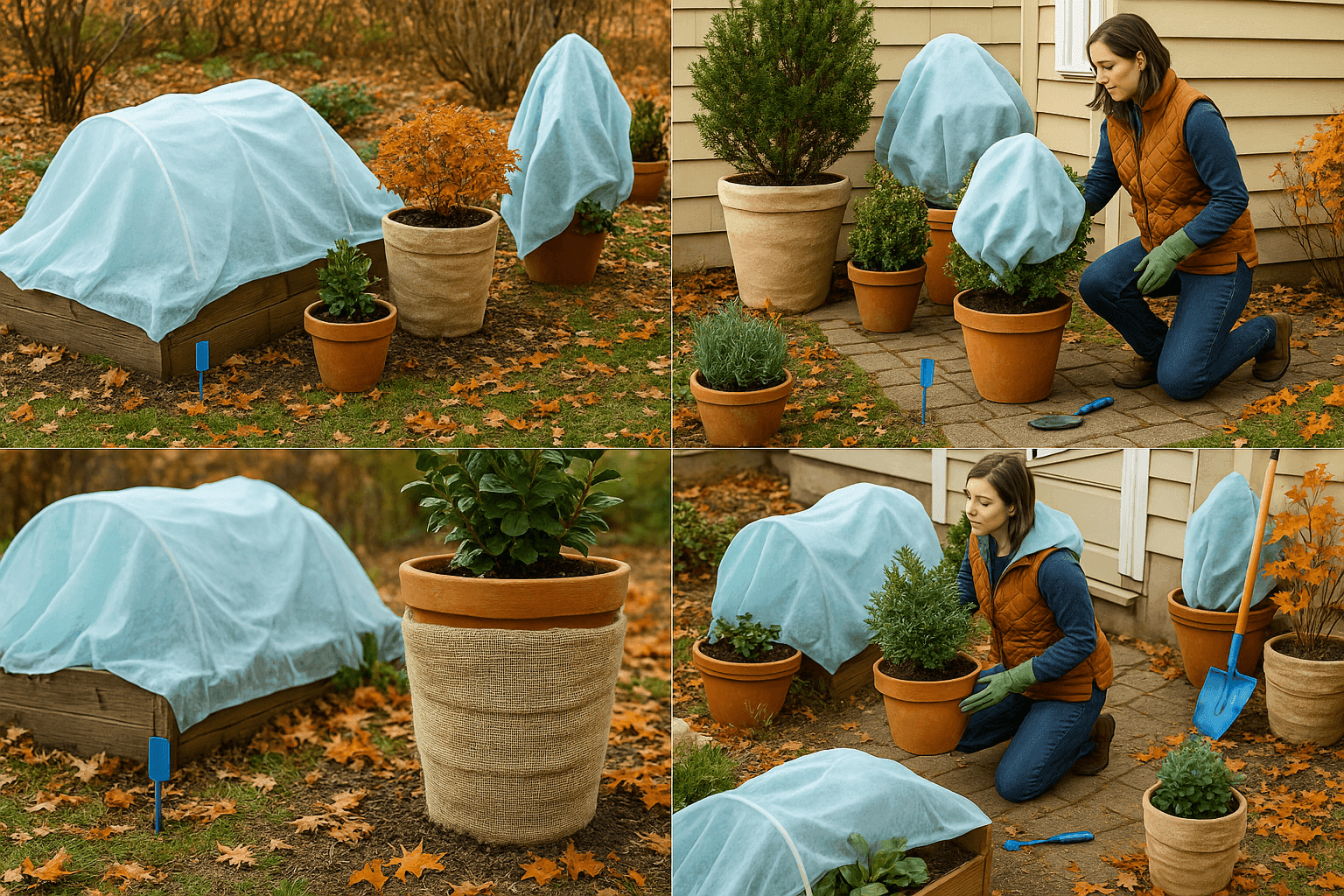
- Create portable covers using frost fabric over tomato cages or hoops for in-ground plants
- Move container plants to protected areas like covered patios, garages, or against south-facing walls
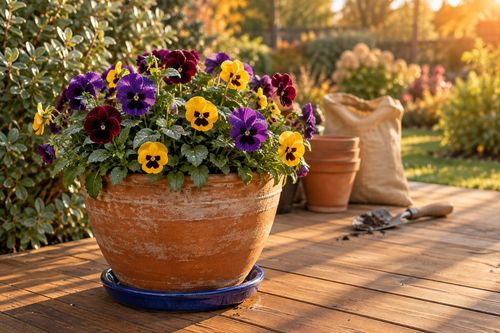
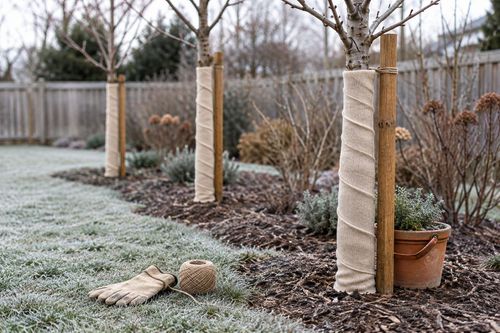
- Insulate pot roots by wrapping containers in bubble wrap or burlap during cold snaps
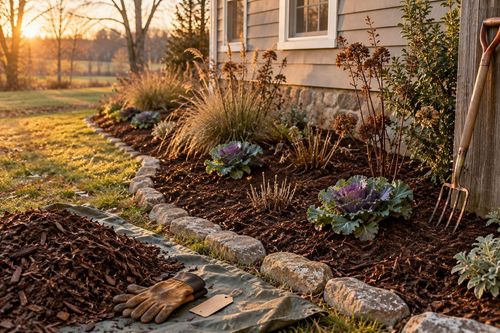
- Apply thick mulch around plant bases to insulate soil and protect root systems
- Water plants thoroughly before freeze events—moist soil holds heat better than dry
- Remove covers during warm days to prevent overheating and allow air circulation
- Monitor weather forecasts regularly and be ready to deploy protection quickly
Create dedicated "plant hotel" areas near your house where containers can be grouped for easier protection and monitoring. South-facing walls with overhangs provide natural frost protection by radiating stored heat overnight. For valuable plants, invest in a min-max thermometer to track actual temperatures in your protection zones—microclimates can be 5-10 degrees warmer than general weather reports, helping you make smarter protection decisions.