Water Smarter: DIY Irrigation and Drainage That Actually Works
Stop dragging hoses — let your yard water itself
Hand-watering is the least efficient way to water a garden — it delivers water inconsistently, takes real time, and is the first thing that gets skipped when life gets busy (which is exactly when plants suffer most). A drip irrigation system costs $40–$80 to install yourself, takes an afternoon to set up, and then waters your garden consistently and automatically for years. Here's what you need to know about both irrigation and drainage — the two water management problems every yard eventually faces.
DIY Drip Irrigation
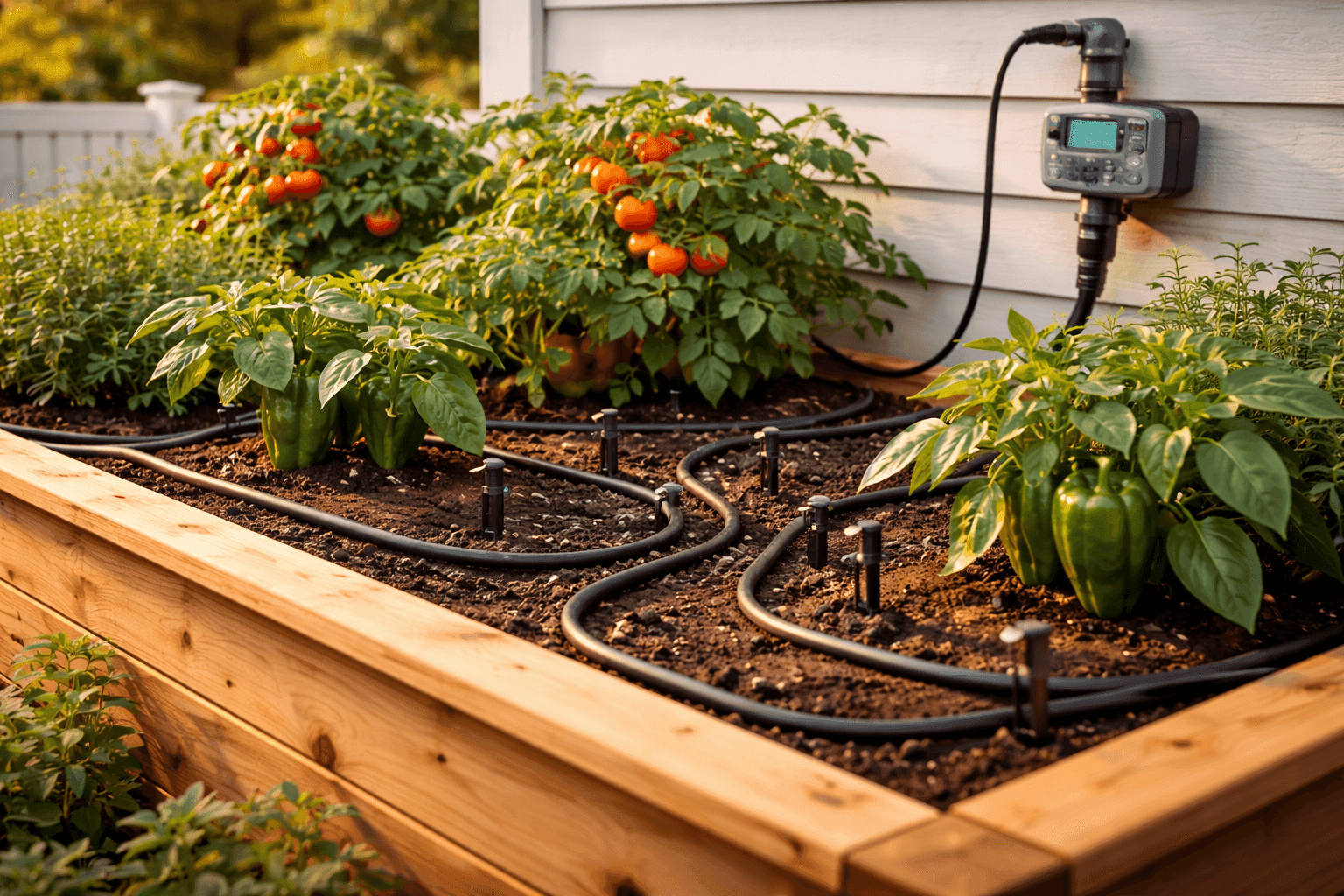
A drip system starts at your outdoor spigot with a timer ($25–$40), a backflow preventer, a filter, and a pressure reducer — these components are often sold as a kit. From there, 1/2-inch supply tubing runs to your garden beds, and 1/4-inch drip emitter tubing branches off to individual plants. Emitters deliver water slowly directly to the root zone — dramatically more efficient than sprinklers (which lose 30–50% of water to evaporation and runoff) and more effective than hand watering. Set the timer for early morning watering (before evaporation peaks), check emitters periodically for clogs, and flush the system at the end of the season before winterizing.
Soaker Hoses
Soaker hoses are the simpler, less precise alternative to drip systems — they weep water slowly along their entire length, working well in dense plantings and garden rows where drip emitters would require too many individual lines. Connect to a timer at the spigot, snake through the bed, and cover with mulch (the mulch dramatically improves efficiency by preventing evaporation). Soaker hoses degrade in UV light over time, so covering them with mulch extends their life significantly. Replace every 3–5 years as they develop leaks and become inefficient.
Drainage Problems: Diagnosing First
Before fixing a drainage problem, identify what's causing it. Standing water that persists for more than 24 hours after rain indicates poor soil drainage, improper grading, or a high water table. Water pooling against the house foundation is a grading problem — the ground should slope away from the foundation at a rate of 6 inches over the first 10 feet. Water pooling in the yard away from structures is usually a soil or drainage pattern issue. Each requires a different fix.
French Drains
A French drain intercepts and redirects groundwater or surface water away from problem areas. The basic construction: dig a trench sloping away from the problem area (at least 1% grade — 1 inch drop per 8 feet of run), line with landscape fabric, fill with 3/4-inch gravel, lay perforated pipe in the gravel, fold the fabric over the top to keep soil out, and backfill. Water enters through the perforated pipe and flows by gravity to a discharge point — a dry well, a lower area of the yard, or the street. This is significant physical work but the materials cost is modest ($2–$4 per linear foot in gravel and pipe).
Call 811 (the national "Call Before You Dig" number) before digging any trench deeper than 12 inches. This free service sends locators to mark underground utilities — gas, electric, water, cable — within a few business days. Hitting a gas line while digging a French drain is genuinely life-threatening and happens more often than you'd think in suburban yards. This call is free, takes two minutes, and is legally required in most states. Do it every single time, no exceptions.