Turn Glass Jars into Outdoor Luminaries for $8
Empty pasta jars, battery tea lights, and an evening — the patio lighting that makes every gathering feel like a celebration
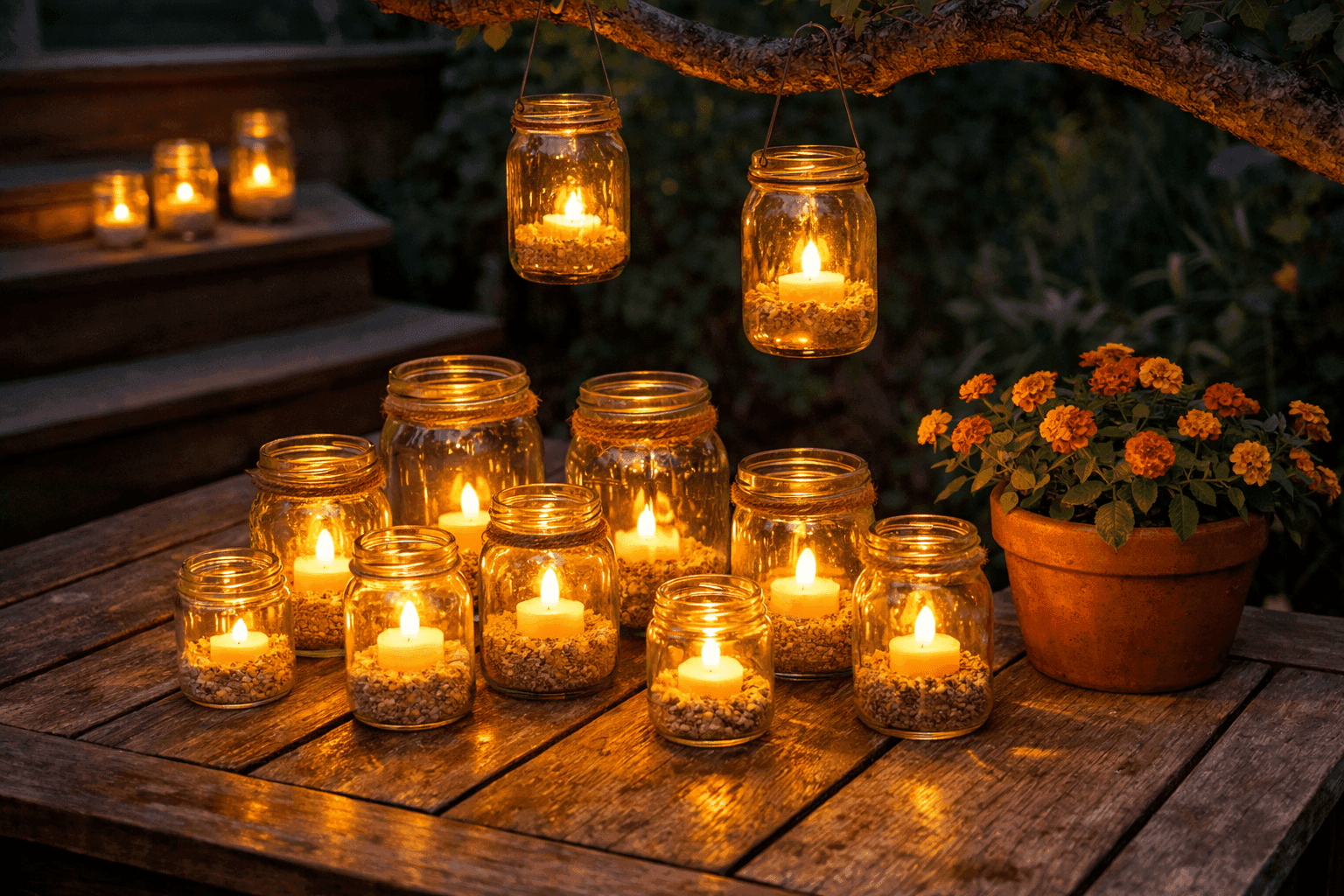
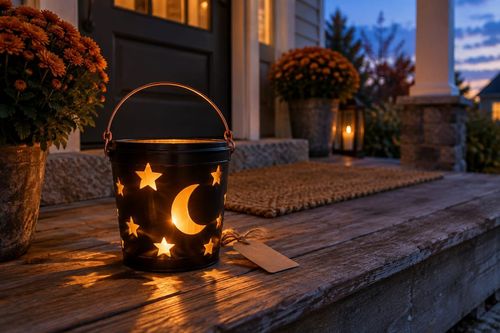
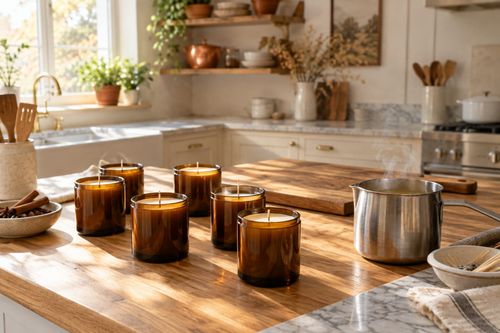
The difference between a patio that feels like an outdoor room and a patio that feels like a parking lot is almost entirely about light — specifically warm, ambient, low-level light that creates pools of glow rather than the flat overhead illumination that makes outdoor spaces feel institutional after dark. Glass jar luminaries do exactly that: they gather and hold battery LED light inside the glass and release it as the warm, slightly diffused glow that makes a table setting or a garden step feel genuinely magical on a summer evening. The jars are free from your recycling bin, the battery tea lights run about $8 for a pack, and the whole collection of a dozen luminaries comes together in an afternoon of label-removing, wire-forming, and light-dropping that costs essentially nothing and transforms every outdoor gathering you host from that evening forward. This is the project where the materials are the least interesting part — what you make with them is the part that earns the compliments.
What You Need
- Glass jars in varying sizes — mason jars, pasta sauce jars, pickle jars, and olive jars all work; the variety of sizes and glass thicknesses in a collected grouping creates a more interesting and layered light display than a uniform set of matching jars (free from recycling)
- Battery-operated LED tea lights or LED fairy lights — never use real candles inside closed glass jars outdoors; battery LED tea lights flicker realistically and are completely safe inside glass; a single strand of battery LED fairy lights coiled inside a larger jar produces a more dramatic glow than individual tea lights (~$6–10 for a pack of 12 tea lights or a fairy light strand)
- Heavy-gauge wire, 18 or 20 gauge — for forming hanging handles on jars you want to suspend from branches or hooks; galvanized or copper wire both work and each produces a different aesthetic character (~$4–6 for a small roll)
- Natural twine, jute cord, or ribbon — for wrapping jar necks as a decorative finish that softens the glass-and-wire aesthetic; hot glue holds twine wraps permanently through outdoor weather (~$2–4)
- Pea gravel, sand, small river stones, or shells — for filling the bottom two inches of each jar before adding lights; the ballast keeps jars stable outdoors, adds visual texture through the glass, and lifts the tea light to a more central position in the jar for better light distribution
- Cooking oil and baking soda paste — for removing stubborn label adhesive residue after the paper label has been soaked off; the oil dissolves the adhesive and the baking soda provides the mild abrasion needed to scrub it away without scratching the glass surface
- Hot glue gun — for securing twine wraps, ribbon details, and any decorative elements that need permanent attachment to the glass exterior
How to Make Them
- Remove all labels by submerging jars in hot soapy water for fifteen to twenty minutes until the paper label lifts cleanly — peel it away and apply a paste of cooking oil and baking soda to any remaining adhesive residue, rubbing with a cloth in circular motions until the glass surface is completely smooth and clean. Residual adhesive left on the exterior of the jar catches dust and grime and becomes increasingly difficult to remove once it has had time to cure further at room temperature.
- Dry each jar completely inside and out — moisture inside a glass jar causes battery tea lights to corrode at the contact points and LED fairy light strands to develop intermittent connections at the wire joins. A jar that feels dry on the exterior can still have residual moisture in the interior from the soaking process; allow jars to air dry upside down on a dish rack for at least an hour before proceeding.
- Form wire handles on jars you want to hang by cutting a length of heavy-gauge wire approximately three times the jar diameter plus twelve inches, wrapping the center section tightly around the jar neck just below the threads in three complete loops, and twisting the wire ends firmly against themselves to lock the coil in position. Bring the two remaining wire tails upward and twist them together into a handle loop at a height that balances the jar comfortably when lifted — the wire handle needs to grip the jar neck securely enough that the jar cannot slip through when full of gravel ballast.
- Decorate jar exteriors before adding ballast and lights — wrap twine around the neck and secure with a dot of hot glue at the start and end of the wrap, tie ribbon bows below the wire handle, or apply dots of glass paint with the end of a pencil eraser for a simple pattern that still allows the interior light to glow through the unpainted glass areas. Keep decorative elements below the jar shoulder rather than across the main body of the jar so the light can radiate clearly through the largest glass surface area.
- Fill each jar with two inches of ballast material — pea gravel, sand, small river stones, or shells — before adding any lights. The ballast serves three functions simultaneously: it stabilizes the jar against outdoor wind, it provides visual texture and interest at the base of the jar where light catches the material and creates interesting shadow patterns, and it elevates the tea light to a position where the glow radiates outward through the middle of the jar rather than pooling at the base.
- Add battery LED tea lights or fairy lights on top of the ballast layer — for tea lights, simply press them into the surface of the gravel or sand so they sit level and stable; for fairy light strands, feed the battery pack into the jar first and coil the light strand loosely on top of the ballast so the lights distribute throughout the jar interior rather than clumping at the bottom. Leave the battery compartment accessible at the jar opening for easy battery replacement without disturbing the arrangement.
- Arrange the finished luminaries in a grouping before the gathering rather than placing them individually — a cluster of seven to twelve jars in varying heights on a table surface, a porch railing, or a garden step creates a dramatically more impressive light display than the same number of jars scattered individually across a space. Group by placing the tallest jars at the back of the cluster and the shortest at the front, with hanging jars suspended at varying heights above the surface grouping for a layered, dimensional light installation.
- Test the complete arrangement at dusk before guests arrive — turn all lights on and walk away from the display to assess the collective effect from the distance at which guests will actually experience it. Individual jars that seemed bright enough during daytime setup sometimes read as too dim in a cluster after dark, and jars that seemed well-positioned on the table may block each other's light when grouped. Minor repositioning at this stage makes a significant difference in the finished evening atmosphere the display creates.
Event lighting designers who style outdoor gatherings professionally always mix warm white LED lights (2700K color temperature) with amber LED lights rather than using a single uniform light color throughout a luminary installation — the slight variation between warm white and amber produces the same layered, multi-toned quality that candlelight achieves through its natural flicker and color variation, and it prevents the slightly clinical uniformity that makes an all-matching LED installation look more like product display lighting than atmospheric evening ambiance. Warm white tea lights and amber tea lights sold in the same pack cost the same as a single-color pack and the visual difference in a grouped outdoor installation is immediately apparent to anyone who sits beside it.