Turn Galvanized Buckets into Rustic Planters for $30
Three buckets, chalk paint, a stencil, and trailing flowers — the porch grouping that looks straight out of a farmhouse magazine
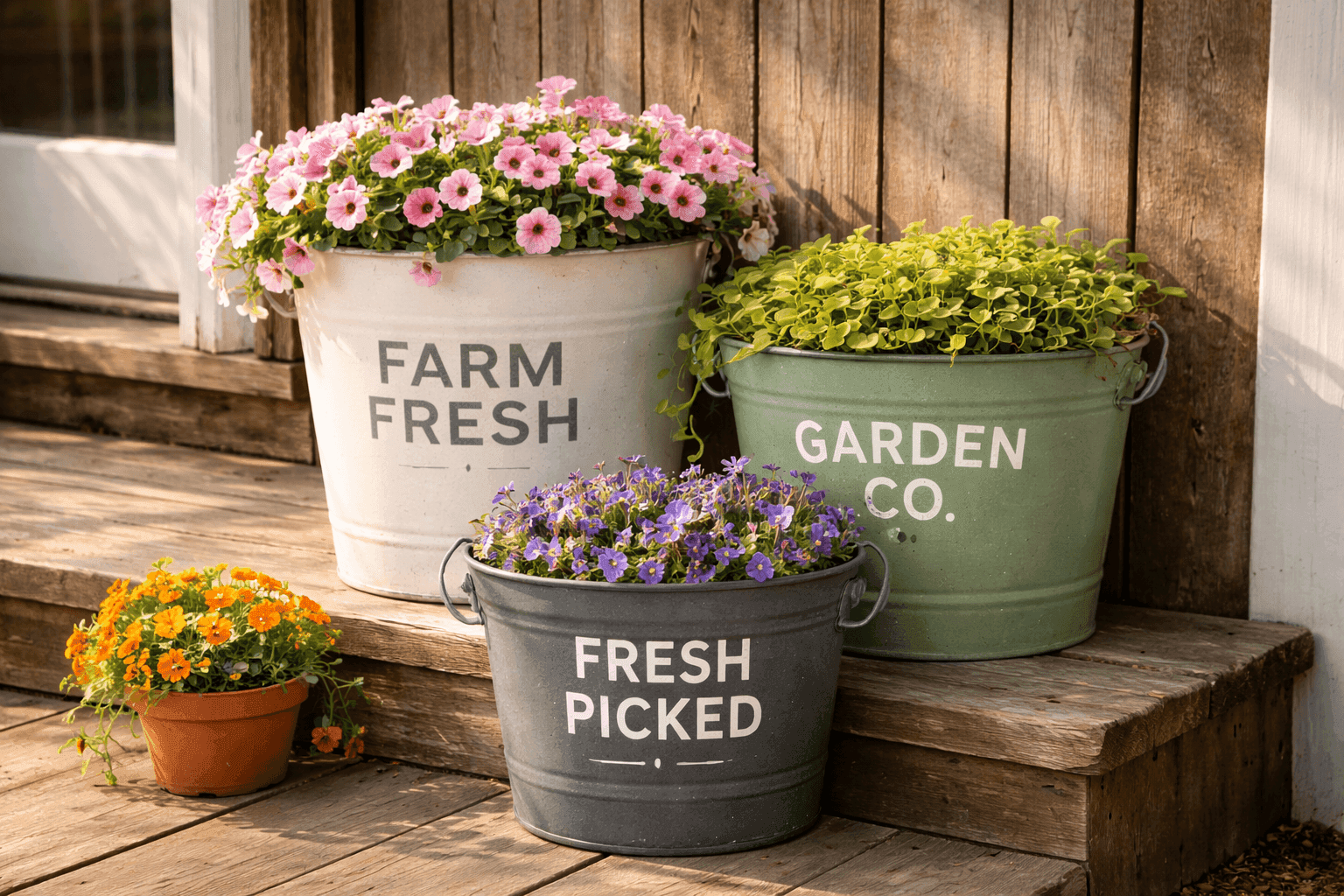
Galvanized buckets from a farm supply store occupy a specific sweet spot in DIY materials — they're inexpensive, structurally sound, weatherproof, and possess exactly the kind of honest industrial character that chalk paint and a farmhouse stencil transform into something that reads as genuinely curated rather than crafted. Three buckets in graduating sizes grouped on a porch or garden step, each painted a different muted tone and lettered with simple text, create the kind of layered, textural display that home décor magazines style elaborately and sell at boutique prices. The whole project costs about $30 in materials including the plants, takes two hours from first drill hole to finished planting, and produces a porch grouping that weathers a full outdoor season without fading, chipping, or looking like anything other than exactly what you intended it to be. Farm supply stores, hardware stores, and even dollar stores stock galvanized buckets year-round — and once you see what three of them become with a little chalk paint, you'll start buying them every time you spot them.
What You Need
- Galvanized buckets in three sizes — a large (5-gallon), medium (3-gallon), and small (1-gallon) grouping creates the most visually dynamic arrangement; farm supply stores like Tractor Supply carry all three sizes (~$5–8 each, ~$18 total)
- Chalk paint in three muted tones — cream, sage green, and soft charcoal are the classic farmhouse palette; chalk paint adheres to galvanized metal without primer and dries to a matte finish that photographs beautifully (~$8–12 for small sample pots)
- Farmhouse-style stencil — simple text stencils with words like FARM FRESH, GARDEN CO., or FRESH PICKED are available at craft stores or printable online; reusable Mylar stencils give the cleanest paint edges (~$4–6)
- Contrasting stencil paint — a small bottle of craft paint one to two shades darker or lighter than the base coat reads well as stencil text without requiring a separate paint purchase in most cases
- Exterior clear sealer — a coat of clear matte or satin sealer over the finished chalk paint locks the color against outdoor moisture and UV exposure; chalk paint without sealer on an outdoor metal surface weathers visibly within a single season (~$8–10)
- Metal drill bit, ⅜" diameter — for punching drainage holes in the bucket base; a standard HSS metal bit handles galvanized steel cleanly at low drill speed
- Drill — set to low speed for metal drilling to prevent bit overheating
- White vinegar and cloth — for wiping down the galvanized surface before painting; galvanized metal has a zinc coating that resists paint adhesion unless the surface is lightly etched with vinegar first
- Potting mix and trailing annuals — petunias, calibrachoa, sweet potato vine, or bacopa all trail beautifully over bucket edges (~$3–5 per plant)
How to Make Them
- Drill five to six drainage holes in the base of each bucket using the metal drill bit at low speed before doing anything else — this is the step that determines whether your plants thrive all season or slowly drown in standing water, and it is significantly easier to drill a clean bucket than a painted one. Position holes in a loose circle around the base interior rather than clustering them in the center, which distributes drainage more evenly across the root zone.
- Wipe the exterior of each bucket thoroughly with undiluted white vinegar on a cloth and allow it to dry completely before painting. The zinc coating on galvanized metal is specifically designed to resist corrosion, which means it also resists paint adhesion — the light acid etching that vinegar provides on the surface is what allows chalk paint to grip the metal firmly rather than peeling away in sheets within the first season of outdoor exposure. This prep step is the single most important determinant of how long your paint finish lasts.
- Apply the first coat of chalk paint to each bucket using a wide foam brush or chip brush in smooth, even strokes following the curve of the bucket wall. Chalk paint's thick, self-leveling consistency covers galvanized metal remarkably well in a single coat, but two thin coats produce a more durable, chip-resistant finish than one heavy application that stays soft underneath as the surface dries.
- Allow the first coat to dry completely — chalk paint on metal typically dries to the touch in thirty minutes in warm weather — then apply a second coat in the same direction as the first. Consistent brush direction across both coats produces an even surface sheen; switching direction between coats creates a slightly textured crosshatch that reads as uneven in the finished piece.
- Position your stencil on the bucket face once the final paint coat is fully dry, securing the edges with painter's tape to prevent shifting during application. Center the stencil horizontally on the bucket's widest face and position it in the lower third of the bucket height — text centered too high on the bucket face gets obscured by plant foliage once the planter is filled and growing.
- Apply stencil paint with a small foam pouncer or stencil brush using a straight up-and-down dabbing motion rather than brushing strokes — brushing paint under stencil edges is the technique error that produces the blurry, bled lettering that makes stenciled text look amateur rather than intentional. Load the applicator with less paint than feels right, dab off the excess on a paper towel first, and build opacity through two to three light passes rather than one heavy application.
- Remove the stencil carefully by lifting straight up from one corner while the paint is still slightly tacky rather than fully dry — pulling a fully dried stencil away from chalk paint can lift the base coat along with the stencil edge if the two layers have bonded. Clean the stencil immediately with a damp cloth for reuse on the remaining buckets.
- Seal each finished bucket with two coats of exterior clear sealer applied with a soft brush, covering the full painted exterior surface including the stenciled text and all the way down to the base. Allow full drying time between sealer coats, and apply a third coat to the base exterior where ground moisture contact is most constant. Fill sealed, dry buckets with potting mix and plant, positioning the largest bucket at the back of the grouping, medium in the middle, and smallest at the front for a tiered display that shows all three planters clearly from the viewing angle.
Farmhouse-style interior designers who work with galvanized metal always intentionally distress the painted finish after sealing by lightly sanding the raised rim, handle attachments, and any embossed text on the bucket with 220-grit sandpaper — these are the areas that would naturally show wear first on a genuinely aged piece, and revealing a small amount of the galvanized metal beneath the chalk paint at these specific high-contact points makes the finished bucket read as authentically aged rather than freshly painted. The distressing takes about two minutes per bucket and is done after sealing rather than before, so the raw metal areas exposed by sanding get a quick targeted recoat of sealer to prevent rust from developing at the distressed points over time.