Turn a Free Pallet Into a Vertical Herb Garden
No yard required — just a patio wall, a free pallet, and $10 in supplies
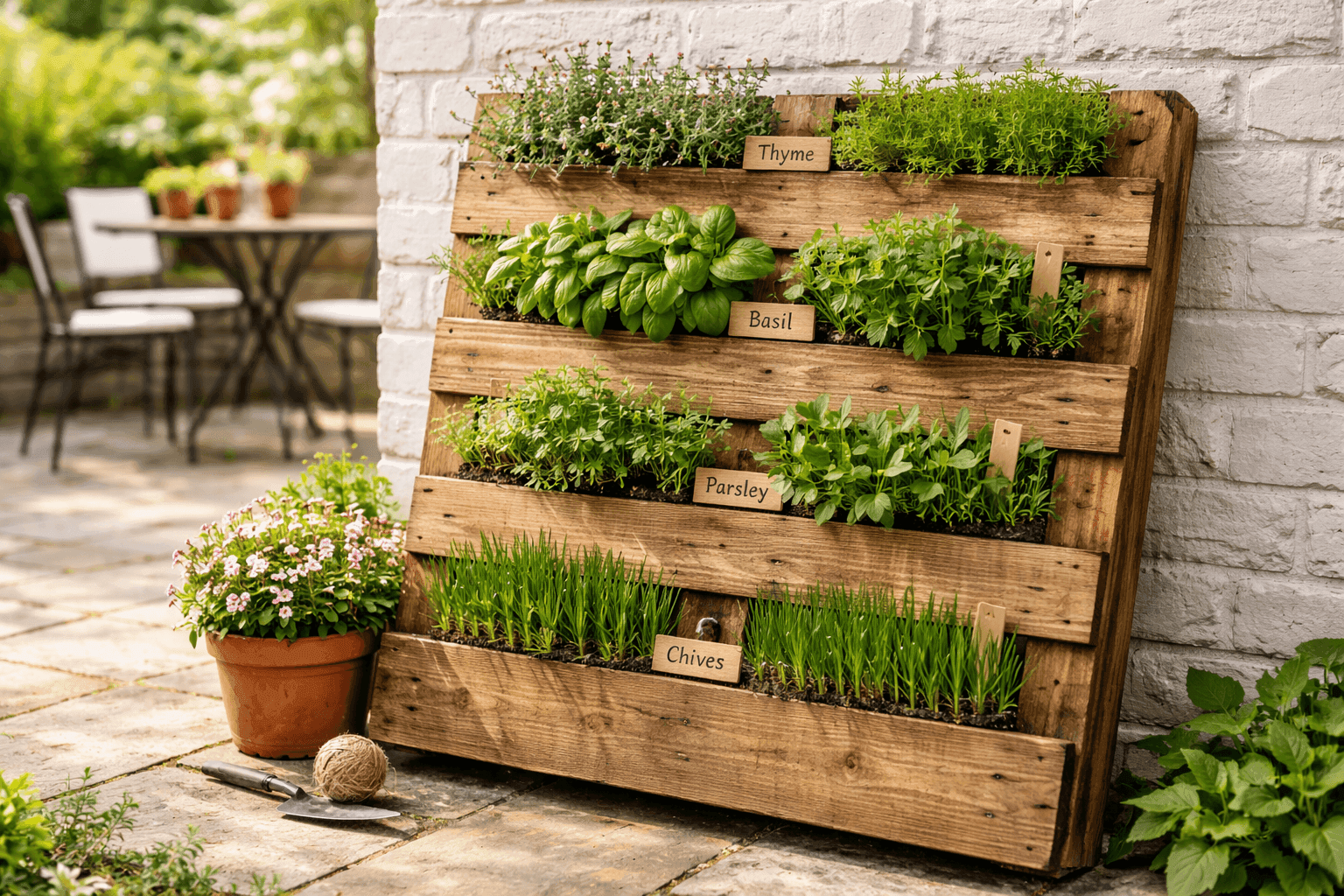
Fresh herbs on demand from a patio, balcony, or narrow side yard is one of those quality-of-life upgrades that seems minor until the first time you walk outside and snip basil directly into a pan rather than paying $4 for a plastic clamshell at the grocery store you'll use once and then watch go slimy in the back of the fridge. A vertical pallet herb garden makes this possible even in the smallest outdoor spaces by growing up instead of out — six to eight herb varieties stacked in the slats of a single free shipping pallet take up about two square feet of floor space against a wall or fence. The whole build costs $10–15 in landscape fabric, potting soil, and starter plants, plus whatever you're willing to spend on sanding and staining the pallet, which is optional. The only patience required is two weeks of letting it lie flat while roots establish — after that it stands up, leans against its wall, and starts producing the most convenient herb supply you've ever had access to.
What You'll Need
- The Pallet
- A clean wooden shipping pallet — standard size is 48x40 inches, which is ideal; ask at garden centers, hardware stores, grocery stores, and furniture retailers, most of whom give them away freely to anyone who asks politely
- Look for the IPPC stamp on the pallet and choose only ones marked "HT" (heat-treated) — avoid any pallet marked "MB" (methyl bromide treated), a fumigation chemical you absolutely do not want in a food garden; unmarked pallets should also be avoided for edible plantings
- Avoid pallets that show chemical staining, strong odors, or any marking that suggests industrial or chemical use — for edible herbs, clean provenance matters
- Prep and Finishing
- 80-grit sandpaper for knocking down splinters and rough edges on all surfaces you'll handle — focus on the front face and the slat edges where you'll reach in to plant and harvest
- Outdoor wood stain, paint, or linseed oil — optional but recommended if the pallet will be against a wall where aesthetics matter; a single coat of gray or walnut stain transforms raw pallet wood into something that looks intentional (~$6–10 for a small can)
- The Planting System (~$8–12)
- Landscape fabric — a roll of standard weed barrier fabric stapled to the back and sides of the pallet creates the pocket that holds soil in each slat opening; you need enough to cover the full back face and wrap around the bottom (~$5–7 for a small roll)
- Heavy-duty staple gun and 3/8-inch staples for securing fabric to the pallet frame — hand-stapling landscape fabric is genuinely difficult without a gun; borrow one if you don't own it
- Quality potting mix — not garden soil, which compacts too densely in confined slat spaces; a lightweight potting mix with perlite holds moisture while draining well enough that roots don't drown in the vertical position (~$6–9 for a 1 cubic foot bag that fills most pallets)
- The Plants (~$6–12)
- Herb starter plants rather than seeds for the first season — establishing from transplants means edible growth within weeks rather than months; basil, flat-leaf parsley, cilantro, thyme, oregano, chives, and mint all perform well in pallet slat depth
- Note: plant mint in its own isolated slat or in a separate container — mint spreads aggressively through any root system it can reach and will colonize neighboring herb slots within a single season if given the chance
- Finishing Touches
- Small wooden craft sticks, slate tags, or metal herb markers for labeling each slat (~$2–4 or free with a permanent marker on wooden skewers)
- Total Cost
- Free pallet plus $10–15 for fabric, soil, and starter plants; add $6–10 for stain if desired
How to Build It
- Source and inspect the pallet before any other step — check for the HT stamp, look for any chemical staining or strong odors, and confirm the structural boards are solid with no rot or cracked slats that would fail under the weight of wet soil. A pallet that seems borderline is worth passing up; they're genuinely free and another source is always available.
- Sand all reachable surfaces with 80-grit sandpaper, focusing on the front face slats and any edges you'll handle during planting and harvesting — splinters in a herb garden are a weekly frustration you can eliminate in 15 minutes now. If applying stain or paint, do it before attaching landscape fabric so you can finish the full wood surface without working around staples.
- Attach landscape fabric to the back of the pallet while it's lying flat face-down — cut the fabric to cover the full back face plus at least 4 inches of wrap around all four edges, and staple every 3–4 inches along the perimeter frame boards. Then staple a separate bottom piece of fabric across the very bottom of the pallet to close off the base so soil can't fall straight through when the pallet eventually stands upright. Pull fabric taut before each staple to prevent sagging pockets.
- Flip the pallet face-up and begin filling with potting mix while it's still lying flat — pack soil firmly into each slat opening from the front, pressing it back against the landscape fabric and tamping it down with your fingers so there are no air pockets. Fill each slat to within half an inch of the top board edge. The soil will compact slightly when watered, so filling generously now prevents the slats from looking half-empty after the first irrigation.
- Plant each slat by making a small hole in the soil with your finger, inserting the root ball of each herb transplant, and firming soil around the stem so the plant sits snugly with no wobble. One to two plants per slat is the right density for most herb varieties — closer spacing looks fuller immediately but creates competition for nutrients within the first month. Water each slat gently immediately after planting to settle the soil around the roots.
- Allow two weeks of flat establishment — leave the planted pallet lying face-up in a location that receives the same sun exposure as its eventual vertical home, watering gently every two to three days. This flat period is what allows roots to spread laterally through the soil and grip the potting mix before gravity pulls everything downward in the vertical position. Skipping this step is the reason most first-attempt pallet gardens dump their soil the first day they stand up.
- Stand and position the pallet once roots have established — lean it against the wall or fence at a slight angle rather than perfectly vertical, which improves soil retention and makes watering easier since water pools briefly at the slat rather than running straight down the face. Secure the top of the pallet to the wall with two L-brackets or a bungee cord anchored to a hook so it can't tip forward onto the patio in a strong wind or when bumped.
- Label and maintain each slat with a plant marker immediately — herb seedlings look remarkably similar before they develop their characteristic leaf shapes and you will absolutely forget which slat holds cilantro versus flat-leaf parsley within the first week. Water by pouring slowly into each slat opening until water drips from the back, and harvest by snipping outer leaves and stems rather than pulling whole plants, which encourages bushier, more productive regrowth all season.
Kitchen garden designers who plan vertical herb plantings almost always organize the slots by harvest frequency and growth habit rather than alphabetically or randomly — the herbs you reach for daily like basil and chives go in the most accessible middle slats at comfortable working height, slower-growing perennials like thyme and oregano that need less interference go toward the top where they can be left largely alone, and vigorous spreaders like mint are isolated at the bottom slat where their tendency to wander can be monitored most easily. This hierarchy maps your actual cooking habits onto the garden's physical layout so the most-used herbs are always at the most convenient reach, and the result is a planting that works with how you actually cook rather than one you have to work around.