Transform Dollar Store Baskets Into Expensive-Looking Storage
Weave ribbon through plastic baskets for custom woven storage under $8 each
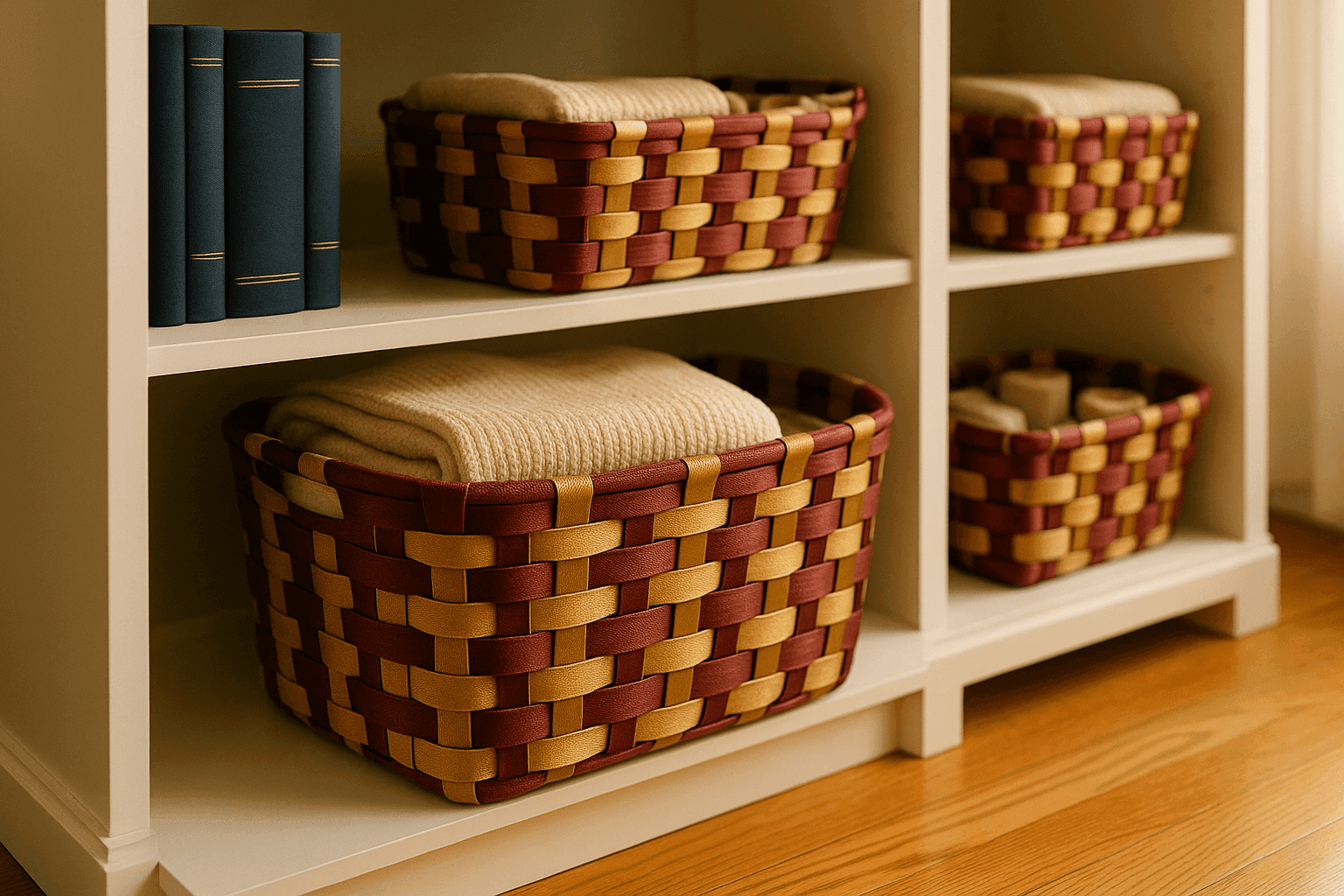
Those basic plastic laundry baskets from the dollar store look exactly like what they cost—cheap, utilitarian, and definitely not something you'd want displayed in your living areas—but with just a few dollars worth of ribbon and about an hour of simple weaving, you can transform them into gorgeous custom storage that looks like expensive boutique finds. This budget-friendly hack takes advantage of the ventilation holes in standard plastic baskets, turning what's essentially a design flaw for aesthetics into the perfect structure for weaving beautiful patterns using ribbon, fabric strips, or even yarn in coordinated colors that match your decor. The project costs under $8 per basket including the basket itself, requires zero special skills beyond being able to weave ribbon over and under like you learned in elementary school, and produces storage solutions that honestly fool people into thinking you spent $40-50 on high-end woven baskets from fancy home stores. What makes me genuinely excited about this transformation is how it solves the eternal storage dilemma—you need functional containers to corral clutter, but attractive storage solutions cost a fortune and cheap options look cheap, leaving you stuck choosing between organization and aesthetics. This craft eliminates that compromise entirely, giving you beautiful customized storage in any color scheme you want for a fraction of what you'd pay for mass-produced woven baskets that might not even match your specific color needs. You're not just decorating a basket, you're creating a repeatable system for affordable custom storage that can outfit an entire home without breaking your budget.
Basket Weaving Supplies
- Base Baskets:
- Plastic laundry baskets with evenly spaced holes (dollar store, $1-3 each)
- Look for baskets with consistent hole patterns for easier weaving
- Standard size works for shelves, smaller for desktop organization
- Choose sturdy plastic that won't crack or bend
- Weaving Materials (Choose One):
- Grosgrain ribbon 1-1.5 inches wide (3-4 spools per basket, $1-2 per spool)
- Fabric strips cut from old sheets or clothing (free)
- Jute or burlap ribbon for rustic look ($1-2 per spool)
- Yarn or thick cord for textured appearance ($2-4)
- Fall Color Combinations:
- Burgundy and gold for rich elegance
- Rust orange and cream for warm neutrals
- Brown and mustard yellow for classic autumn
- Navy and copper for sophisticated contrast
- Finishing Materials:
- Hot glue gun and glue sticks ($3-5 if you don't have one)
- Scissors for cutting ribbon
- Lighter for sealing ribbon ends (prevents fraying)
- Clear nail polish as lighter alternative
- Clips or clothespins to hold ribbon while working
Weaving Your Basket
- Plan Your Pattern: Decide whether you want vertical stripes, horizontal bands, diagonal patterns, or a checkerboard effect before you start weaving—sketching your color placement on paper helps visualize the final look and prevents you from realizing halfway through that your color distribution isn't what you wanted.
- Start at the Bottom: Begin weaving from the bottom edge of your basket, threading your first ribbon through the holes in an over-under pattern just like traditional basket weaving—starting at the base creates the most stable foundation and lets you work upward in manageable rows that build on each other.
- Secure the Starting End: Apply a small dot of hot glue on the inside of the basket where your ribbon begins, pressing it firmly for 30 seconds until the glue sets completely—this anchor point prevents your entire weaving project from unraveling when you pull ribbon taut during the weaving process.
- Weave in Consistent Pattern: Thread your ribbon through basket holes maintaining your chosen over-under pattern, pulling gently to keep tension even without stretching the ribbon so tight it distorts the basket shape or so loose that gaps appear between rows showing the ugly plastic underneath.
- Join New Ribbon Lengths: When you reach the end of one ribbon spool, overlap the new ribbon with the old by about 2 inches on the inside of the basket, securing the join with hot glue so the transition is invisible from the outside—this creates continuous color without awkward gaps or visible knots.
- Alternate Colors Strategically: If using multiple colors, switch between them according to your planned pattern, weaving complete rows or sections in one color before transitioning to create clean color blocks rather than random color changes that look unintentional and messy instead of designed.
- Finish Top Edge: When you reach the basket's top rim, trim your ribbon leaving about 2 inches of excess, fold this tail to the inside, and secure with hot glue—seal the cut ribbon end with a lighter flame or clear nail polish to prevent fraying that would unravel your hard work over time.
- Add Final Details: Check all ribbon ends are securely glued, trim any stray threads, and consider adding a decorative label tag or handle for extra polish—once complete, your $8 basket looks indistinguishable from $40 store-bought options except that it's custom-colored exactly for your space and personal taste.
Professional organizers who create custom storage solutions swear by the "gradient weave" technique that takes these baskets from nice to absolutely stunning. Instead of using just two colors in blocks, collect 4-5 spools of ribbon in a single color family ranging from light to dark—for fall, try cream, tan, caramel, chocolate brown, and espresso. Start weaving with the lightest shade at the bottom and gradually transition through your color spectrum as you work upward, spending 2-3 rows on each shade before switching to the next. This creates an ombre effect that looks incredibly sophisticated and custom, making it obvious you didn't just buy these baskets off a shelf. The basket selection secret that makes weaving infinitely easier is choosing baskets with rectangular holes rather than round ones—rectangular openings grip ribbon better and create cleaner lines in your finished pattern. Dollar Tree and Dollar General typically stock both styles, so examine several baskets before buying to find the rectangular hole variety. For maximum storage system cohesion, buy 3-6 identical baskets and weave them all in coordinating but slightly different color combinations—perhaps burgundy and gold, rust and cream, and brown and mustard—so they look like an intentional collection when displayed together on shelves rather than random mismatched storage. The durability upgrade that makes these practical for heavy daily use is lining the bottom interior with a piece of cardboard cut to size before weaving—this prevents items from poking through gaps and protects the ribbon weaving from wear, especially important for baskets that will hold toys, tools, or other items with sharp edges that could snag and damage your careful ribbon work over time.