Tower of Flavor: Build a Vertical Strawberry Tower
Six feet of PVC pipe, staggered planting holes, and a central watering tube — the one-square-foot patio garden that produces an embarrassing amount of strawberries
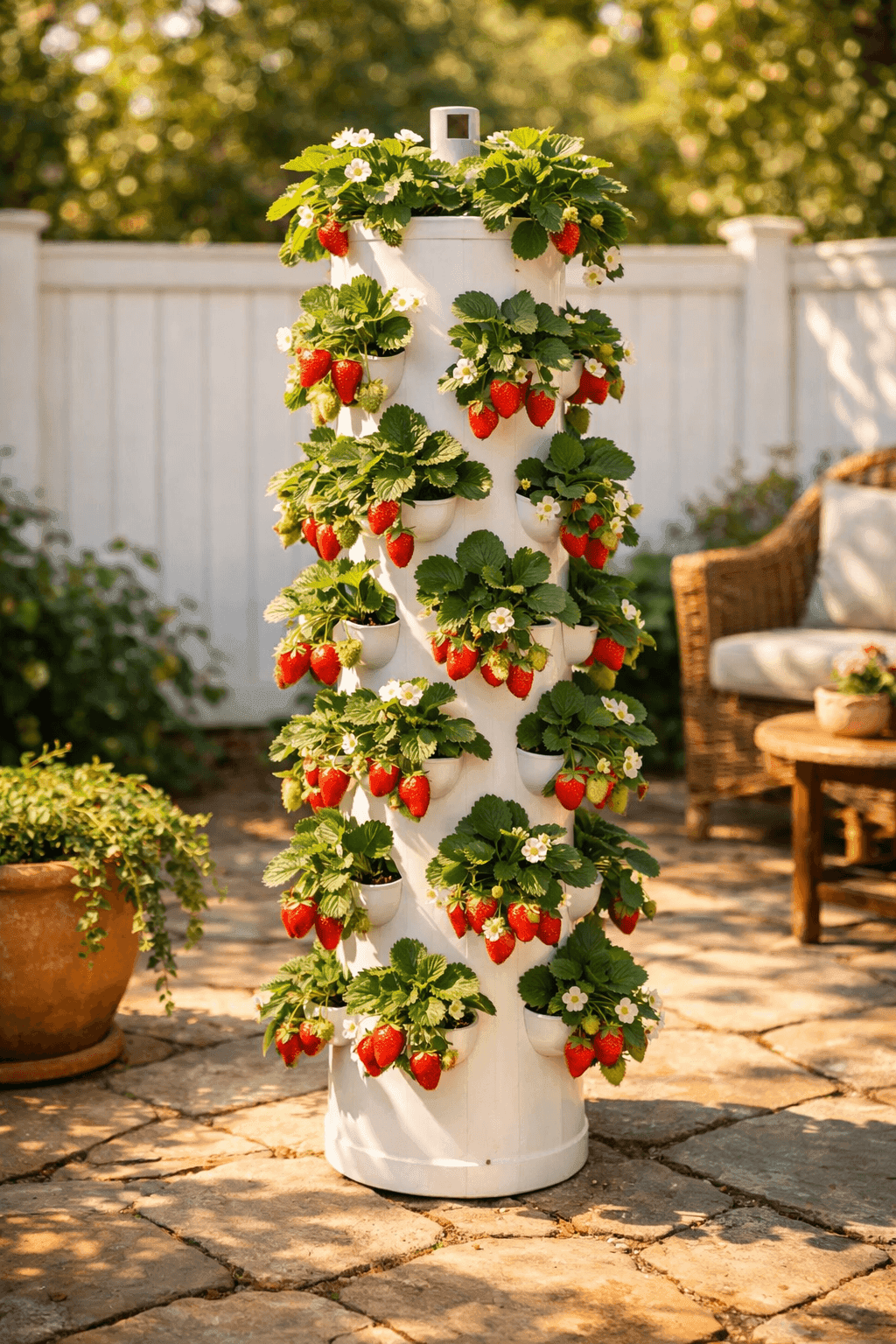
A sprawling strawberry bed needs four to six square feet of ground space per plant to produce well — which means a meaningful strawberry harvest in a small yard requires either sacrificing a significant chunk of your garden real estate or getting creative about growing vertically. A PVC strawberry tower solves the space problem so completely it almost feels like cheating: a single six-foot length of four-inch pipe with staggered planting holes drilled every eight inches up its height produces the same strawberry yield as a traditional bed many times its footprint, takes up exactly one square foot of patio or ground space, and becomes a genuine conversation piece every time someone visits. The central watering tube that distributes moisture evenly from top to bottom is the engineering detail that makes it actually work rather than just look interesting — without it, the bottom plants stay dry while the top gets all the water. The whole build costs about $35 and takes 90 minutes, and the harvest-to-footprint ratio is frankly absurd. If you have a patio, a balcony, or any outdoor space at all, this project belongs in it.
What You'll Need
- The Main Pipe
- One 4-inch diameter Schedule 40 PVC pipe, 6 feet long — the standard white plumbing pipe available at any hardware store — ~$10–$14. Four-inch diameter is the minimum for strawberry roots to develop properly; anything narrower restricts root growth and reduces fruit production
- One PVC end cap for the bottom of the pipe to contain the soil — ~$2–$3. Drill 4–6 small drainage holes through the end cap before attaching so water can escape from the base rather than pooling at the bottom and drowning the lowest plants
- PVC cement or strong waterproof adhesive for permanently bonding the end cap to the pipe bottom — ~$5–$7 per small can, or use a rubber cap that friction-fits without adhesive for an easier assembly that still allows the cap to be removed for cleaning at season's end
- The Central Watering Tube
- One 1-inch diameter PVC pipe or rigid perforated drainage pipe, cut to 5½ feet — this inner tube runs the full height of the tower and distributes water evenly from top to bottom rather than letting it channel down the outside of the soil column. This single component is the difference between a tower that waters all plants equally and one where the top plants are consistently overwatered while the bottom plants slowly struggle — ~$4–$6
- Drill ⅛-inch holes every 3–4 inches along the full length of the inner pipe if using solid pipe — stagger the holes in alternating directions so water releases in all directions into the surrounding soil rather than channeling preferentially to one side
- Cap or plug the bottom end of the inner tube so water must seep through the drilled holes rather than dumping directly out the base — a small cork, a PVC cap, or a piece of duct tape over the bottom opening all work
- Tools for Drilling
- A drill with a 3-inch hole saw attachment for the planting holes — a 3-inch diameter opening accommodates a strawberry plant's crown and root ball comfortably and allows the foliage to cascade outward freely — ~$12–$18 for a hole saw kit if you don't already own one
- A workbench vise or clamps for holding the pipe steady during drilling — PVC pipe rolling under the drill bit is the most common cause of ragged, off-center holes that make planting difficult and look unfinished
- A marker and measuring tape for marking hole positions before drilling — marking every hole before drilling any of them allows you to confirm the staggered layout looks right before committing
- A heat gun or propane torch for the cup-forming step — gently heating each hole opening and pressing it outward to form a slight cup shape that holds soil around each plant's root zone and prevents erosion during watering
- Soil & Plants
- Strawberry-specific potting mix or a lightweight container mix — standard garden soil is too heavy and compacts in a vertical column, restricting drainage and root development in the lower sections of the tower. Lightweight potting mix with added perlite maintains consistent drainage from top to bottom — ~$8–$12 for a small bag that fills the tower
- Eight to ten strawberry starts — everbearing varieties like Seascape, Albion, or Tristar are significantly better for tower growing than June-bearing varieties because they produce fruit continuously throughout the season rather than all at once — ~$3–$5 for a six-pack at a garden center
- Slow-release granular fertilizer to blend into the potting mix before filling — strawberries are heavy feeders and the limited soil volume of a tower means they exhaust available nutrients faster than plants in a ground bed
How to Build It
- Mark all hole positions before drilling — starting 6 inches from the bottom and working upward, mark a hole position every 8 inches up the pipe, rotating the pipe 90 degrees between each mark so the holes spiral around the circumference rather than lining up in a vertical column. The staggered spiral pattern is critical: holes that align vertically create a structural weakness in the pipe wall and cause adjacent plants to compete directly for the same narrow soil column rather than each accessing its own section of the root zone.
- Secure the pipe firmly in a vise or with clamps before drilling the first hole — PVC pipe that can roll or shift during drilling produces ragged, off-center openings that don't seat plant crowns cleanly and look obviously unfinished from a distance. Clamp the pipe to a workbench with the marked hole facing directly upward, drill straight down through the pipe wall only (not through the far side), and reposition the pipe for each subsequent hole rather than trying to hold it steady by hand.
- Form cups at each planting hole using a heat gun or propane torch — carefully heat the plastic around each drilled opening for 15–20 seconds until it becomes pliable, then use a rounded object like the back of a large spoon or a small jar to press the heated plastic outward into a shallow cup shape that slopes slightly downward. This formed cup holds potting mix and the plant's root ball in place during watering rather than letting soil wash out of the flat-drilled opening with every irrigation cycle — it's a 30-second step per hole that makes a significant practical difference in how the finished tower performs.
- Attach the end cap and prepare the inner tube — cement or press-fit the end cap onto the pipe bottom after drilling the drainage holes through it, then drill the staggered ⅛-inch water distribution holes along the full length of the inner tube and plug or cap its bottom end. Stand the outer pipe upright in its final location before filling — a soil-filled six-foot PVC tower is significantly heavy and awkward to move after planting, so position it exactly where it will live for the season before the soil goes in.
- Insert the inner watering tube centered in the outer pipe before adding any soil — hold it upright against the pipe wall with one hand or prop it temporarily with a small wooden skewer pushed through one of the planting holes to keep it centered during the filling process. The top of the inner tube should sit 2–3 inches above the top of the outer pipe so you can funnel water directly into it during irrigation without spillage down the outside of the tower.
- Fill with soil in stages by adding potting mix in 8-inch layers, tamping each layer gently before adding the next and pausing at each planting hole to seat a strawberry start. Position each plant with its crown sitting just above the lip of the planting cup, spread the roots downward into the soil column, and fill around the roots before adding the next soil layer. Work methodically from the bottom hole upward so each plant is properly positioned before the soil above it makes adjusting impossible.
- Plant the top of the tower with one or two additional strawberry plants in the open top of the pipe once the column is fully filled — the top planting position gets the most direct sun and most consistent watering and typically produces the most vigorous growth of any position on the tower. Fill the top to within 2 inches of the pipe rim, firm the soil gently, and plant the crown at the same depth as the side plants with the foliage spreading outward over the pipe rim.
- Water through the inner tube slowly and thoroughly on the first irrigation — pour water directly into the top of the inner tube until it begins to seep from the drainage holes at the base, confirming water is reaching the full height of the soil column rather than channeling straight through. Rotate the tower a quarter turn every week so all sides receive equal sun exposure and all plants produce equally rather than the sun-facing plants outperforming the shaded ones — a single weekly rotation is all the maintenance required to get consistent production from every planting hole across the full season.
Vertical gardening specialists who grow strawberries commercially in tower systems use a fertilization approach that home tower gardeners almost universally underestimate — and the difference in production between a properly fed tower and an unfed one is dramatic enough to make the feeding schedule the single most important maintenance commitment after watering. The limited soil volume of a PVC tower means available nutrients are exhausted significantly faster than in a ground bed, typically within four to six weeks of the first watering. Supplement the slow-release granular fertilizer blended into the initial soil fill with a weekly liquid fertilizer application through the inner watering tube using a diluted fish emulsion or balanced liquid fertilizer at half the label strength — the liquid application feeds roots at every level of the tower simultaneously and replaces the calcium and magnesium that regular watering leaches from the confined soil column. The other production variable that most tower builders overlook is runner management: strawberry plants send out horizontal runners aggressively in early summer, and runners that are allowed to develop on a tower divert significant energy from fruit production to propagation. Pinch off every runner at the base as soon as it appears through the growing season, and the energy the plant would have spent establishing new plants goes entirely into producing the fruit the tower was built for.