Tiny Magic: Build a Fairy Garden in an Afternoon
Miniature furniture, pebble paths, and tiny plants — the whimsical little world that delights every single person who discovers it
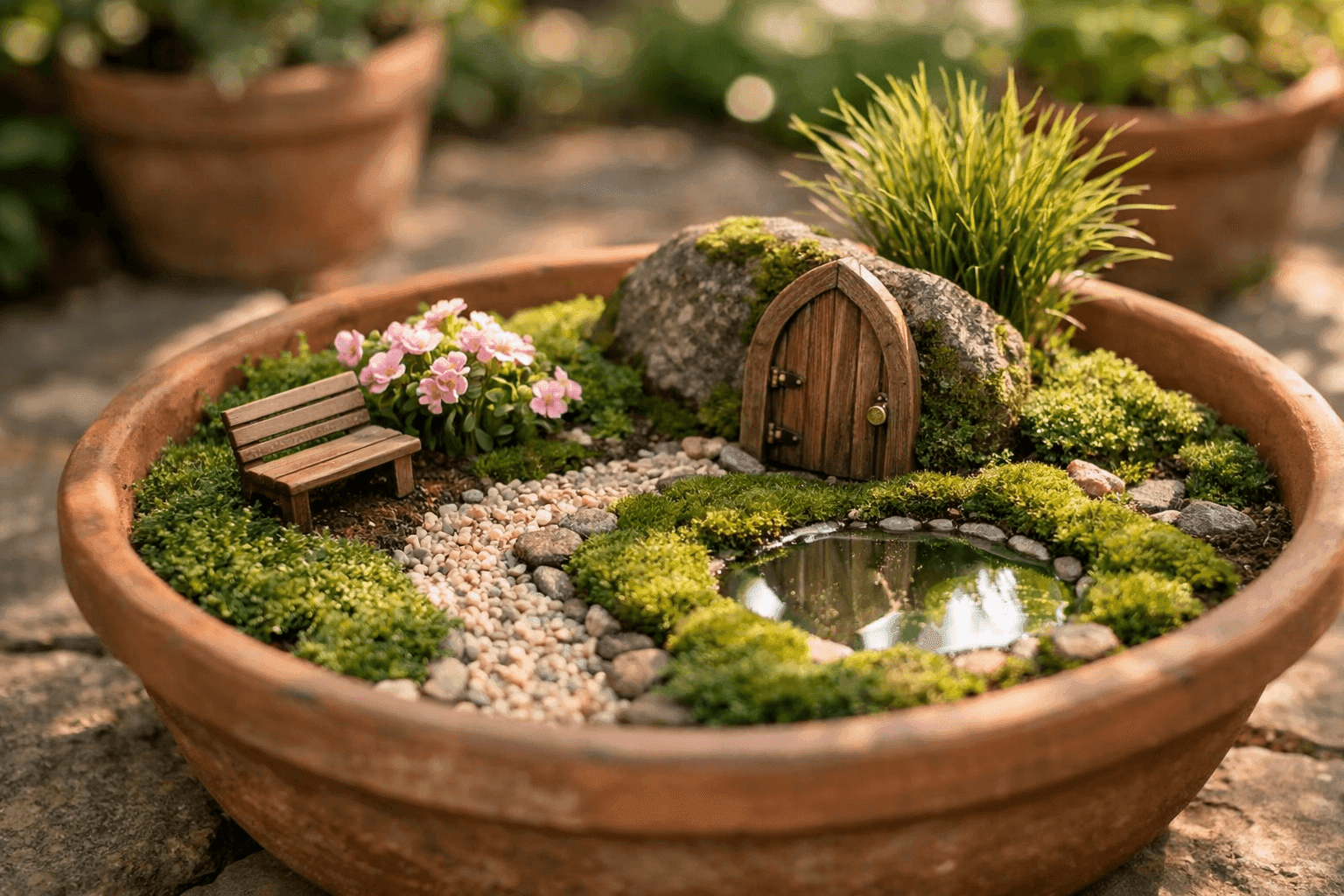
There's a particular kind of delight that only a well-made fairy garden can produce — that double-take moment when someone notices the tiny bench beside the miniature rose bush, the pebble path winding toward a little wooden door, the thyme groundcover that looks uncannily like a real lawn at this scale. Fairy gardens work on children for obvious reasons, but they work just as powerfully on adults who weren't expecting to feel charmed by a pot of plants on a patio. At $25–$40 for the full setup and one to two hours of building time, this is one of the most rewarding garden projects per dollar you can spend — partly because the miniature scale makes every element feel considered and intentional, and partly because it's genuinely fun to build in a way that most DIY projects aren't. Whether you're making this for your own patio, a child in your life, or a container garden display that needs a focal point with real personality, a fairy garden delivers a kind of magic that no amount of regular planting quite replicates.
What You'll Need
- The Container
- A wide, shallow container with drainage — a 16–18 inch terra cotta pot, a half whiskey barrel, a wide ceramic bowl, or a wooden planter box all work beautifully — ~$8–$15 or repurpose something you already have
- Wider and shallower is better than tall and narrow — fairy gardens need horizontal real estate to tell a story, and a cramped container makes the miniature landscape feel claustrophobic rather than whimsical
- Drainage holes are non-negotiable — standing water kills the small plants that make fairy gardens feel alive
- Landscape Materials
- Quality potting mix to fill the container — enough to come within 2 inches of the rim so plants sit at the right visual height — ~$6–$8 for a small bag
- Fine pea gravel or small river pebbles for paths and ground cover areas — ~$3–$5 for a small bag, or collect them from your yard or a nearby creek
- Coarse sand or decomposed granite for open "clearing" areas that mimic a woodland floor — ~$3–$4
- Small flat stones for stepping stones, walls, or a miniature patio surface
- Sheet moss or preserved moss from a craft store for groundcover in shaded spots — ~$4–$6 per bag
- Plants
- Creeping thyme or Irish moss as the main groundcover — it stays tiny, spreads slowly, and looks exactly like a miniature lawn — ~$3–$4 per small pot
- One small upright plant as a "tree" — dwarf mondo grass, baby tears, or a small ornamental grass give height and scale — ~$3–$5
- One or two small flowering plants for color — miniature roses, alyssum, lobelia, or small violas work perfectly at fairy garden scale — ~$3–$4 each
- Avoid fast-growing plants that will outgrow the container in weeks — the goal is a landscape that stays in proportion for a full season
- Miniature Furniture & Accessories
- Two to four miniature furniture pieces — a bench, a table and chairs, a tiny wheelbarrow, a small birdhouse — available at craft stores, garden centers, and online for ~$2–$5 each
- A small fairy door to lean against a stone or plant base — ~$3–$6 at craft stores or easily made from a few craft sticks and a hot glue gun
- Optional: a small mirror as a "pond," tiny fencing made from craft sticks, a miniature lantern, or small decorative mushrooms
- Resist the urge to overcrowd — three to five well-chosen accessories look curated and intentional, while fifteen pieces look cluttered and chaotic at miniature scale
How to Build It
- Plan your layout on paper or in your head before adding a single scoop of soil — decide where the path runs, where the main plant grouping goes, where the furniture will sit, and where any feature elements like a pond mirror or fairy door will live. A fairy garden with a clear narrative — a path leading to a door, a bench beside a flowering tree, a clearing with a table set for a tiny meal — is dramatically more magical than an arbitrary scatter of miniature elements across a pot of soil.
- Fill the container with potting mix to about 2 inches below the rim, then mound the soil slightly higher toward the back of the container to create a gentle sense of depth and elevation — this subtle grade makes the finished garden look like a real landscape rather than a flat tray, and gives taller plants at the back the slight height boost that improves the overall visual scale of the whole scene.
- Lay out your hardscape first before planting anything — press your pebble path into the soil surface, position your flat stepping stones, arrange any small stone walls or borders, and place your mirror pond if using one. Getting the non-living elements placed and settled before plants go in means you can adjust paths and features freely without working around root balls, and the finished layout looks far more considered when the hardscape reads as a permanent feature rather than something tucked around the plants as an afterthought.
- Plant your groundcover first by pressing small plugs of creeping thyme or Irish moss into the soil in the areas designated as lawn or meadow on your mental map, spacing them 2–3 inches apart so they'll fill in within a few weeks without immediately looking overcrowded. Water them in gently with a turkey baster or a watering can with a very fine rose head — regular watering pressure at this scale disturbs the soil surface and sends pebbles flying across your carefully laid path.
- Add your feature plants next — your upright "tree" plant toward the back for height, your flowering accent plants where they'll frame a seating area or line a path, pressing each root ball firmly into the soil and filling any gaps around the base. Step back after each plant placement and assess from the same angle a fairy would approach — which means eye level with the container rim, not looking straight down from above, which is how most people assess their work and why fairy gardens often look less magical in person than they did during building.
- Tuck in the moss in any shaded or partially covered areas where groundcover plants won't thrive — press preserved sheet moss firmly against the soil surface and into gaps between stones and plant bases, tearing it into natural irregular shapes rather than cutting it into neat squares that look artificial at close inspection. Moss adds the single most convincing element of age and naturalness to a fairy garden and transforms a freshly built scene into something that looks like it's been there quietly for years.
- Place your furniture and accessories with restraint and intention — set the bench where someone sitting on it would have a pleasant view of the flowering plants, position the fairy door where a path leads naturally toward it, lean the tiny wheelbarrow beside a plant grouping as if someone just set it down mid-task. Props that tell a story of activity and habitation make a fairy garden feel genuinely inhabited rather than just decorated, and that narrative quality is the difference between a garden that makes people smile and one that makes them stop and stare.
- Water gently and place in its final spot — most fairy garden plants prefer bright indirect light or morning sun with afternoon shade, which also happens to be the viewing condition that makes the miniature landscape look most magical. Check moisture daily for the first two weeks until the plants establish, top-dress with fresh moss or gravel if any soil erosion occurs around the path, and add or rearrange accessories seasonally to keep the scene feeling fresh and alive throughout the growing season.
The single most common mistake in fairy garden design — and the one that separates a truly enchanting result from one that just looks like a pot with some tiny things in it — is scale inconsistency. Miniature garden designers work with a strict rule of thumb: every element in the garden should look proportionally correct if a six-inch fairy were standing in it. That means your "tree" plant should be no more than 8–10 inches tall, your furniture pieces should all come from the same scale range, and your path pebbles should be small enough to read as stepping stones rather than boulders at miniature scale. The moment one element breaks the scale — a too-large plant, an oversized accessory, pebbles that are really the size of rocks in fairy terms — the illusion collapses and the whole garden loses its magic. Shop for all your accessories together rather than across multiple trips so you can physically compare sizes before buying, and always hold each piece next to your other elements before committing to it. One rogue oversized gnome can undermine an otherwise perfectly scaled scene.