Therapeutic Paint Pouring: Let Colors Flow Into Zen Art
Discover the meditative magic of fluid acrylics creating unpredictable abstract masterpieces
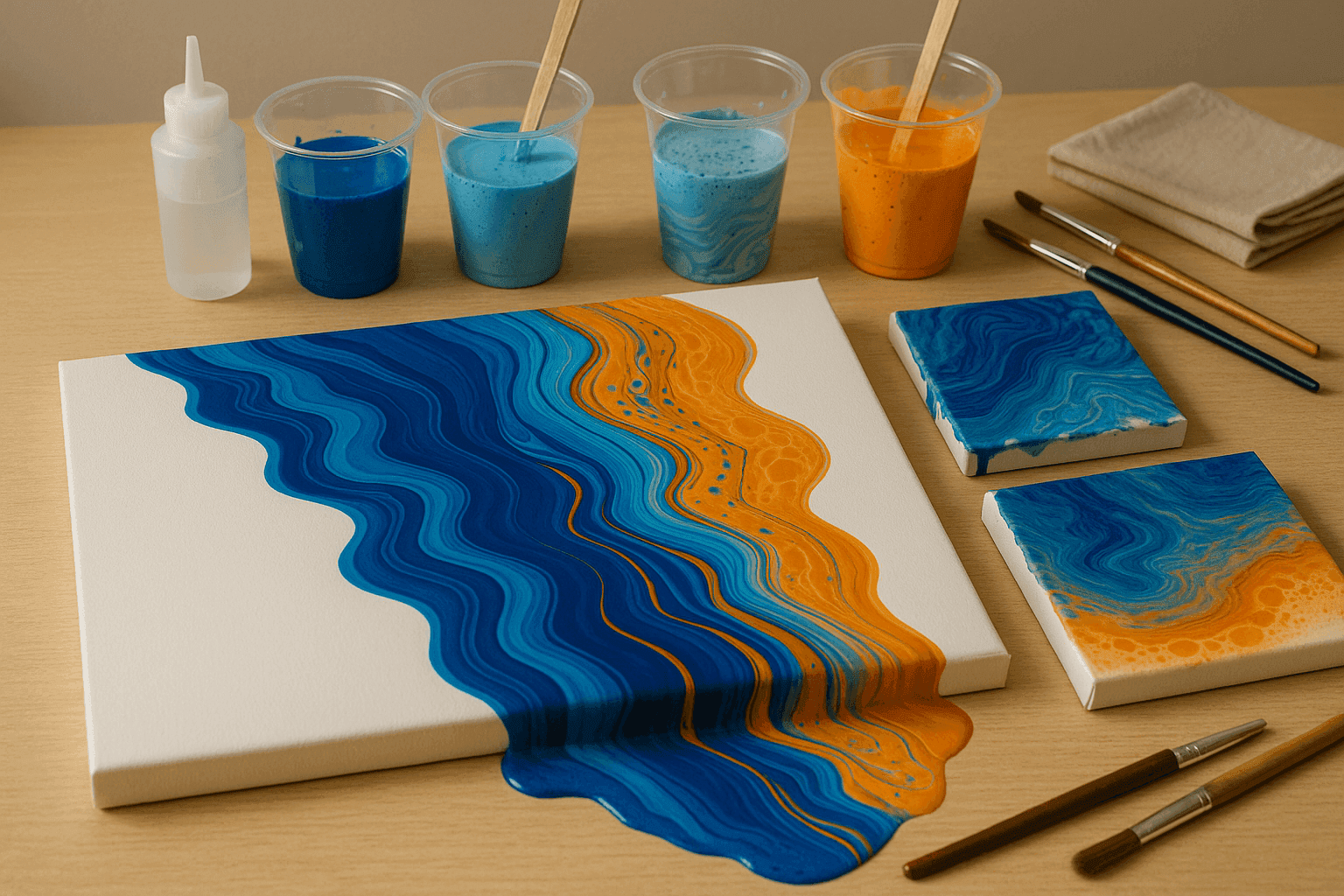
There's something deeply therapeutic about watching paint flow and blend in ways you can guide but never fully control, creating abstract art that surprises even you with its beauty. Paint pouring transforms the traditional idea of "painting" into a meditative dance between intention and surrender, where mixed acrylic paints cascade across canvas in organic patterns that mirror the flow of water or the movement of clouds. The process itself becomes a form of mindfulness – you're completely present as colors merge and separate, create cells and rivers, forming compositions that would be impossible to replicate with a brush. What makes this art form so therapeutic is the perfect balance of creative control and beautiful unpredictability; you choose the colors and guide their movement, but the paint creates its own magic through gravity and chemistry. In a world where we're always trying to control outcomes, paint pouring teaches us to find joy in the unexpected.
Pouring Art Supplies (Under $45)
- Canvas panels or stretched canvas - 8"x10" or 11"x14" for beginners ($8-15)
- Acrylic paints - 3-4 fluid acrylics in harmonious colors ($12-20)
- Pouring medium - Floetrol or specialized acrylic medium ($8-12)
- Mixing cups - Disposable plastic cups for paint preparation ($3-5)
- Wooden stir sticks - For gentle paint mixing ($2-4)
- Silicone oil - Creates beautiful cells in paint (optional) ($5-8)
- Plastic drop cloth - Protect your work surface thoroughly ($3-6)
- Disposable gloves - Keep hands clean during the process ($2-4)
Flow Art Technique
- Prepare your workspace with plastic covering and elevate canvas on cups for paint drainage
- Mix each paint color with pouring medium in 1:1 ratio until consistency of warm honey
- Layer mixed paints into one cup, pouring each color slowly to create distinct bands
- Center your canvas over the cup and flip both quickly together in one smooth motion
- Lift the cup slowly, allowing paint to flow from center outward across the canvas
- Tilt canvas gently in different directions to guide paint flow and coverage
- Add drops of silicone oil with toothpick for organic cell patterns if desired
- Let dry completely flat for 24-48 hours, allowing the magic to fully reveal itself
Choose colors that naturally harmonize – think ocean blues with seafoam greens, or sunset oranges with deep purples – rather than high-contrast combinations that can create muddy results when they blend. The therapeutic value comes from embracing imperfection, so resist the urge to "fix" areas that don't turn out as expected. Instead, step back and appreciate how the paint has created its own landscape of texture and movement. Keep a notebook nearby to jot down color combinations and techniques that create effects you love, turning each session into a learning experience that deepens your connection to this meditative art form.