Stop Cold Drafts and Slash Heating Bills With Fabric Tubes
Simple sewn draft stoppers keep warmth inside and dramatically reduce energy waste
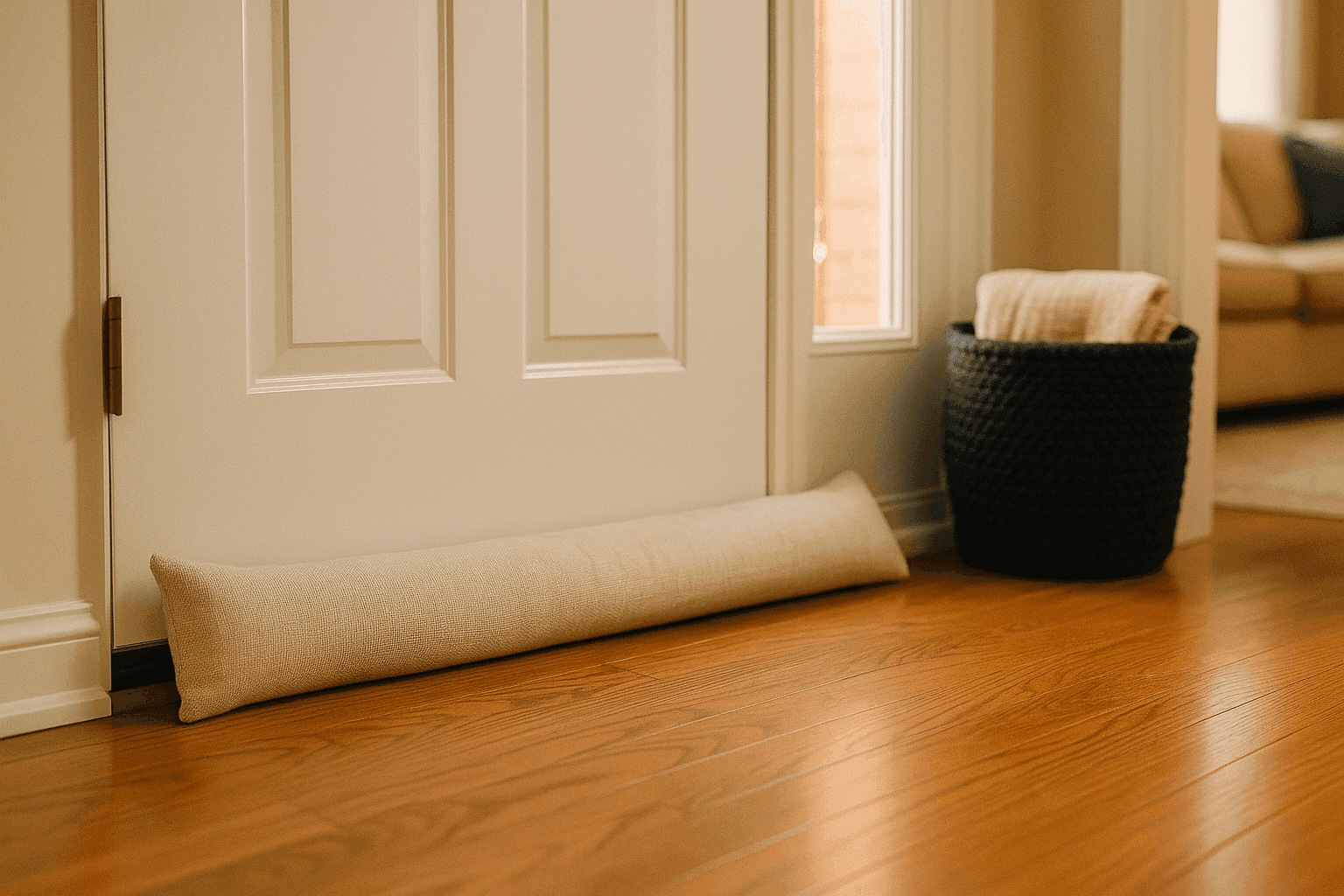
If you've ever felt that annoying cold breeze sneaking under your doors on winter days, you know exactly how much heat you're literally watching escape from your home while your heating system works overtime to compensate. Draft stoppers are one of those brilliantly simple solutions that make an immediate, noticeable difference in comfort while actually reducing your energy bills—and the DIY version costs under $10 per door compared to $25-40 for store-bought options that often don't fit properly anyway. I absolutely love this project because it combines practical problem-solving with an opportunity to use fun fabrics that complement your decor, turning a functional necessity into an attractive home accessory that guests actually compliment. The basic concept is incredibly straightforward—you're creating a weighted fabric tube that sits snugly against the door bottom, blocking cold air infiltration while keeping your heated air inside where it belongs. With just basic straight-line sewing skills and about 30 minutes per door, you'll create custom-fit draft stoppers that can reduce heating costs by 10-15% in rooms with particularly drafty doors while making those spaces feel noticeably warmer and more comfortable throughout the entire winter season.
Materials Per Draft Stopper
- Fabric:
- Decorative cotton or canvas fabric (1/2 yard, $4-6)
- Or repurpose old jeans, towels, or curtains (free)
- Coordinating thread
- Filling Materials (Choose One):
- Dry white rice (3-4 pounds, $3-5) - heaviest, best seal
- Dry beans or lentils (3-4 pounds, $4-6) - good weight
- Play sand (3-4 pounds, $2-3) - very heavy, excellent seal
- Poly-fil stuffing mixed with rice (lighter option, $5-8)
- Optional Additions:
- Essential oils (lavender, cedar) for pleasant scent ($5-8)
- Dried lavender buds to mix with filling ($3-5)
- Decorative trim or ribbon for embellishment ($2-4)
- Fabric handle or loop for easy moving ($1-2)
- Tools:
- Sewing machine (or needle for hand-sewing)
- Measuring tape
- Fabric scissors
- Straight pins
- Funnel for filling (or make one from paper)
- Iron for pressing seams
Sewing Your Draft Stopper
- Measure Your Door: Measure the exact width of your door at the bottom (typically 32-36 inches for interior doors, 36 inches for exterior doors), then add 1 inch to this measurement for seam allowances—precision here ensures a perfect fit without gaps.
- Cut Your Fabric: Cut a rectangle that's your door width plus 1 inch by 11 inches tall (this creates a finished tube about 4 inches in diameter once sewn and filled)—if using patterned fabric, pay attention to pattern direction so it looks right when positioned at the door.
- Create the Tube: Fold your fabric in half lengthwise with right sides together, pin along the long edge, and sew a straight seam with 1/2-inch seam allowance to create a long tube—backstitch at both ends to reinforce since this seam bears the weight of your filling.
- Sew One End Closed: Turn the tube right-side out, press it flat with your iron, then fold one short end inward about 1/2 inch and sew it completely closed with a straight stitch—this creates your bottom end that will hold the filling securely.
- Fill Strategically: Using your funnel, pour your chosen filling material into the open end, filling it about three-quarters full so the tube remains flexible enough to conform to your door bottom while being heavy enough to stay in place—shake and compress filling as you go to eliminate air pockets.
- Add Scent (Optional): Before filling completely, add 5-10 drops of essential oil or a handful of dried lavender buds mixed into your filling material, which gives you a subtle pleasant fragrance every time someone opens the door and releases the scent.
- Close the Opening: Once filled to desired firmness (test it against your door first), fold the open end inward 1/2 inch, pin it closed, and sew a straight seam across—for extra security, sew this end twice or use a decorative stitch that adds visual interest.
- Test and Adjust: Position your finished draft stopper against the door bottom, checking that it blocks the entire gap when the door is closed and doesn't prevent the door from opening smoothly—if it's too thick, you can carefully open one end and remove some filling.
Professional energy auditors recommend the double-chamber design for maximum draft blocking effectiveness, especially for exterior doors with significant gaps. Create this by sewing a vertical seam down the middle of your tube before filling, creating two separate chambers that you fill independently—this design prevents filling from shifting to one end over time and creates a more consistent seal across the entire door width. For doors you use frequently, add a fabric loop or handle on top so you can easily move the draft stopper when opening the door rather than kicking it aside, which extends its life considerably. Consider making reversible draft stoppers by using different fabrics on each side—perhaps a festive winter pattern on one side and a neutral solid on the other, so you can flip it around when holidays end without making a whole new one. The rice filling trick that nobody tells you about is adding a few bay leaves to the mix, which naturally deters any insects that might be attracted to the organic material while adding a subtle pleasant scent that's less overwhelming than essential oils.