Stack It Up: Build a Tiered Fruit Stand for Under $9
Three dollar store plates, two candlesticks, and a tube of E6000 — the kitchen counter upgrade that looks like a $40 store find and costs less than a coffee
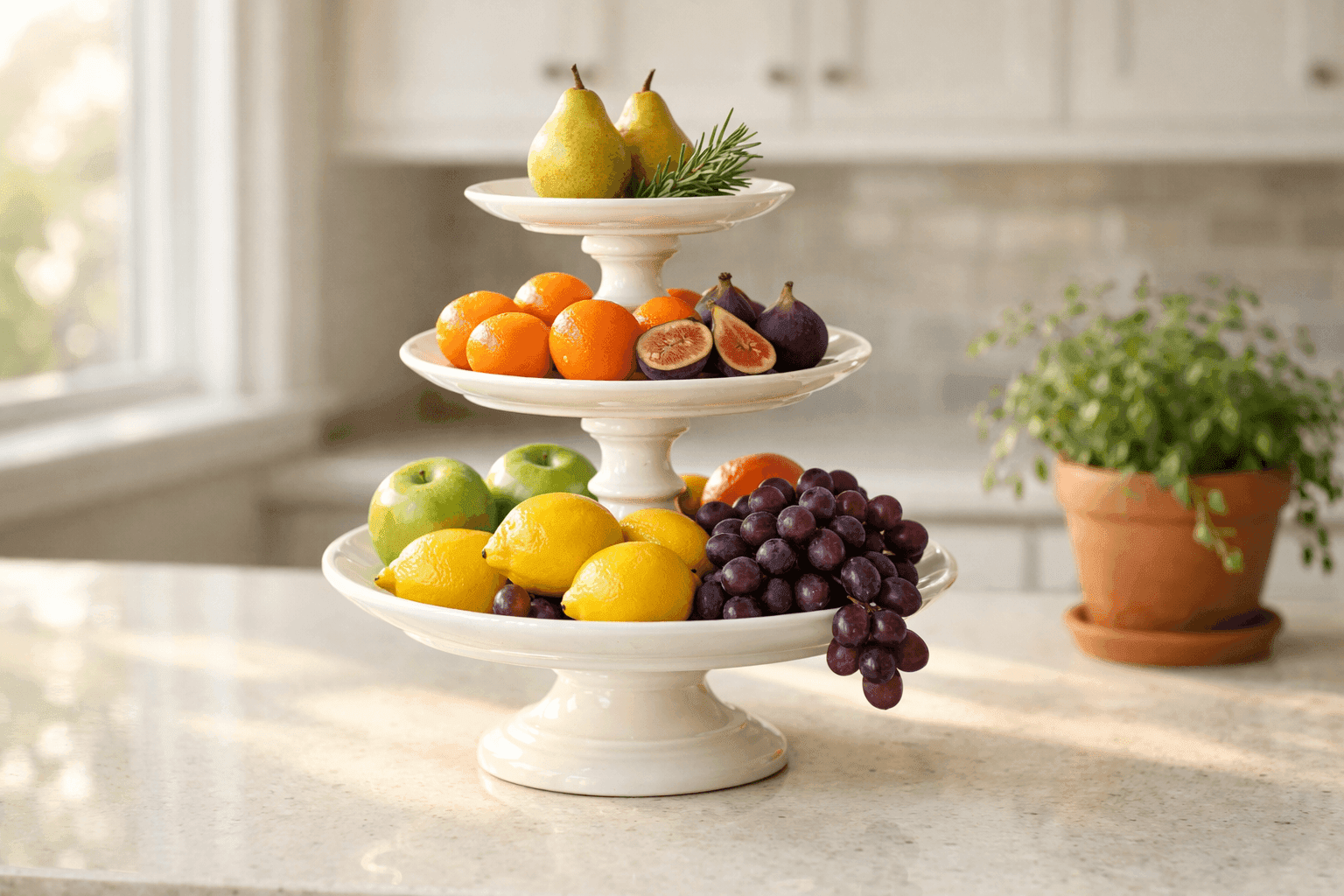
A tiered fruit stand does something that a bowl of fruit sitting on a counter simply cannot — it takes up a fraction of the horizontal space, displays everything at different heights so nothing gets buried and forgotten at the bottom, and adds the kind of intentional vertical structure to a kitchen counter that makes the whole space look styled rather than just functional. The kitchen store versions that look this good run $35–$50. This dollar store version costs $6–$9 in total materials, takes about five minutes to assemble plus 24 hours of curing time, and produces a piece that is genuinely indistinguishable from the retail versions in daily use. Three graduating plates stacked on two candlesticks of different heights — that's the entire engineering of a piece that looks considered and custom — and the optional spray paint step takes it from a dollar store craft to something that looks like it belongs in a kitchen design magazine. Fruit, vegetables, pastries, small snacks, or a mix of all four — a tiered stand makes everything it holds look more abundant and more appealing than it does in a flat bowl, which is both the practical and the aesthetic argument for building this today.
What You'll Need
- The Plates
- Three plates in graduating sizes — 10-inch, 8-inch, and 6-inch is the classic combination that produces the most balanced visual proportion — ~$1.25 each at the dollar store (~$3.75 total)
- Choose plates with a flat center base rather than ones that curve steeply from center to edge — the flat center is what gives E6000 the full contact surface it needs for a bond strong enough to hold the weight of loaded fruit
- Matching plates in the same pattern or color produce the most cohesive finished look; deliberately mismatched vintage-style plates in complementary patterns create a charming collected aesthetic that works equally well depending on your kitchen style
- If spray painting, the plate material matters less than the surface finish — both ceramic and melamine take spray paint well with proper prep, while plates with a glossy glaze benefit from a light sand with 220-grit paper before priming for best adhesion
- The Candlesticks
- Two candlesticks or sturdy glasses in different heights — approximately 6 inches and 4 inches tall — ~$1.25 each (~$2.50 total). The height difference between the two creates the tiered visual effect, so a meaningful size difference of at least 2 inches between the two candlesticks is important for the finished stand to read as genuinely tiered rather than nearly flat
- Candlesticks with a flat top surface provide the best gluing platform for the plate above — a tapered or pointed top requires a small disc of cardboard or cork as a leveling shim before the plate is attached
- Sturdy glass tumblers, small ceramic vases, or short pillar candle holders all work as candlestick alternatives — the key requirement is structural rigidity that won't flex or compress under the weight of a loaded plate
- Adhesive
- E6000 craft adhesive — the correct choice for this project, bonds ceramic to ceramic with exceptional strength, remains slightly flexible after curing so the joints don't crack if the stand is moved or bumped, and cures to a completely clear finish that's invisible in the assembled piece — ~$4–$6 per tube at a craft store, one tube builds several stands
- Super glue as an alternative if you need the stand assembled and cured within hours — it bonds instantly and holds well on smooth non-porous surfaces but creates a brittle joint that can snap cleanly if the stand is knocked sideways. E6000 is worth the 24-hour wait for a kitchen stand that will be loaded with fruit weight daily
- Rubbing alcohol and a clean cloth for wiping every gluing surface before assembly — adhesive bonds dramatically better to clean, grease-free ceramic than to surfaces with any kitchen residue or manufacturing release coating
- Optional Paint Supplies
- Spray paint in your chosen finish — metallic copper, matte black, glossy white, and brushed gold are all kitchen-appropriate finishes that transform dollar store pieces into something that reads as intentional — ~$6–$8 per can, one can covers a full stand with coats to spare
- Spray primer for any glossy ceramic surfaces — one coat before color ensures the paint bonds to the slick surface rather than chipping off at the first contact with a piece of fruit
- Clear spray sealer for any painted stand that will hold fresh produce — a food-safe sealer coat protects the paint from moisture and fruit acids that would otherwise slowly lift the painted surface — ~$6–$8
How to Build It
- Clean every gluing surface with rubbing alcohol on a clean cloth before touching any adhesive — every plate bottom, every candlestick top, and every candlestick base that will sit on a plate surface needs to be completely free of grease, dust, and any factory coating that might interfere with the adhesive bond. This thirty-second prep step is the difference between a stand that holds together through years of daily fruit loading and one where the top tier starts listing sideways within the first month.
- Dry-fit the full assembly before opening the E6000 — stack all three plates on the two candlesticks without adhesive to confirm the proportions look right, the heights feel balanced, and each candlestick sits stably on its plate before you commit to a 24-hour cure that locks everything permanently. This dry-fit is also when you decide the front-facing orientation of any plates with a pattern or design, since a patterned plate glued at a slightly off angle is visible and annoying in a piece that sits on your kitchen counter every day.
- Paint all pieces before assembly if using the spray paint option — it's dramatically easier to get full, even coverage on individual plates and candlesticks than on an assembled tiered stand where every angle is partially blocked by another component. Apply primer first on glossy surfaces, let cure fully, then apply two thin coats of your chosen color with full drying time between coats. Paint the underside of each plate and the full length of each candlestick for a finished result that looks complete from every viewing angle rather than raw and unpainted on the hidden surfaces.
- Begin assembly from the bottom up — apply a generous ring of E6000 to the bottom of the taller candlestick, center it on the underside center of the largest plate, press firmly with a slight twisting motion to spread the adhesive into full contact, and set it aside flat on a protected surface to cure without being disturbed. The bottom joint bears the weight of the entire assembled stand plus everything loaded on it — give this first joint the full 24-hour cure before building any further, because a partially cured bottom joint that gets stressed during the rest of assembly is the most common failure point in a tiered stand build.
- Build upward once the bottom joint is fully cured — apply E6000 to the top of the tall candlestick, center the medium plate on it, press firmly, and let cure for another 24 hours before adding the next tier. Building one joint at a time rather than gluing all three joints simultaneously and hoping everything stays aligned during the cure is the approach that produces a stand that sits perfectly level — simultaneous multi-joint assembly almost always results in one tier that's slightly off-center because there's nothing to brace it while the adhesive sets.
- Complete the top two joints in the same way — taller candlestick to the center of the medium plate, short candlestick to the center of the medium plate once that joint cures, and finally the smallest plate centered on the short candlestick. Check the levelness of each plate as each joint is made by setting the partially assembled stand on a flat surface and sighting across the plate rim — a plate that tips even slightly will distribute fruit unevenly and eventually stress the adhesive joint below it as contents roll to one side.
- Apply clear sealer to painted stands before loading with fruit — one to two light coats of food-safe clear spray sealer over the entire stand surface after the final assembly joint has fully cured. Let the sealer cure for 24 hours before the stand touches any food — sealer that hasn't fully off-gassed can transfer a chemical taste to delicate fruit skins, especially berries and thin-skinned stone fruits that rest directly on the plate surface.
- Style the finished stand by loading each tier with a mix of colors, sizes, and textures rather than sorting strictly by fruit type — a single layer of bananas on the bottom, a cluster of apples in the middle, and a handful of clementines on top reads as grocery store stock; a loosely mixed arrangement with different colors and shapes at each level reads as a styled still life that makes your kitchen counter look genuinely intentional. Position the stand where it will get some natural light during the day — fresh fruit displayed in natural light looks abundantly more appealing than fruit in shadow, and the tiered height means the top tier catches light that a flat bowl never reaches.
Food stylists who dress kitchen sets for editorial shoots and cookbook photography use a tiered stand technique that makes even a modest amount of fruit look abundantly full rather than sparsely placed — and it works just as well in a home kitchen as it does on a professional set. Fill the bottom tier only about two-thirds full rather than piling it to the rim, which allows the eye to see the full height of the stand rather than having the overflow obscure the structure. Place the largest, most colorful items on the bottom tier where they anchor the composition visually, medium items in the middle tier, and the smallest or most delicate items on the top where they're most visible and least likely to be crushed by heavier items above them. The styling detail that photographs best and looks most considered in person: one item deliberately placed slightly off the edge of the bottom tier — a single lemon or a few grapes trailing over the rim — which creates a sense of casual abundance that a perfectly contained arrangement never achieves. It's a one-second styling adjustment that makes the stand look like someone who knows what they're doing put it together, which is the entire goal.