Stack & Roll: Build a Rustic Crate Bar Cart
Two vintage wooden crates, a set of casters, and an afternoon — that's all it takes to build a rolling bar cart with serious character
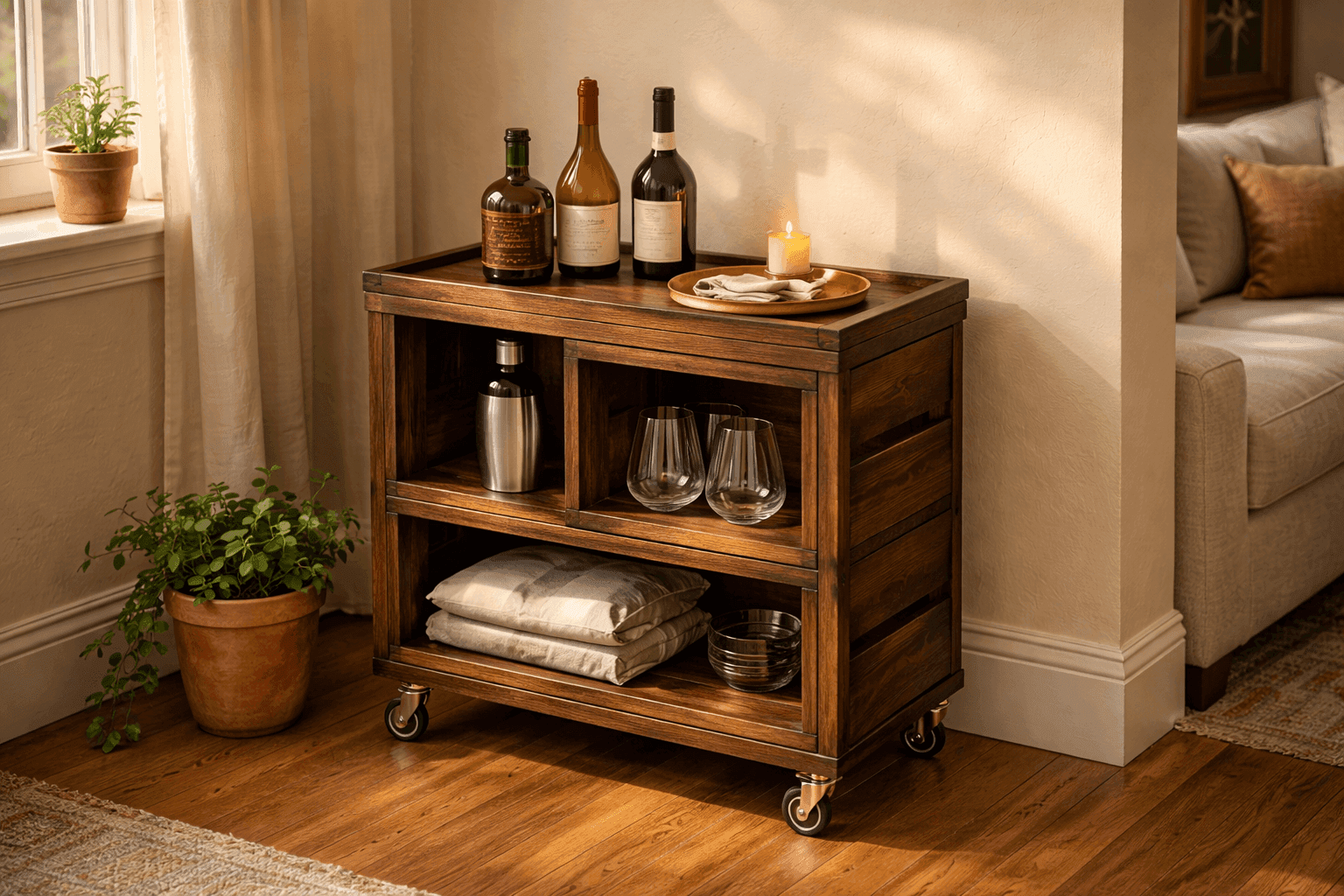
Bar carts have been a fixture on every home décor wishlist for years, and the store-bought versions that actually look good tend to run $150–$400 before you've put a single bottle on them. This two-crate DIY version costs $25–$35 in materials, rolls on locking casters, holds just as much as anything you'd find in a furniture store, and has the kind of genuine rustic character that you simply cannot buy off a showroom floor. Vintage fruit crates and wine boxes are practically made for this project — their open faces become perfect storage cubbies for bottles, glassware, and bar tools without any modification at all. A secured top serving surface, a coat of stain or paint in whatever color suits your space, and a few optional finishing touches like hanging wine glass hooks turn two humble wooden boxes into a piece you'll actually be proud to wheel out for company. If you've been waiting for a sign to finally build this one, this is it.
What You'll Need
- The Crates
- Two matching wooden crates with open faces — fruit crates, wine boxes, or produce crates all work beautifully — sourced free to ~$10 each from grocery stores, wineries, farmers markets, or Facebook Marketplace
- Look for crates with similar dimensions and solid construction — give each one a firm squeeze and shake to make sure the joints aren't separating before you commit to the build
- Matching sizes matter more than identical crates — a small size difference of up to an inch can be hidden with the top serving board
- Mobility Hardware
- Four heavy-duty swivel casters with locking mechanisms, 2–3 inch diameter — ~$12–$18 for a set of four rated for at least 50 lbs each
- Make sure at least two casters lock — a bar cart that rolls away while you're pouring is nobody's friend
- Caster mounting screws included with most sets, but confirm the screw length works with your crate bottom thickness
- Top Serving Surface
- One piece of ¾-inch hardwood board or plywood cut to the width and depth of your crate stack plus a 1-inch overhang on each side — ~$8–$12
- Four small L-brackets with screws for securing the top board from underneath — ~$4–$6
- Optional: wood trim or edge banding to finish the top board edges cleanly — ~$3–$5
- Fasteners & Adhesive
- Wood glue for the crate-to-crate joint — standard Titebond or similar
- 1¼-inch wood screws for reinforcing the crate joint from inside — 6–8 screws total
- Clamps to hold crates together while glue cures — at least two bar clamps or ratchet straps work in a pinch
- Finish & Trim
- 120 and 220-grit sandpaper for smoothing rough wood
- Wood stain in your preferred tone (dark walnut and ebony are crowd favorites) OR chalk paint for a bold color finish — ~$8–$12 per quart
- Polyurethane or furniture wax topcoat for protection — ~$8–$10
- Optional: cup hooks for hanging wine glasses under the top board — ~$3–$4 for a pack
- Optional: decorative contact paper or fabric scraps for lining crate interiors
How to Build It
- Inspect and prep both crates by checking every joint, corner, and slat for structural integrity — tighten any loose nails with a hammer, re-glue any separating joints, and set aside any crate that has cracked or rotting wood. A wobbly crate loaded with bottles and glassware is a disaster waiting to happen, and reinforcing it now takes two minutes versus cleaning up a collapse later.
- Sand both crates thoroughly with 120-grit paper to knock down splinters, rough grain, and any old labels or price stickers that didn't peel cleanly. Work with the grain on all flat surfaces and pay extra attention to the top edges where hands will rest — then follow with 220-grit for a smooth finish that takes stain or paint evenly without blotchiness.
- Stack and align the two crates with their open faces pointing outward in the same direction, centering them carefully so the side edges are flush and even. Lay the stack on its back on a flat surface to make joining easier — gravity will hold everything in alignment while you clamp and fasten without needing a third hand to steady things.
- Glue and fasten the crates together by applying a generous bead of wood glue along the entire top edge of the bottom crate where it contacts the bottom of the upper crate, pressing them firmly together, clamping across the full width, and letting the glue cure for at least 30 minutes before driving 1¼-inch screws through the bottom of the upper crate into the top of the lower crate at each corner for a joint that won't shift under load.
- Attach the casters to the four bottom corners of the lower crate by positioning each caster plate flush with the corner, marking the screw holes with a pencil, drilling pilot holes to prevent splitting, and driving the mounting screws firmly — test each one with a firm push to confirm it's locked into the wood securely before moving on. Confirm all four casters roll smoothly and that the locking mechanisms engage cleanly before flipping the cart upright.
- Cut and finish the top board to your chosen dimensions, sand it smooth on all faces and edges, then apply your stain or paint to the board and the entire crate assembly in thin, even coats — doing the top board separately before attaching it means you get full coverage on the underside without awkward brush angles. Let everything dry completely and apply a protective topcoat of polyurethane or furniture wax once the color coat is fully cured.
- Attach the top board by centering it across the upper crate with your chosen overhang on all sides, then reaching inside the upper crate to position L-brackets at each corner and driving screws up through the bracket into the underside of the top board — this keeps all fasteners completely hidden from view and gives the finished cart a clean, furniture-quality look from every angle.
- Add finishing details that take the cart from functional to genuinely polished — screw cup hooks into the underside of the top board for hanging stemware, line the crate interiors with cut-to-fit decorative contact paper or fabric for a pop of pattern, and load it strategically with your tallest bottles in the back, glassware in the front cubby, and bar tools tucked in the sides. Roll it into position, lock the casters, and pour yourself something to celebrate a build well done.
The finish choice you make here does more for the final look than any other single decision in this build — and the difference between a cart that looks like a craft project and one that looks like a boutique furniture piece often comes down to one thing: a proper topcoat. Stain alone leaves wood looking flat and vulnerable to the inevitable wine drip or cocktail splash, so always follow with at least two coats of water-based polyurethane or a hard furniture wax on the top serving surface especially. For color, dark walnut stain on natural wood grain hits that sweet spot between rustic and sophisticated that works in almost any living room or dining space. If you want to go bold, chalk paint in navy or deep forest green with a clear wax topcoat gives the cart a moody, high-end look that photographs beautifully and holds up to regular use. One styling trick the pros use: vary the heights of what you display in the crate openings — a tall bottle next to a short rocks glass next to a small plant or candle creates visual rhythm that makes the cart look intentionally styled rather than just stocked.