Stabilize Your Dining Table Before the Holiday Rush
Fix wobbly table legs in 30 minutes so your Thanksgiving dinner doesn't become a disaster waiting to happen
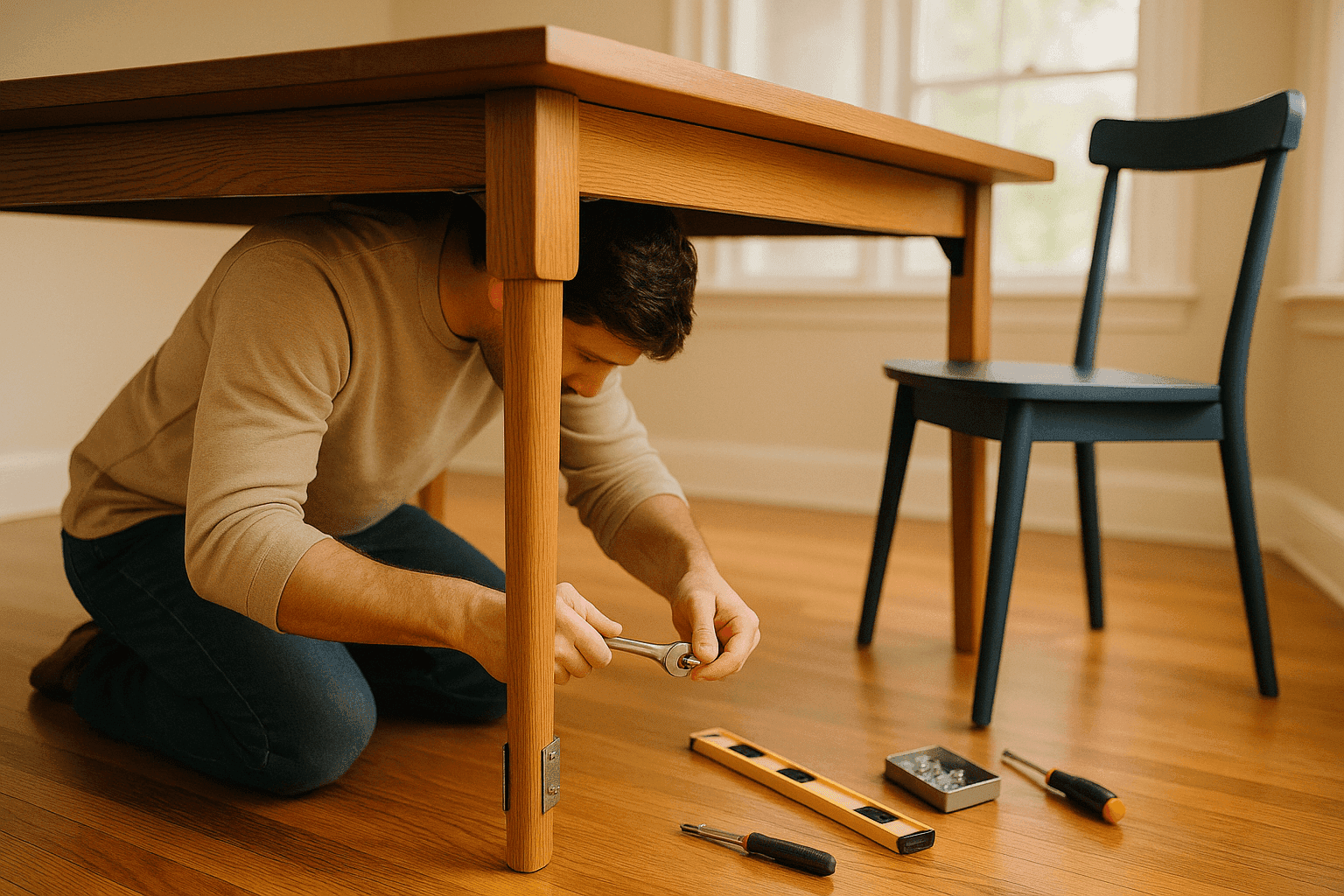
There's nothing quite like the sinking feeling when you're serving Thanksgiving dinner and realize your dining table wobbles every time someone cuts their turkey, sending wine glasses dangerously close to the edge with each movement. I learned this lesson the embarrassing way during a holiday dinner when my uncle's enthusiastic carving nearly toppled a full gravy boat, and I vowed never to host another meal on an unstable table. Fixing wobbly table legs is one of those essential maintenance tasks that takes just 30 minutes but prevents potential disaster and constant anxiety during important gatherings. The repairs cost anywhere from nothing if it's just loose bolts to $20 for corner braces and levelers, yet the peace of mind is priceless when you're hosting a dozen people around a fully loaded table. Most table wobbles stem from just a few common issues—loose hardware, uneven legs, or weakened corner joints—all of which are straightforward to diagnose and fix with basic tools you probably already own.
What You'll Need
- Basic Tools:
- Adjustable wrench or socket set
- Screwdriver set (Phillips and flathead)
- Level for checking table surface
- Tape measure
- Flashlight for inspecting under table
- Repair Materials:
- Wood glue for loose joints
- Corner braces or L-brackets (if joints are weak)
- Wood screws in various lengths
- Furniture levelers or felt pads
- Toothpicks and glue for stripped screw holes
- Optional Reinforcement:
- Metal mending plates for cracked wood
- Adjustable leg levelers for uneven floors
- Rubber bumpers for floor protection
- Wood filler for damaged areas
- Total Cost: $0-20 depending on needed repairs
Stabilization Steps
- Diagnose the problem by flipping the table upside down or crawling underneath to inspect all joints, hardware, and leg attachments while gently wiggling each leg to identify where the movement originates. Understanding the specific issue prevents wasted effort on the wrong solution.
- Tighten all hardware by systematically checking every bolt, screw, and fastener connecting legs to the table frame, using your wrench or screwdriver to snug them firmly without overtightening which can strip threads or crack wood. This simple step alone fixes wobbles in about 60% of cases.
- Repair stripped holes if screws spin without tightening by removing the screw, squirting wood glue into the hole, inserting toothpicks or wooden matchsticks to fill the space, then breaking them off flush and re-driving the screw once glue dries. This creates new material for threads to grip.
- Reinforce weak joints by installing corner braces or L-brackets at each leg attachment point, screwing them into both the leg and table frame to create triangulated support that prevents racking motion. Metal brackets are especially effective for tables that see heavy use.
- Check for level by placing your level on the table surface in multiple directions to determine if the table itself is flat or if you're dealing with uneven flooring. This distinction matters because different problems require different solutions.
- Address uneven legs by measuring from floor to underside of table at each leg position, then either trimming the long leg carefully with a saw or adding adjustable furniture levelers to short legs. Levelers are reversible if you move to different flooring later.
- Glue loose joints if legs fit into sockets or mortises that have become loose over time by carefully pulling the joint apart slightly, injecting wood glue into the gap, then clamping or weighting it closed for 24 hours. This restoration works surprisingly well for vintage tables.
- Test thoroughly by applying pressure to various points on the table surface, having someone sit on it if appropriate for your table type, and placing weight on all corners to ensure stability before declaring victory. Better to discover remaining issues now than during dinner.
Furniture repair professionals have a secret weapon for tables that wobble despite tight hardware and level legs—the "diagonal brace" technique. Measure the diagonal distance between opposite corners under your table, and if they're not identical, your table frame has racked out of square over time. Fix this by installing a diagonal brace (a length of wood or metal) running from one corner to the opposite corner underneath the table, which forces the frame back into square and eliminates wobble permanently. This is especially common in extension tables where the mechanism creates inherent weakness. For tables you extend frequently, consider installing removable braces that attach only when the table is in full extension, since that's when structural integrity matters most. Finally, if your table has a center pedestal base, check that the column connecting to the feet hasn't loosened—this often requires specialized wrenches but fixing it completely transforms stability.