Spring Prep: Transform Plain Pots Into Painted Garden Art
Create beautiful hand-painted containers that make seed starting season feel like a celebration
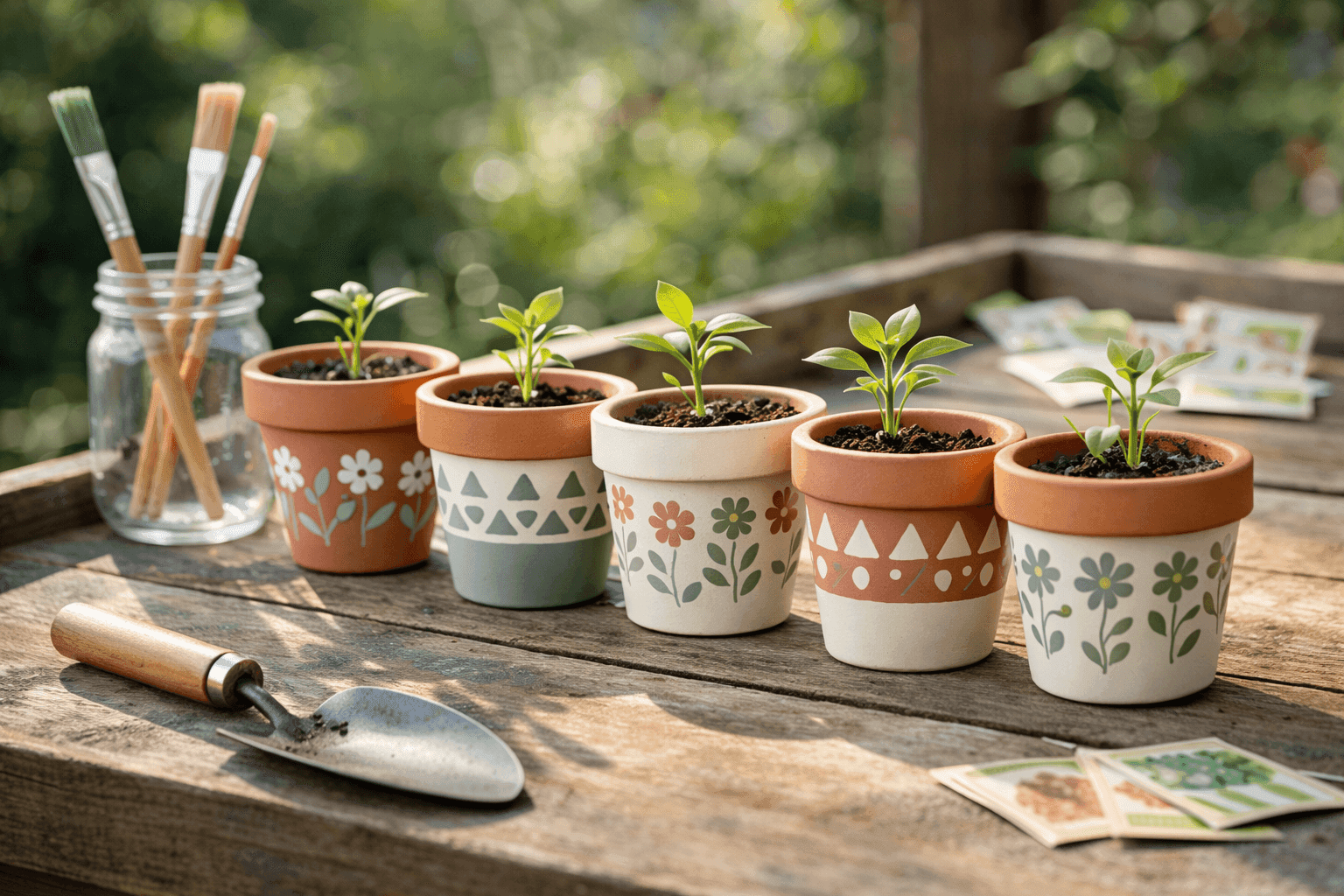
There's something wonderfully optimistic about preparing for spring planting while winter still has its grip on the landscape, and decorating terra cotta pots is the perfect indoor project that connects you to the growing season ahead while satisfying that creative urge that builds during long winter months. Plain clay pots are functional but honestly pretty boring, costing $2-5 each whether they're blank or not—so why not transform them into colorful, personalized containers that make your seed starting station or garden space feel intentionally designed rather than accidentally assembled? I've been painting pots for years as both meditation and creative expression, and there's something deeply satisfying about the combination of the earthy clay texture, bright acrylic colors, and the knowledge that these beautiful containers will soon hold living plants that you've grown from tiny seeds. This project is genuinely foolproof even if you don't consider yourself artistic—simple geometric patterns, polka dots, stripes, or basic florals all look stunning on the warm terra cotta background, and the porous clay surface accepts paint beautifully without any special preparation. Spend a cozy afternoon transforming a collection of plain pots into a coordinated set that makes your spring gardening feel more like art than chore, and you'll find yourself actually looking forward to seed starting season in a way that plain brown pots simply don't inspire.
What You'll Need
- Terra Cotta Pots: Clean, dry clay pots in various sizes from 4" to 10" diameter—buy new for $2-5 each or use existing pots thoroughly cleaned (dollar stores often have great deals)
- Acrylic Craft Paint: Choose 3-5 coordinating colors plus white for mixing lighter shades—outdoor acrylic or multi-surface paint provides best durability ($1-3 per bottle)
- Paint Brushes: Variety of sizes including small detail brushes for intricate work, medium flat brushes for stripes and geometric patterns, larger brushes for base coats
- Waterproof Sealant: Clear acrylic sealer spray or brush-on polyurethane to protect painted designs from water damage and UV fading ($5-10 per can or bottle)
- Design Tools: Painter's tape for crisp lines and geometric patterns, pencil for sketching designs, cotton swabs for fixing mistakes, paper plate or palette for mixing colors
- Optional Stencils: Pre-made stencils for flowers, leaves, or patterns if you want design guidance (or cut your own from cardstock for custom shapes)
- Drop Cloth: Newspaper or plastic sheeting to protect your work surface from paint drips and spills
Step-by-Step Instructions
- Clean pots thoroughly by washing with soap and water to remove any dirt, oils, or residue, then let dry completely for 24 hours—paint won't adhere properly to damp or dirty clay surfaces.
- Plan your design by sketching ideas on paper first or using painter's tape to map out geometric patterns directly on pots—this prevents that moment of staring at a blank pot unsure where to start.
- Apply base coat if desired by painting the entire pot in one solid color first, which creates a non-porous background that makes subsequent detail colors pop more vibrantly than painting directly on raw terra cotta.
- Let base coat dry completely for 2-3 hours before adding details—rushing this step results in muddy colors and frustrating smudging that ruins your careful work.
- Add your design elements working from largest shapes to smallest details, using painter's tape for clean lines, stencils for repeated patterns, or freehand for organic florals and brushstrokes that showcase your personal style.
- Build layers gradually by applying 2-3 thin coats rather than one thick coat for each color—this prevents drips, creates more vibrant final colors, and allows for easier corrections if needed.
- Let paint cure fully for 24-48 hours in a warm, dry location before sealing, ensuring all layers are completely dry and hardened to prevent sealant from causing paint to run or smudge.
- Apply waterproof sealant in 2-3 light coats following manufacturer's directions, working in a well-ventilated area and allowing proper drying time between coats—this protection is essential for outdoor use and frequent watering.
Here's the professional technique that elevates handpainted pots from craft project to designer-quality garden accessories: create a cohesive color palette across multiple pots rather than making each one completely different, which can look chaotic and amateur. Choose three complementary colors as your signature palette—for example, soft sage green, warm terracotta orange, and cream white—then use these same three colors across 4-6 pots in varying combinations and patterns. One pot might feature sage stripes on white, another could have orange polka dots on sage, a third might display cream florals on terracotta, and so on. This approach, which professional garden designers call "coordinated variety," creates visual harmony that makes your collection look intentionally curated rather than randomly decorated. The psychological effect is fascinating—when colors repeat across multiple pots, your eye reads the collection as a deliberate design choice rather than individual craft projects, instantly elevating the perceived sophistication and value. Take this further by painting matching saucers or adding coordinating painted plant markers using the same palette, creating an entire seed-starting system that looks like it came from an expensive garden boutique rather than your kitchen table.