Space-Saving Solutions: Installing Wall-Mounted Desks
Create a functional workspace that disappears when not in use
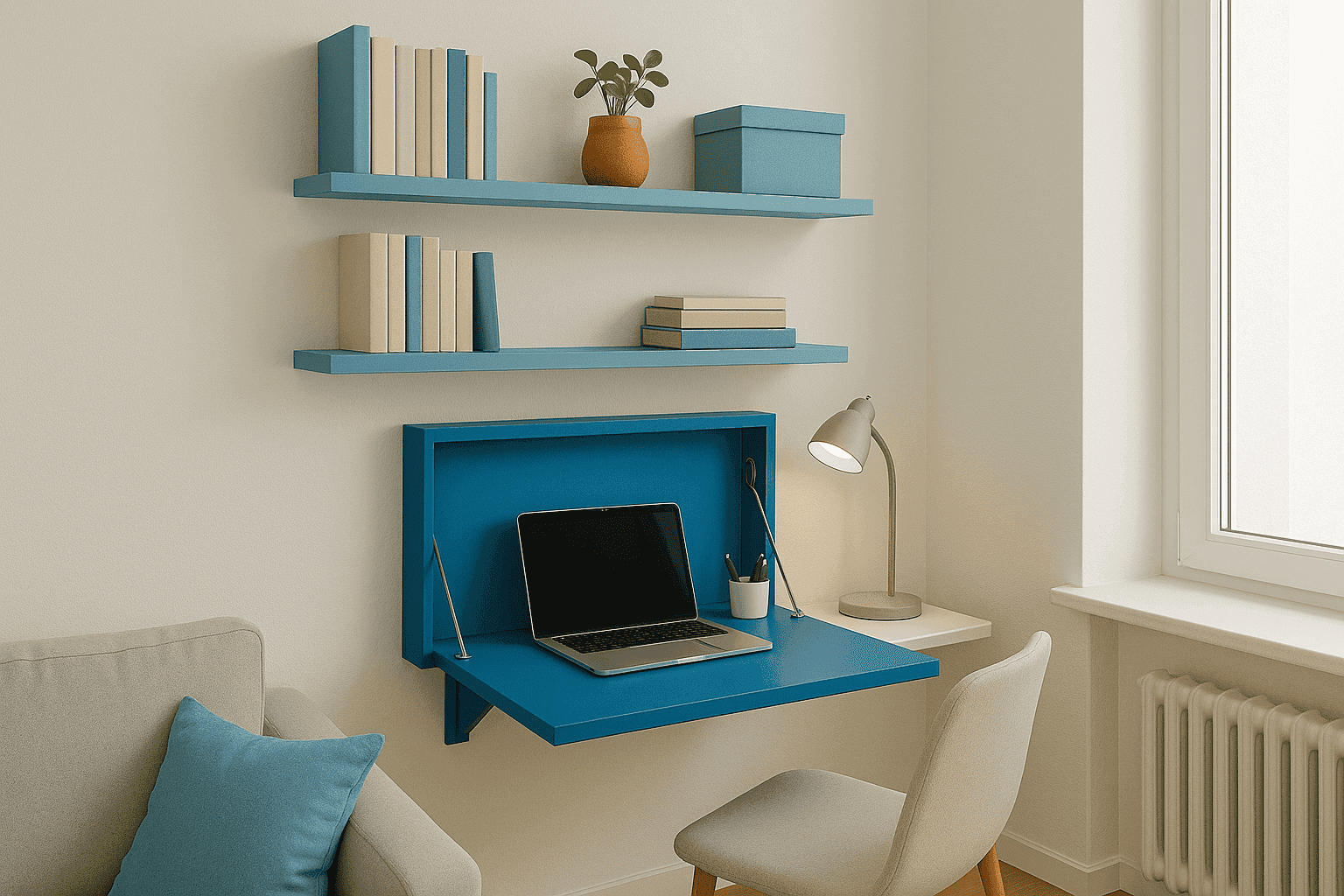
As remote work and multi-functional spaces become increasingly common, wall-mounted desks offer an elegant solution for creating dedicated workspaces without sacrificing precious square footage. These innovative installations provide full functionality when needed, then fold away or integrate seamlessly with your decor when work is done. Whether you're outfitting a compact apartment, creating a homework station in a child's room, or adding a flexible workspace to any room, wall-mounted desks deliver style and practicality in equal measure.
Desk Options & Materials
| • Fold-Down Desks: Murphy-style with hinges, supports |
| • Floating Desks: Wall-mounted with brackets, no legs |
| • Desk Materials: Plywood, solid wood, MDF, laminate |
| • Support Hardware: Heavy-duty brackets, folding hinges |
| • Mounting Hardware: Wall anchors, toggle bolts, screws |
| • Tools: Stud finder, level, drill, screwdriver |
| • Optional Features: Cable management, built-in storage |
| • Finishing Materials: Paint, stain, edge banding |
| • Accessories: Task lighting, bulletin board, shelving |
Installation Process
- Choose your desk style. Consider your space constraints and usage needs. Options include:
- Murphy-style fold-down: Hinges at bottom, folds flat against wall when not in use
- Floating wall-mounted: Permanently attached with no visible supports
- Bracket-supported: Visible but decorative brackets for a industrial or rustic look
- Secretary-style: Fold-down front that becomes writing surface with storage behind
- Determine ideal dimensions and placement. Standard desk height is 28-30 inches from the floor. For width, consider available wall space and your needs—24-48 inches is typical. Depth usually ranges from 18-24 inches for adequate workspace. Consider nearby power outlets, natural light, and room traffic patterns.
- Locate wall studs. Use a stud finder to locate and mark studs in your chosen installation area. Mounting directly into studs provides maximum stability. If stud positioning doesn't align with your design, plan to use appropriate wall anchors rated for the combined weight of your desk and items placed on it.
- For a simple floating desk:
- Cut 3/4-inch plywood or solid wood to your desired desktop dimensions.
- Sand all edges and surfaces, finishing with 220-grit for smoothness.
- Apply edge banding to exposed plywood edges if using.
- Stain or paint as desired and apply clear protective finish.
- Install heavy-duty floating shelf brackets into wall studs.
- Secure desktop to brackets following manufacturer's instructions.
- Consider adding a 1x2 inch support strip along the back wall for additional stability.
- For a fold-down desk:
- Purchase fold-down desk hardware or create a custom solution with piano hinges.
- Build or purchase a desktop sized to your specifications.
- Construct a frame that will be mounted to the wall, with attachment points for hinges.
- Install frame securely into wall studs using lag bolts.
- Attach hinges to both frame and desktop according to hardware specifications.
- Add fold-out supports or cables that secure desktop when in horizontal position.
- Install a latch mechanism to keep desk secured when folded up.
- Add functionality enhancements. Consider incorporating:
- Built-in cable management systems or simple grommets for power cords
- Small drawers or cubbies for office supplies
- Wall-mounted task lighting that doesn't take up desk space
- Cork board, magnetic board, or small shelving above desk for organization
- Hidden compartments for storing office supplies when desk is folded away
- Test stability and functionality. Before using regularly, test your installation by applying downward and outward pressure. Ensure all hinges, latches, and supports work smoothly. Make any necessary adjustments to level or securing hardware.
- Customize your workspace. Add a comfortable chair that can be tucked away when not in use. Consider additional wall organization such as pegboards or floating shelves to complete your compact workspace.
For a truly multi-functional piece, design your wall-mounted desk to visually transform when closed. Install a large framed mirror or artwork on the underside of a fold-down desk that becomes a decorative element when folded up. Alternatively, add a chalkboard or magnetic surface that serves as a message center when the desk isn't being used. Consider mounting your desk at counter height (36") rather than standard desk height to allow it to double as a buffet, bar, or crafting station. This versatility maximizes the utility of your space while maintaining a streamlined aesthetic.