Space Division: Creating Flexibility with Sliding Room Dividers
Define areas while maintaining flow in open floor plans with stylish sliding partitions
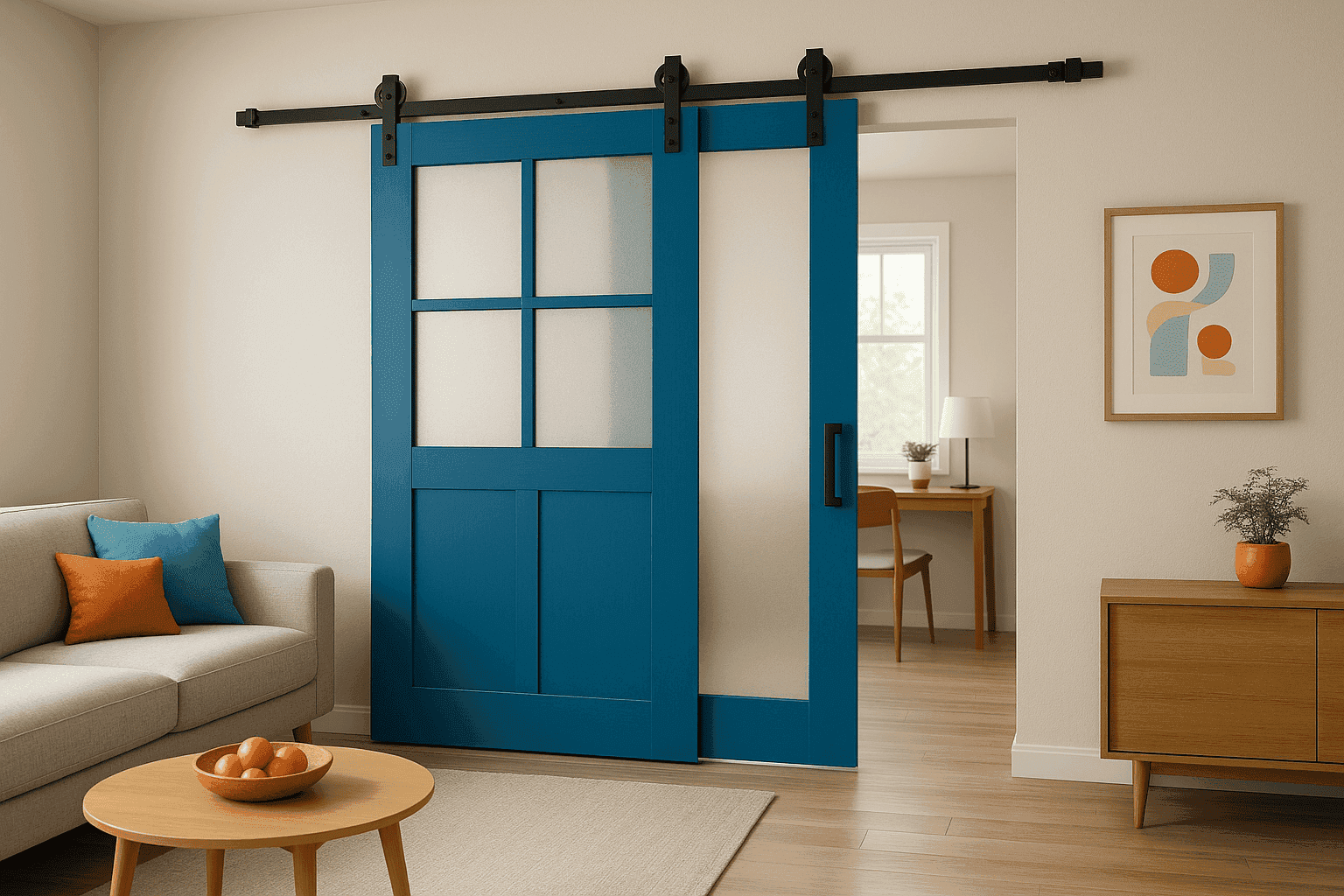
Sliding room dividers offer the perfect solution for modern living spaces—providing privacy when needed while maintaining an open, airy feel when fully open. Whether you're carving out a home office from a living area, separating a bedroom from a dressing space, or simply adding architectural interest, a sliding divider creates multi-functional spaces without the permanence of traditional walls.
What You'll Need
| Sliding door hardware kit (barn door style or pocket door) |
| Door panel(s) (wood, glass, or composite) |
| Stud finder |
| Level (4-foot recommended) |
| Drill and drill bits |
| Screwdriver |
| Measuring tape |
| Pencil |
| Header board (if required for mounting) |
| Door handle or pull |
| Floor guide (optional but recommended) |
How To Install It
- Select your divider style - Choose between barn door hardware (mounted outside the wall), pocket doors (slide into the wall), or ceiling-mounted track systems.
- Measure carefully - For barn door styles, ensure wall space is at least twice the door width. Measure the opening height and width, adding 1-2" to the width for overlap.
- Locate and mark studs - Use a stud finder to locate wall studs where you'll mount the track. Mark their positions clearly.
- Install header board - If your wall doesn't have proper support or to create a design feature, mount a header board (typically a 1x4 or 1x6) to the wall first, securing it into studs.
- Mount the track - Following the manufacturer's instructions, install the track system, ensuring it's perfectly level and securely attached to studs.
- Prepare the door panel - Install the mounting hardware to your door panel as specified in your kit instructions.
- Hang the door - With assistance, lift the door and place it on the track, adjusting the hangers as needed for proper alignment and smooth operation.
- Add finishing touches - Install door handles or pulls, and add an optional floor guide to prevent the door from swinging.
For a truly designer look, consider using unexpected materials for your sliding divider. Frosted glass panels allow light to filter through while maintaining privacy, reclaimed wood adds character and warmth, or try a fabric-wrapped panel for sound absorption in a home office setup. For small spaces, mirrors mounted to one or both sides of your sliding panel create the illusion of more space while adding functionality. If your space allows, consider installing a double-track system for overlapping panels that can open from either direction, offering maximum flexibility.