Think Big: Space & Value Hacks for Any Size Home
Small square footage is no match for these layout and lighting tricks
Square footage is fixed, but how a space feels is entirely within your control — and that feeling is what drives both resale value and day-to-day livability. I've been in 1,000 square foot apartments that felt luxurious and 2,500 square foot houses that felt cramped and chaotic, and the difference was almost never the actual size. It was layout, light, storage, and a handful of smart visual tricks that professional designers use to make spaces read as bigger, calmer, and more valuable than they technically are. Whether you're prepping to sell or just trying to get more out of your space, these are the moves that make the biggest perceptual difference for the least amount of effort.
What You'll Need
- Large mirror(s): Full-length or oversized leaner-style mirror for key spaces (~$80–$200)
- Floating shelves: Simple bracket-mounted shelves for vertical storage display (~$20–$60 per shelf)
- Crown molding: Pre-primed MDF crown for living areas (~$1–$3 per linear foot)
- Curtain rods + panels: Floor-to-ceiling mounting hardware and light-filtering curtains (~$40–$100 per window)
- Under-bed storage containers: Low-profile rolling bins for bedroom storage (~$20–$40 per set)
- Warm LED bulbs: 2700K warm-white LEDs for all fixtures — brighter wattage in smaller rooms (~$15–$25 per pack)
- Light-colored paint: Warm white or soft greige to open up darker rooms (~$60–$80 per gallon)
- Furniture risers: To elevate sofas and beds if they're blocking light near the floor (~$15–$25 per set)
The Space-Expanding Playbook
- Hang curtains as close to the ceiling as possible — not at the window frame. Ceiling-height curtains visually stretch wall height and make rooms feel dramatically taller. Always let them puddle slightly on the floor.
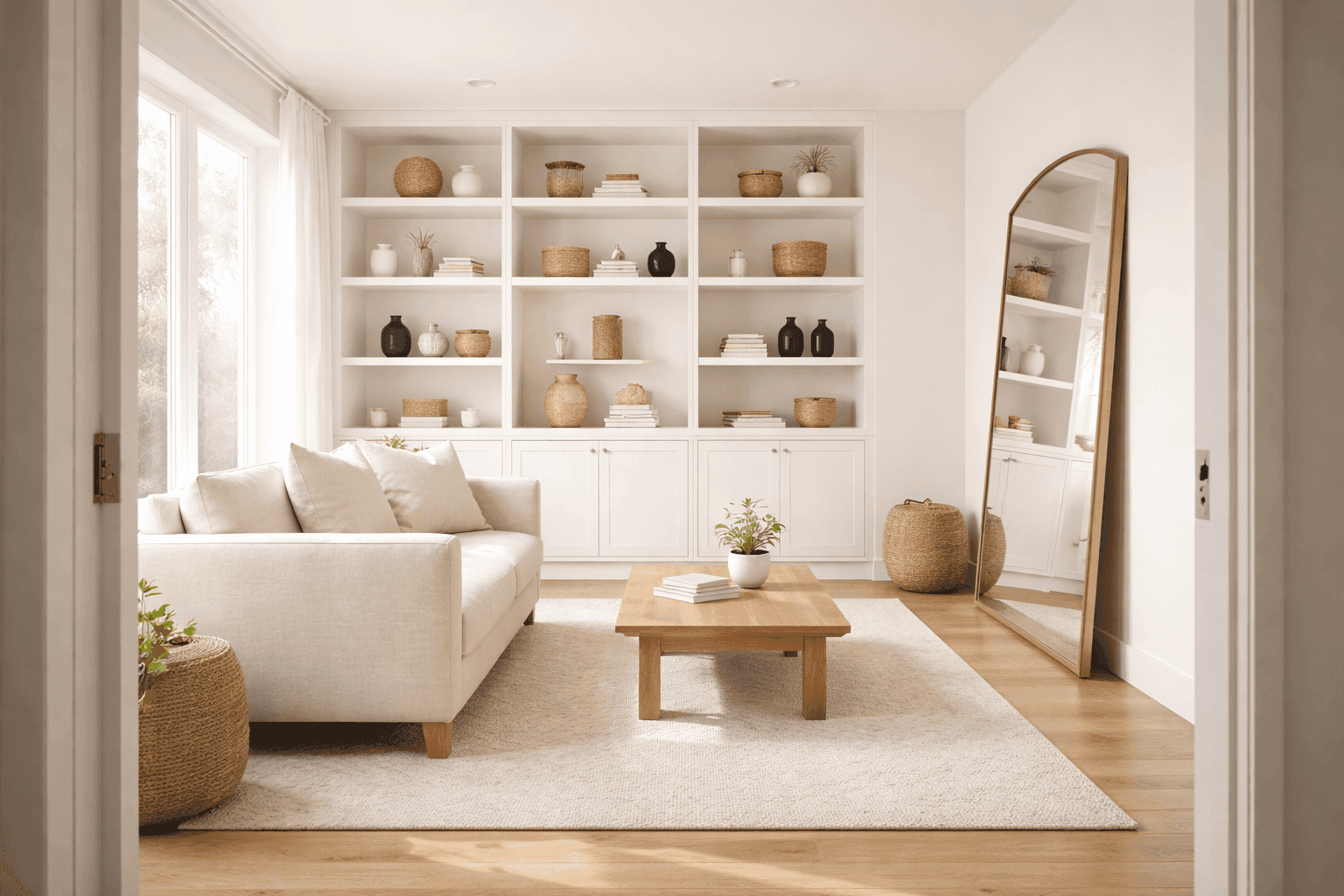
- Place a large mirror on the primary wall opposite a window in any small room. Mirrors reflect light and double the perceived depth of a space — it's one of the oldest designer tricks for a reason and still works every single time.
- Go vertical with storage wherever possible. Floor-to-ceiling built-in shelves or tall bookcases draw the eye upward, signal abundant storage, and keep floor space clear — which makes rooms photograph and feel much larger.
- Paint darker rooms in a warm white. Many sellers resist this because they love their colored walls, but buyers don't — and a dark room consistently appraises and photographs as smaller than it is. Warm whites add perceived square footage.
- Float furniture away from walls. This sounds counterintuitive in small spaces, but pulling sofas and chairs 6–12 inches from the wall creates breathing room that makes the overall space feel larger and more intentionally arranged.
- Add crown molding to rooms without it. This architectural detail creates a visual connection between wall and ceiling, makes ceilings appear higher, and signals quality craftsmanship to buyers and appraisers alike.
- Maximize natural light by removing heavy window treatments and keeping sills clear. If privacy isn't a concern, bare windows let in dramatically more light and make spaces feel open and connected to the outside.
- Eliminate visual clutter at floor level — clear the floor entirely in smaller rooms, use under-bed and under-stair storage, and make sure furniture legs are visible (not hidden by low-hanging upholstery). Floor visibility expands the perceived size of any room.
Interior designers talk about "borrowed space" — visual techniques that make your eye perceive a room as extending beyond its actual boundaries. The most powerful of these is continuous flooring: if you use the same flooring material across open-plan spaces without transitions or thresholds, the eye reads the entire area as a single unified space rather than two smaller ones. If you're replacing flooring before listing and you have an open-plan kitchen and living area, running a single consistent material throughout both spaces — without a transition strip — is one of the highest-ROI single moves you can make for perceived square footage.