Smooth Operator: Fix Stubborn Sticking Drawers for Good
Stop wrestling with resistant drawers and restore effortless gliding in under 20 minutes
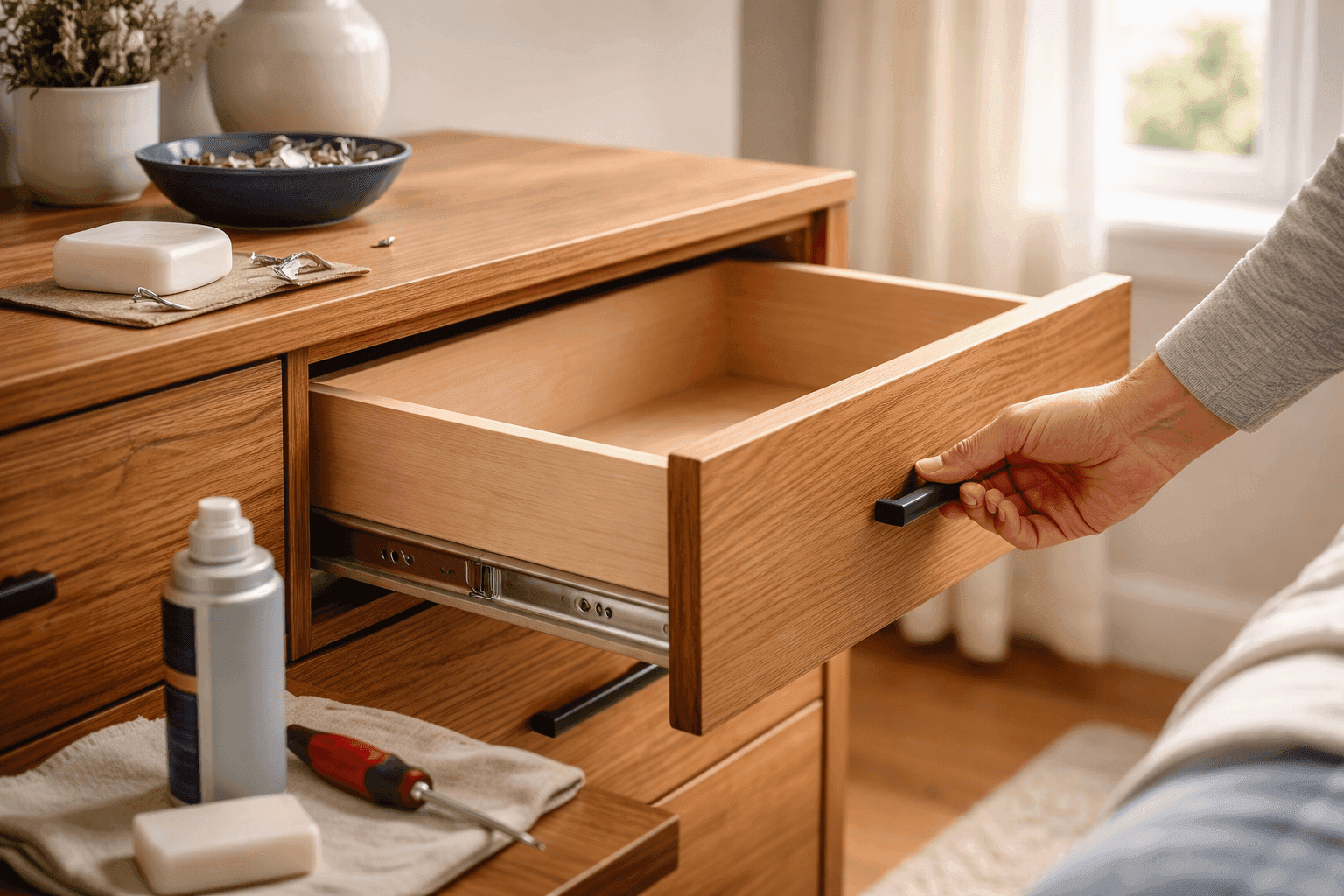
Few household annoyances are as persistent and frustrating as drawers that refuse to open smoothly, requiring a two-handed yank every single time you need fresh socks or kitchen utensils. The good news is that sticking drawers are almost never a sign of serious furniture damage—they're usually simple friction or alignment problems that you can diagnose and fix yourself in about 10-20 minutes per drawer using supplies you probably already have. Whether you're dealing with old wooden drawers that have swollen with humidity, metal slides caked with years of dust and debris, or ball-bearing mechanisms that have lost their glide, there's a straightforward solution that doesn't require replacing the entire piece of furniture. I've fixed dozens of sticky drawers over the years, and I can tell you that the satisfaction of transforming a frustrating daily struggle into effortless one-finger opening is absolutely worth the small investment of time. Let's diagnose what's causing your specific drawer drama and get you back to smooth, frustration-free access to your stuff.
What You'll Need
- For Wooden Drawers: Bar of plain soap, white candle, or paraffin wax for natural lubrication (under $3)
- For Metal Slides: Silicone spray lubricant specifically (NOT WD-40, which attracts dust), vacuum with brush attachment for cleaning debris
- Basic Tools: Phillips and flathead screwdrivers for tightening loose hardware, flashlight for inspecting dark cabinet interiors
- For Adjustments: Thin cardboard pieces for shimming, level tool to check alignment, pencil for marking problem areas
- For Swollen Wood: 120-grit sandpaper or sanding block, clean rag, optional dehumidifier for long-term moisture control
- For Ball-Bearing Slides: Light machine oil or 3-in-1 oil, cotton swabs for precise application, old toothbrush for cleaning bearings
Step-by-Step Diagnosis & Fixes
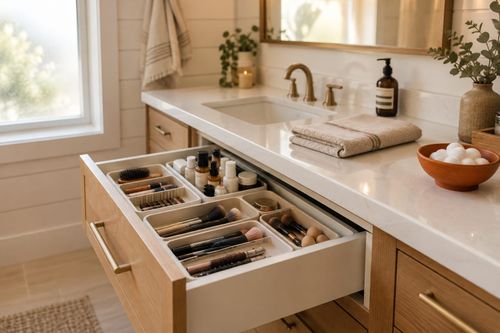
- Remove the drawer completely by pulling it all the way out and either lifting up to release from slides, or pressing the release tabs on modern ball-bearing mechanisms—inspect everything with good lighting to identify your specific issue.
- Identify your drawer type and problem: wooden drawers with no slides show shiny wear spots where wood rubs wood, metal slides accumulate dust and debris, ball-bearing slides make grinding noises, sagging drawers scrape the bottom of the opening.
- For wooden drawer friction, rub those shiny contact points generously with bar soap, candle wax, or paraffin—the waxy coating reduces friction dramatically and lasts for months with this old-school carpenter's trick.
- For metal slide mechanisms, vacuum out all the accumulated dust, lint, and debris from both the drawer-mounted slides and cabinet-mounted tracks, then spray sparingly with silicone lubricant and wipe away excess.
- Tighten every screw you can find on both the drawer box itself and the slide mechanisms, because loose hardware allows wobbling and misalignment that creates sticking and scraping problems.
- Check slide alignment using a level on the cabinet-mounted tracks—if they're not parallel to the floor, use thin cardboard shims behind the mounting screws to correct the angle and eliminate binding.
- For humidity-swollen wooden drawers, lightly sand the areas that show wear marks or rub marks, removing just enough material to allow clearance—work slowly and test frequently to avoid removing too much wood.
- For ball-bearing slides, clean the tiny bearings with an old toothbrush and cotton swabs, then add just one drop of machine oil to each bearing cluster—too much oil attracts dust, so less is definitely more here.
Here's a professional furniture restoration trick that prevents future sticking problems: after you've fixed the immediate issue, take photos of the slide mechanisms with your phone and set a calendar reminder for six months from now to perform preventive maintenance. During this quick check-up, vacuum the slides, reapply lubricant where needed, and retighten any screws before they become loose enough to cause problems. This proactive approach—which takes maybe 5 minutes per drawer twice a year—prevents the gradual degradation that turns smooth-gliding drawers into sticky nightmares over time. Professional cabinet makers know that the real secret to furniture that works beautifully for decades isn't just quality construction, it's consistent basic maintenance that keeps moving parts moving smoothly. Think of it like changing your car's oil: a small, regular investment that prevents much bigger headaches down the road.