Smooth Operator: Fix Sticky Drawers in 5 Minutes
A birthday candle or a bar of soap is all that stands between you and drawers that glide open effortlessly every single time
There are few household annoyances more disproportionately infuriating than a drawer that sticks — the kind you have to yank open with both hands, that judders and catches halfway, or that requires a shoulder-check to close properly. The deeply satisfying truth is that most sticky wooden drawers have a fix so simple it almost feels like cheating: rub a candle or a bar of soap along the contact surfaces and the problem is gone in about five minutes without disassembling anything, sanding anything, or spending more than a dollar or two. This works because wood swells with humidity and age until friction builds up at the contact points, and a thin layer of wax or soap reduces that friction so completely that even severely sticky drawers often glide smoothly on the first test pull. It's the kind of fix that makes you feel like you've been dramatically overcomplicating home maintenance for years — because in this particular case, you probably have been.
What You'll Need
- The Lubricant — Pick One
- White or ivory candle wax — a plain taper candle, pillar candle, or even a birthday candle works perfectly and costs next to nothing. White wax is ideal because it won't leave visible residue on light-colored wood
- Bar soap — a standard bar of Ivory, Dial, or any plain unscented bar soap is an excellent alternative that most people already have in the house. Avoid heavily moisturizing soaps with added oils that can leave sticky residue over time
- Beeswax block or furniture wax — a more premium option that lasts longer and feels silkier than paraffin candle wax, available at hardware stores for ~$5–$8 and lasting for dozens of drawer treatments
- Paste wax such as Johnson's Paste Wax or Renaissance Wax — the professional furniture restorer's choice for antique and high-quality wooden drawers where longevity and finish protection both matter
- Diagnosis Tools
- A flashlight for examining drawer runners and sides for wear marks, splits, or debris that might be contributing to the sticking beyond simple friction
- A pencil — rubbing a pencil along runners works as a graphite lubricant for very mild sticking and is worth trying before reaching for wax on newer or lighter drawers
- Cleaning Supplies
- Dry cloth or paper towel for wiping runner surfaces clean before applying lubricant
- Soft brush or compressed air for clearing dust and debris from deep inside the runner channel
- Fine-grit sandpaper (220 grit) for addressing any rough raised grain or splinters on runners before waxing — only needed if the runner surface feels visibly rough to the touch
- For Stubborn Cases
- WD-40 or a dry PTFE lubricant spray for metal drawer slides that have corroded or seized — wax and soap are for wood-on-wood friction only and won't help metal hardware
- Wood glue and clamps for any runner that has split or separated from the drawer body — a split runner needs repair before lubrication or it will just continue splitting under use
How to Fix It
- Pull the drawer out completely and set it on a flat surface so you can examine the full length of all contact surfaces — the bottom runners on the drawer itself, the side edges where they contact the cabinet opening, and the fixed runner channels inside the cabinet. Most sticky drawers show obvious wear marks or shiny friction zones that tell you exactly where the contact problem is concentrated before you apply a single thing.
- Clean all contact surfaces with a dry cloth before applying any lubricant — dust, debris, and old wax buildup create a gritty surface that makes friction worse rather than better, and applying fresh wax over a dirty runner just locks the grit in place. A soft brush or a quick blast of compressed air clears the narrow channel inside the cabinet where the drawer runner sits, which is the spot that collects the most debris and the hardest to reach with a cloth.
- Identify the friction zones precisely by looking for shiny, worn, or discolored areas on the drawer runners and sides — these bright spots are where wood-on-wood contact is highest and where your lubricant application will have the most immediate effect. On most sticky drawers the friction is concentrated at the front corners of the runner where the drawer tilts slightly under the weight of its contents, so pay extra attention to those areas.
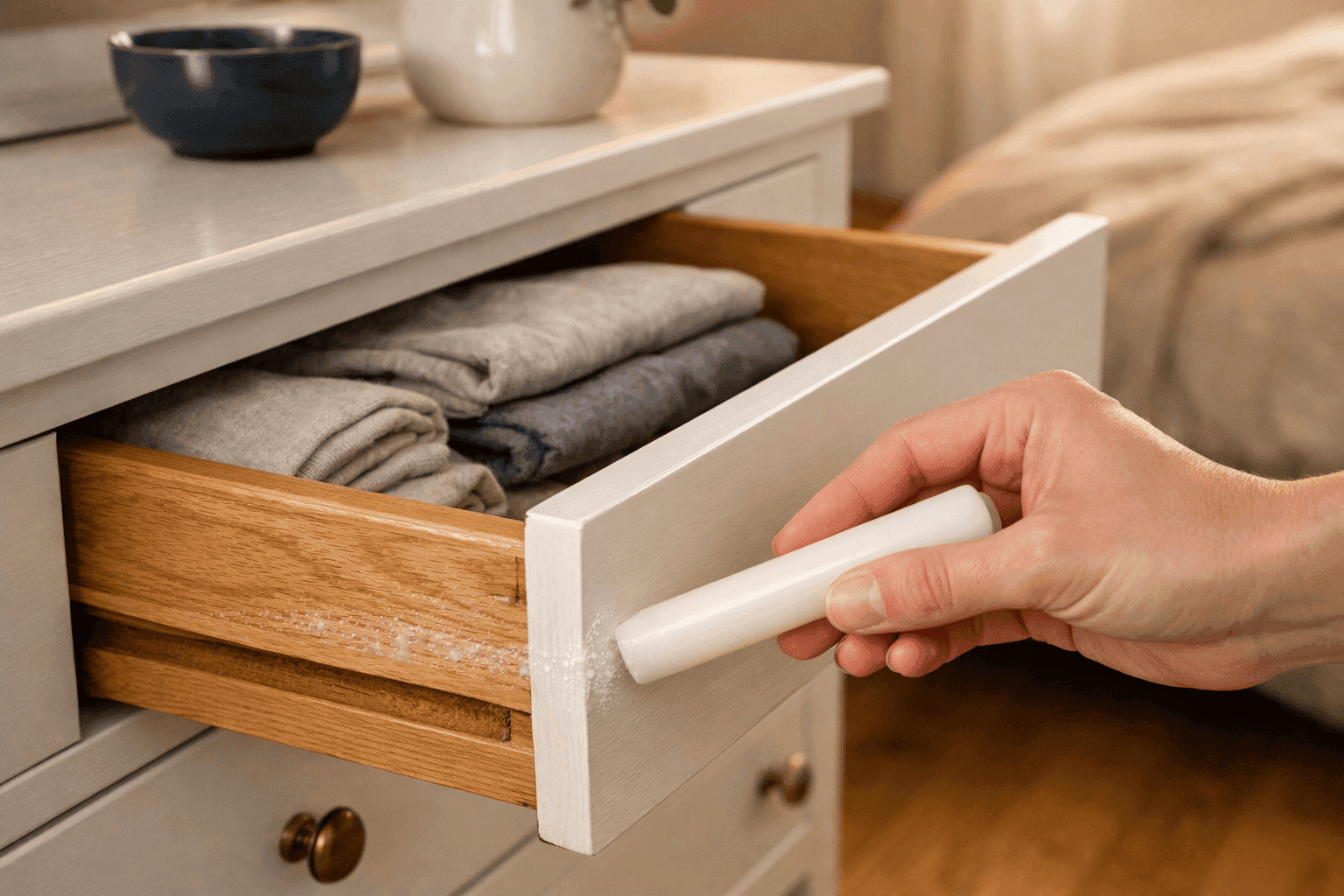
- Apply your lubricant by rubbing your candle, bar of soap, or wax block firmly and repeatedly along the full length of every contact surface — the bottom runners on the drawer, the side edges if they contact the cabinet opening, and the fixed runner channels inside the cabinet. Press with enough pressure to transfer a visible layer of wax or soap to the wood surface rather than just ghosting lightly over it — you should be able to see a faint waxy sheen on the wood when you're done.
- Slide the drawer in and out several times immediately after applying the lubricant — this working motion spreads and seats the wax into the wood grain more effectively than any amount of rubbing in place, and the improvement is usually immediate and dramatic on the first few test pulls. If the drawer still catches noticeably in one spot after five or six test cycles, pull it out again and apply an extra layer of wax specifically to that friction zone.
- Address any rough grain or splinters on the runner surface if the drawer still catches after waxing — lightly sand any raised grain with 220-grit paper along the direction of the wood grain, wipe off all dust, and apply a second round of wax before testing again. A runner that feels visibly rough or splintery to the hand won't respond fully to wax alone and needs that light sanding step first to give the lubricant a smooth surface to do its job on.
- Check for underlying causes if the drawer continues to bind after two rounds of wax and light sanding — seasonal wood swelling from high humidity is the most common culprit and will continue reversing and returning with the seasons, meaning you may simply need to repeat this five-minute treatment once or twice a year. A drawer that binds only in summer and glides freely in winter is almost always a humidity issue, not a structural one, and wax is the correct long-term maintenance tool for it.
- Treat every drawer in the piece while you have the wax out — even drawers that are currently gliding fine will benefit from a preventative coat, and the five extra minutes it takes to do the whole dresser or cabinet means you won't be back here pulling out another drawer next month. Preventative waxing on wooden drawer runners twice a year is the kind of simple maintenance habit that keeps furniture functioning smoothly for decades.
Furniture conservators who work on antique and high-value wooden pieces never use paraffin candle wax on fine furniture drawers — not because it doesn't work, but because paraffin stays soft and can transfer onto clothing and contents over time. For dressers holding good clothing, linen, or anything light-colored, use a paste wax like Johnson's Paste Wax or Renaissance Wax instead — it dries to a hard, non-transferable film that lubricates just as effectively and won't leave white smears on your cashmere sweaters. For kitchen drawers near heat sources, skip soap entirely since it can go tacky in warm humid conditions, and use a dry PTFE spray or paste wax that stays stable at higher temperatures. One more thing the pros always check before reaching for the wax: confirm the drawer bottom hasn't bowed upward in the center from humidity, because a bowed drawer bottom drags against the cabinet shelf beneath it no matter how well you wax the runners — and the fix for that is simply flipping the drawer bottom panel over so the bow faces downward and clears the shelf.