Shell Yeah: Grow Seedlings in Eggshell Starters
Save your eggshells, nestle them in the carton, add a pinch of seed starting mix and one seed — the completely free seed starting system that plants directly in the ground, shell and all
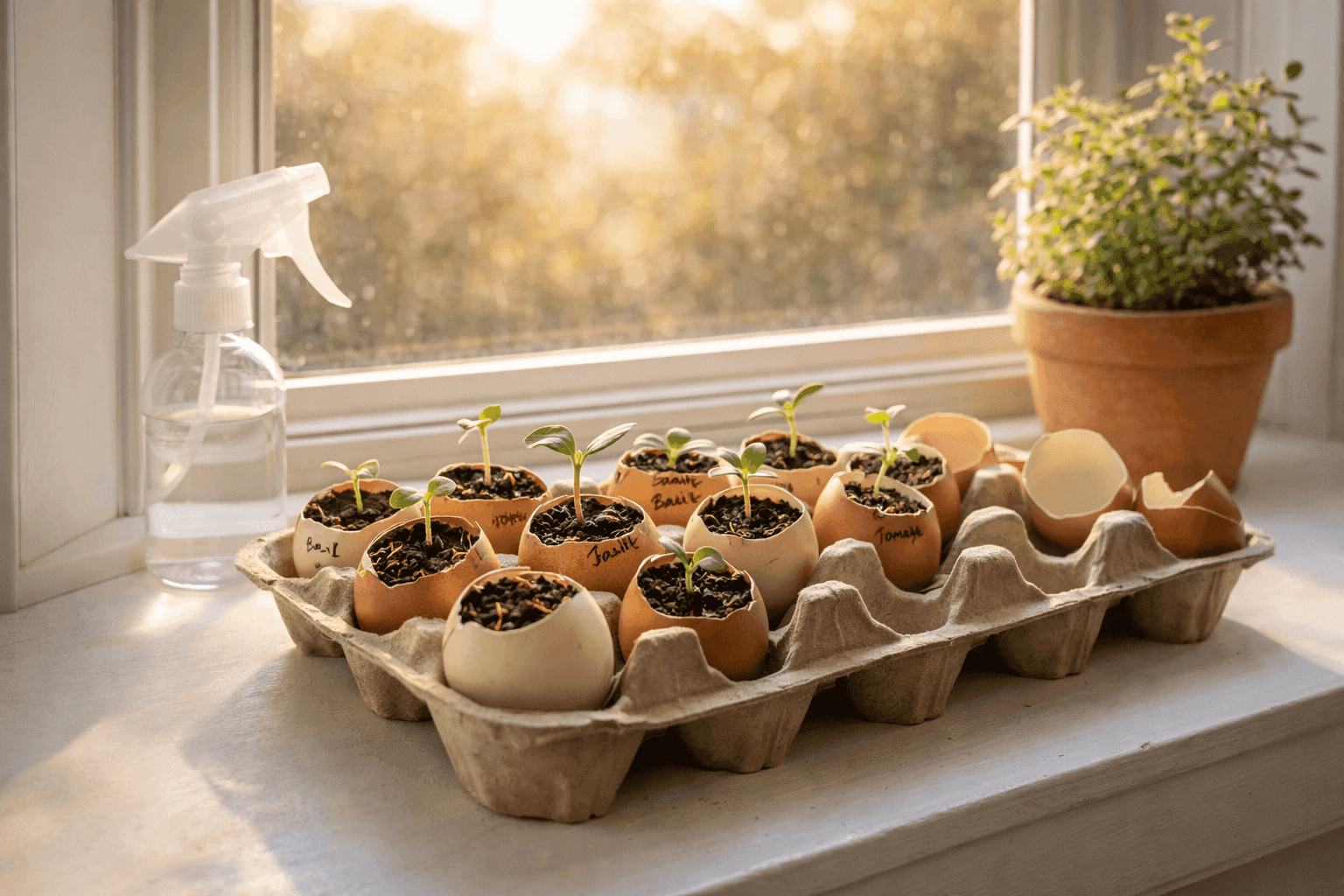
Most seed starting systems cost money — plastic cell trays, peat pots, biodegradable plugs — and produce containers that either need to be washed and stored between seasons or thrown away after a single use. Eggshell seed starters cost exactly nothing, require zero storage space between seasons, and are the only seed starting container that actually improves your soil as it decomposes after transplanting. The calcium in an eggshell breaks down slowly in the soil over the weeks after planting, providing a micronutrient that tomatoes, peppers, and leafy greens use actively and that prevents the blossom end rot that plagues tomato crops grown in calcium-deficient soil. The egg carton holds everything in place, keeps the shells upright during watering, and goes directly in the compost at transplanting time. There is genuinely no setup cost, no cleanup, and no waste — just eggs you were going to crack anyway, saved from the recycling bin and repurposed into the most charming seed starting tray in any windowsill garden.
What You'll Need
- The Eggshells
- Eggshells cracked carefully at the top to preserve as much shell depth as possible — tap the narrow top end of the egg firmly against a counter edge rather than cracking across the middle, which sacrifices half the shell depth you need for adequate soil volume. The larger the shell half you retain, the more root space the seedling has before transplanting
- Save shells over several weeks before planting season by rinsing each shell immediately after use, letting it air dry completely on the counter, and storing the dry shells back in the egg carton — a dozen shells collected over a few weeks produces a full carton of starters without requiring any single large egg-cooking session
- Standard large chicken eggs produce shells with approximately 2–3 tablespoons of soil capacity — sufficient for most herb seeds and small vegetable starts like tomatoes, peppers, and basil that will be transplanted before their roots become seriously pot-bound
- Duck eggs and goose eggs produce significantly larger shells that hold more soil and work beautifully for seedlings that need slightly more root room before transplanting — worth seeking out at farmers markets if you're starting larger seeds
- The Container
- The original cardboard egg carton — the natural companion to eggshell starters, holding each shell upright and stable during watering and providing a carrying tray for moving the whole batch from windowsill to garden at transplanting time. Cardboard cartons go directly in the compost; plastic cartons can be reused for the next seed starting session
- Styrofoam egg cartons are the least ideal option — they don't compost, can't be planted directly, and offer no advantage over cardboard for seed starting purposes
- Stacking two cartons — one beneath the other — provides a slightly more stable base if the filled shells feel tippy on an uneven windowsill surface
- Seed Starting Mix
- Seed starting mix rather than potting soil or garden soil — seed starting mix is specifically formulated to be lightweight, sterile, and fine-textured for optimal germination, while potting soil is too heavy for eggshell volume and garden soil compacts and drains poorly in a confined space — ~$5–$8 for a small bag that fills many cartons of eggshells
- Moisten the seed starting mix slightly before filling the shells — damp mix settles around seeds more effectively than dry mix that shifts during the initial watering and can displace tiny seeds from their correct planting depth
- Fill each shell to within ¼ inch of the top rim to leave room for the seed and a light covering of mix without overflow during watering
- Best Seeds for Eggshell Starting
- Tomatoes — the single best eggshell starter candidate, benefiting directly from the calcium the decomposing shell adds to the soil and producing vigorous starts in the 4–6 weeks before they outgrow the shell's root space
- Basil, parsley, and chives — fast-germinating, shallow-rooted herbs that thrive in eggshell volume and transplant beautifully when the shell is cracked and planted whole
- Peppers and eggplant — slow-growing crops that benefit from the early start an indoor seed starting system provides and stay within eggshell root capacity long enough to develop a strong transplant
- Avoid direct-sow crops like carrots, radishes, and beans that don't transplant well regardless of container — the eggshell advantage is in the biodegradable transplant-ready container, which offers no benefit to crops that prefer to stay where they're sown
How to Set It Up
- Crack eggs at the narrow top end from the very first egg you save — hold the egg with the narrow end pointing up, tap it firmly against a hard counter edge to create a crack across the top third of the shell, and peel away the cracked top section to leave the largest possible shell half intact. The extra inch of shell depth you preserve by cracking high rather than across the middle doubles the soil volume available to the seedling root and meaningfully extends how long the seedling can stay in the shell before transplanting.
- Rinse and dry every shell immediately after cracking — hold each shell under running water, swirl briefly to rinse the interior, then set it open-end-down on a clean cloth or paper towel to drain and air dry completely before storing it back in the carton. Wet shells stored in a closed carton develop mold on the interior surface within a day or two, and moldy shells introduce fungal spores into your seed starting mix that can cause damping off in young seedlings. A dry shell is a clean shell — this step takes ten seconds per egg.
- Use a pin or toothpick to poke a small drainage hole in the bottom of each shell before filling — place the shell curved-side-down on a hard surface and press a pushpin firmly through the shell base to create one or two small drainage holes. Eggshells without drainage holes hold standing water at the base of the soil column that promotes root rot in seedlings that are watered regularly — the drainage hole is what makes the difference between healthy seedling development and mysterious early damping off that seems to have no cause.
- Fill each shell with moistened seed starting mix to within ¼ inch of the rim, pressing the mix very gently into the shell so it makes contact with the curved interior walls rather than bridging across the opening with an air pocket below. A shell that's properly filled feels slightly heavy and the mix surface is level with good contact all the way to the shell walls — an improperly filled shell has a visible gap between the mix and the shell at the base, which means seedling roots growing downward reach an air pocket rather than soil.
- Plant one to two seeds per shell at the correct depth for the variety — most vegetable seeds plant at a depth equal to two to three times their diameter, which for tomato and pepper seeds means barely covered, and for larger seeds like squash and cucumber means pressed in to about ¼ inch below the surface. Cover the seed with a pinch of dry mix, press very gently to ensure good seed-to-mix contact, and label each shell with the variety name using a permanent marker directly on the shell — eggshell labels written with permanent marker remain legible through regular watering for the full seed starting period.
- Water with a gentle mist or a small turkey baster rather than pouring water directly onto the mix surface — the small soil volume in an eggshell is easily overwhelmed by even a gentle stream from a watering can, which displaces seeds and creates channels through the mix rather than moistening it evenly. A spray bottle set to fine mist or a few drops from a turkey baster per shell delivers exactly the right amount of moisture without disturbing the seed or compacting the mix surface into a crust that seedling stems can't penetrate during emergence.
- Place the filled carton in the brightest windowsill available and cover loosely with plastic wrap until germination — the plastic wrap creates a humidity tent that maintains consistent moisture at the seed level during the days before germination when the mix must stay evenly damp without any additional watering. Remove the plastic wrap as soon as the first seedling emerges and move the carton to bright direct sun for a minimum of six hours daily — seedlings that germinate under the humidity tent and then stay covered too long become etiolated (stretched and leggy toward the light) within days.
- Transplant by cracking and planting shell and all — when seedlings have developed their first true leaves and outdoor temperatures are appropriate for the variety, take the full carton outside, hold each shell over the prepared planting hole, crack the bottom of the shell by squeezing gently so several small cracks run across the base, and plant the cracked shell at the correct depth with the seedling crown at soil level. The cracked base allows roots to grow directly into the surrounding soil immediately after planting, while the decomposing shell walls release calcium gradually over the following weeks — the cleanest, least root-disturbing transplanting method available in any seed starting system.
Market gardeners who start hundreds of tomato and pepper seedlings each season use a hardening-off technique with eggshell starters that produces significantly more resilient transplants than seedlings moved directly from a warm windowsill to a garden bed — and it takes almost no additional effort when the starters are in their portable egg carton tray. Beginning one to two weeks before the intended transplant date, move the full carton outside to a sheltered spot in dappled shade for two to three hours on the first day, returning it inside before temperatures drop in the evening. Increase outdoor exposure by one to two hours each subsequent day and gradually move the carton from shade into progressively more direct sun over the course of the full two weeks. By the final day of hardening off, the seedlings have been acclimated to outdoor light intensity, temperature fluctuation, and wind movement in gradual stages that allow the plant's cellular structure to thicken and strengthen rather than experiencing the shock of immediate full outdoor exposure. Seedlings hardened off this way show visibly thicker stems, darker leaf color, and dramatically better survival and establishment rates after transplanting than seedlings moved directly from indoor to outdoor conditions — and the portable egg carton makes the daily outdoor move a ten-second task rather than a production.