Sentimental Upcycle: Turn Outgrown Crib Into Toddler Art Desk
Give sentimental baby furniture new life as a perfectly-sized creative workspace for growing artists
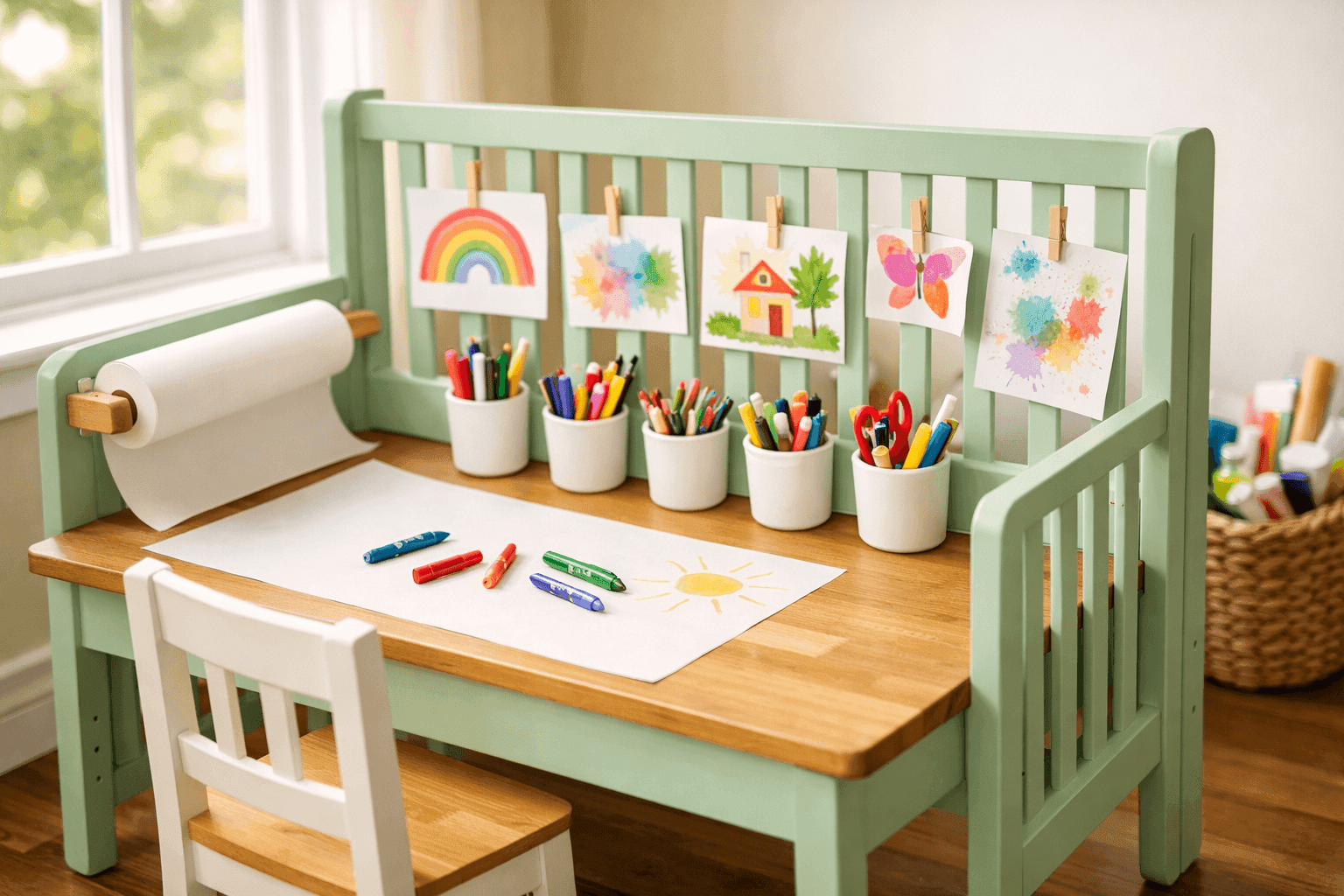
There's something genuinely emotional about that moment when you realize your baby has outgrown their crib and you're faced with either selling a piece of furniture loaded with memories or storing it in the basement indefinitely where it serves no purpose except taking up space and making you feel vaguely guilty. This crib-to-desk transformation solves that dilemma beautifully by giving sentimental furniture meaningful new life as a creative workspace that's absolutely perfectly sized for toddlers and preschoolers who need art stations at their height rather than struggling to reach adult desks. The beauty of this project is that cribs are already built to ideal dimensions—the height works perfectly for little ones sitting in kid-sized chairs, the slatted sides that once kept babies safely contained now become built-in organizers for displaying artwork and storing supplies, and the sturdy construction means this desk will handle years of enthusiastic crayon scribbling and paint splattering. I've helped several friends make this transformation, and there's something really special about watching a child create their first drawings at a desk that was once their baby bed—it's a tangible symbol of growth that keeps family history alive in functional, daily-use furniture rather than packed away in storage. The entire conversion costs maybe $15-25 in materials for the desktop surface and hardware, takes an afternoon to complete, and creates a custom art station that would cost $150-300 if you bought something similar new.
What You'll Need
- Outgrown Crib: Standard crib with removable sides (most modern cribs designed for conversion)—ensure it's structurally sound with no loose joints or cracked wood
- Desktop Surface: Plywood sheet or butcher block cut to fit crib dimensions (approximately 28" x 52" for standard cribs, $10-20 at home improvement stores)
- L-Brackets: 4-6 heavy-duty metal L-brackets for securing desktop to crib frame ($8-12 for set)
- Screws: Appropriate length wood screws for attaching brackets to both desktop and crib frame
- Paint or Stain: Non-toxic, child-safe paint in bright colors, or wood stain for natural finish ($8-15 per can)
- PVC Pipe Sections: 3-4 inch diameter PVC cut into 4-6 inch lengths for cup-style marker and crayon holders (under $5)
- Paper Roll Holder: Dowel rod or tension curtain rod for mounting butcher paper roll ($5-8)
- Hooks: Adhesive or screw-in hooks for hanging art smocks, bags, or small supply baskets on slatted side
- Sandpaper: 120-grit and 220-grit for smoothing any rough edges and preparing surfaces for paint
- Tools: Drill with bits, screwdriver, saw for cutting desktop to size if needed, paintbrushes
Step-by-Step Instructions
- Remove one long side of the crib completely according to manufacturer's instructions, keeping all hardware in case you ever want to restore it to original configuration—this opens up the workspace while leaving one slatted side as your built-in organizer.
- Position crib flat so the remaining slatted side stands upright at the back like a desk hutch, and the open side faces forward where your child will sit—test stability before proceeding to ensure it doesn't tip.
- Measure and cut desktop to fit the crib base dimensions precisely, allowing slight overhang at the front edge for comfortable seating but keeping it flush with the back where it meets the upright slatted side.
- Sand all surfaces thoroughly including desktop edges and any crib parts that might have rough spots from disassembly, because toddler hands and faces will touch every surface constantly during creative play.
- Paint or stain everything using non-toxic, child-safe finishes in bright colors that inspire creativity, or natural wood tones for a more sophisticated look—let cure completely per manufacturer's directions before assembly.
- Attach desktop securely using L-brackets spaced evenly underneath, screwing firmly into both the desktop and crib frame to create a stable work surface that won't shift during enthusiastic art-making.
- Install PVC cup holders by cutting sections to desired height and attaching to desktop edge or slatted back using strong adhesive or screws, creating perfect compartments for markers, crayons, and paintbrushes.
- Add paper roll holder by mounting a dowel rod across one end of the desk where butcher paper can unroll over the work surface for endless drawing space, securing with brackets or drilling through slatted sides.
- Attach hooks and accessories to the upright slatted back for hanging artwork with clothespins, small baskets for supplies, or art smocks—this vertical organizer space is what makes this conversion so much better than a standard desk.
Here's the brilliant upgrade that takes this project from functional to truly special: before you paint or finish the crib, have your child make hand prints or foot prints on the underside of the desktop surface in their favorite color, adding the date and their age. Years later when they've outgrown the desk and you're deciding whether to pass it on or store it, you'll lift the desktop and find those tiny prints preserved as a permanent reminder of when they were small enough to use this furniture. Professional furniture restorers and sentimental parents know that hidden personal touches turn functional furniture into genuine family heirlooms worth preserving. Take this concept further by keeping a small section of the original crib mattress support or a few of the decorative spindles, labeling them with permanent marker noting "Baby Bed 2020-2023, Art Desk 2024-2027" so future generations understand the piece's journey through your family's life. This documentation strategy transforms ordinary furniture into storytelling objects that carry emotional weight beyond their utilitarian function, which is exactly what makes family heirlooms valuable—they're not just furniture, they're physical records of your family's history.