Seed Savings: Harvest Wildflower Seeds for Future Pollinators
Turn summer's spent blooms into next year's butterfly and bee haven while saving money
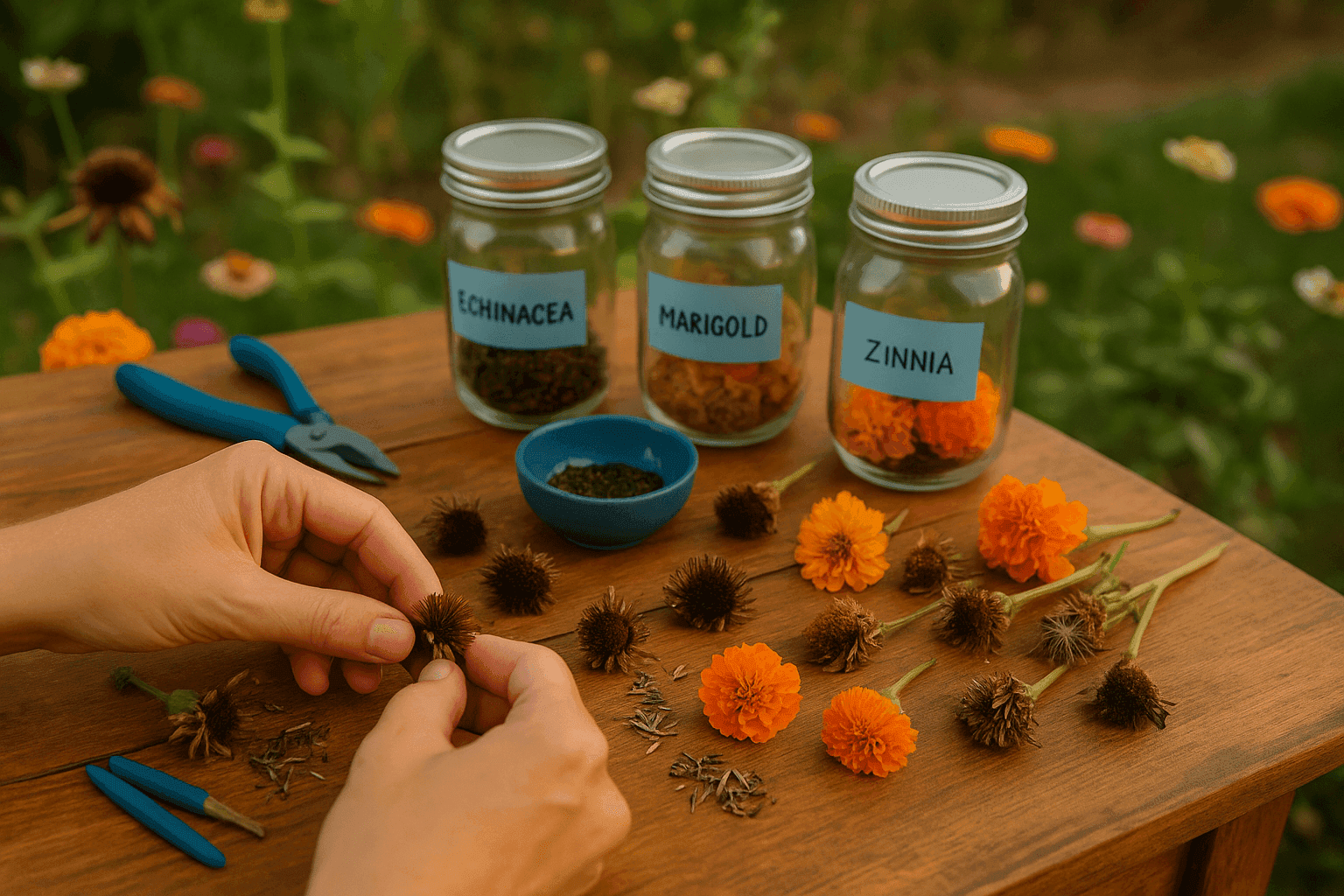
I discovered seed collecting completely by accident when I was deadheading my zinnias and noticed how full of seeds they were – suddenly I realized I was throwing away next year's entire flower garden! There's something incredibly satisfying about harvesting seeds from your most successful blooms, knowing you're not just saving money but also preserving the exact varieties that thrived in your specific garden conditions. The process connects you to generations of gardeners who understood that the best plants come from seeds that have proven themselves in your own soil. Plus, there's a wonderful anticipation that builds over winter as you plan where to scatter your collected treasures come spring. What started as a simple curiosity has become one of my favorite late-summer activities, and now my pollinator garden practically plants itself each year with volunteers from my careful seed collecting efforts!
Collection Supplies
- Collection Containers: Small mason jars, paper envelopes, or seedsaving packets ($8-15)
- Gathering Tools: Small scissors, pruning shears for cutting seed heads ($10-15)
- Cleaning Equipment: Fine mesh strainers, tweezers for separating seeds ($5-10)
- Storage Materials: Silica gel packets, airtight containers for long-term storage ($8-12)
- Labeling Supplies: Permanent markers, waterproof labels with plant names and dates ($5-8)
- Drying Setup: Screen or paper towels for air-drying collected seeds ($3-5)
- Total Investment: Under $50 for supplies that save hundreds on future seed purchases
Harvesting Process
- Wait for seed heads to fully mature and dry naturally on the plant
- Choose a dry, sunny morning after dew has evaporated for best seed quality
- Cut seed heads with stems attached, placing immediately in collection containers
- Label each container immediately with plant name, variety, and harvest date
- Dry seeds thoroughly in warm, well-ventilated area for 1-2 weeks
- Clean seeds by separating from chaff and plant material using screens
- Test viability by placing a few seeds in damp paper towel to check germination
- Store in cool, dry, dark location in airtight containers for spring planting
Master gardeners know that the secret to successful seed collecting is timing – harvest too early and seeds won't be viable, too late and they'll have already dispersed. Here's my foolproof test: gently shake the seed head, and if you hear rattling, they're ready! My signature technique is the "paper bag method" for flowers like cosmos and zinnias – slip a paper bag over the seed head, secure with a rubber band, and let them finish drying right on the plant. Pro tip: focus on collecting seeds from your most successful, healthiest plants – you're essentially breeding for traits that work in your specific garden conditions. Also, never collect seeds from hybrid varieties as they won't breed true, but heirloom and open-pollinated flowers will give you identical plants next year!