Screw Hole Salvation: Fix Stripped Cabinet Hardware Fast
Repair loose doors and drawer fronts in 10-15 minutes using simple techniques that restore grip
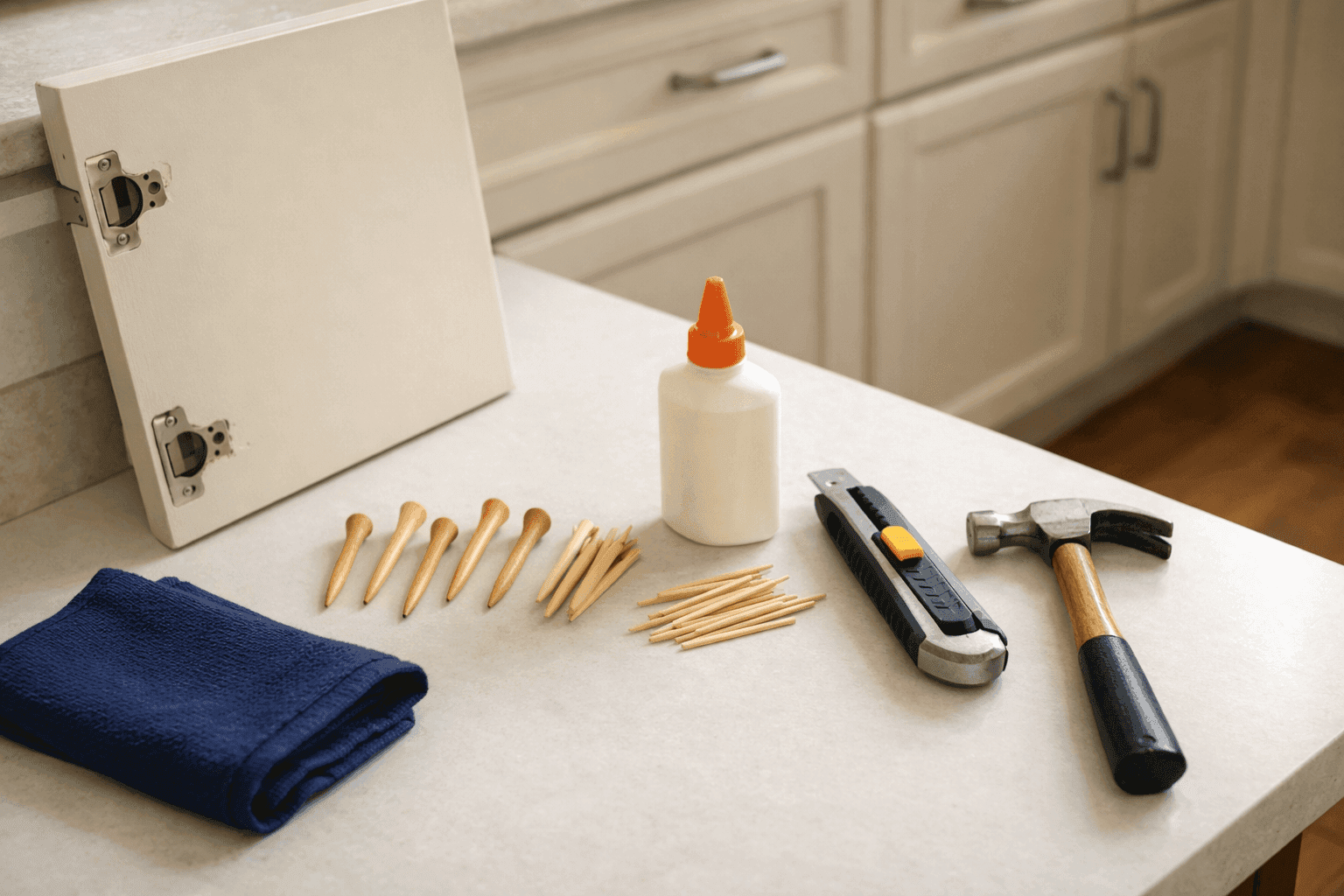
That sagging cabinet door or loose drawer front happens when screw holes get stripped from years of opening and closing, and the frustrating part is the hardware itself is fine—it's just that the wood no longer grips the screws properly. Calling a handyman for this repair costs $75-150 for something that takes them fifteen minutes, and replacing entire cabinets because of loose hardware is absurd when simple fixes exist using items you probably already own. Repairing stripped screw holes takes 10-15 minutes per hole using golf tees, toothpicks, or matchsticks coated in wood glue, creating new material for screws to grab into and restoring tight, secure mounting. This straightforward repair saves hundreds of dollars in professional fees or premature cabinet replacement while teaching you a fundamental fixing skill you'll use repeatedly throughout homeownership. The satisfaction of tightening a door that's been sagging for months and having it stay put is disproportionate to the minimal effort required, proving that not all home repairs need professional intervention.
What You'll Need
- Wood Glue: Standard carpenter's glue for bonding wood filler material
- Filler Material: Golf tees (easiest), toothpicks, or wooden matchsticks for small holes
- Alternative Fillers: Hollow door anchors or two-part epoxy for larger stripped holes
- Cutting Tool: Utility knife or saw for trimming filler material flush
- Drill: For re-creating pilot holes after filler dries
- Screwdriver: Matching your hinge or hardware screws
- Time Investment: 10-15 minutes per stripped hole including drying time
Step-by-Step Method
- Remove the loose hinge or hardware completely so you can access the stripped hole and work comfortably
- Clean out the stripped hole removing any wood debris or old glue that might interfere with your repair
- Apply wood glue generously to a golf tee, several toothpicks, or matchsticks depending on hole size and which filler material you're using
- Insert filler material into the stripped hole, tapping gently with a hammer until snug—golf tees work beautifully because they taper perfectly
- Allow glue to dry completely, ideally overnight but minimum 2-3 hours before proceeding to next steps
- Trim excess filler material flush with the cabinet surface using a utility knife or small saw
- Re-drill a pilot hole through your new wood filler material at the original screw location
- Reinstall hardware by driving screws into the repaired holes which now have solid wood to grip instead of stripped voids
Professional cabinetmakers recommend the golf tee method as most reliable for typical hinge screw holes because tees are pre-shaped to fit snugly and provide substantial material for screws to bite into. For drawer fronts with large stripped holes, two-part epoxy injected into the void and allowed to cure creates rock-solid anchoring that often exceeds original wood strength. If you're dealing with multiple stripped holes on the same hinge, consider repositioning the hinge up or down by half an inch to use fresh, uncompromised wood rather than repairing every hole—sometimes relocation is simpler than repair. When using toothpicks or matchsticks, don't just insert one; pack the hole completely full with multiple pieces coated in glue for maximum strength. The most common mistake is not waiting for glue to fully cure before reinstalling hardware—impatience leads to pulling your repair right back out and starting over. For persistent stripping issues, examine why holes failed originally; overtightening screws during installation causes most stripping, so use appropriate torque when reinstalling to prevent repeating the problem.