Scrap Happy: Transform Fabric Remnants Into Quilted Coasters
Use up fabric scraps while creating colorful functional coasters with simple quilting techniques
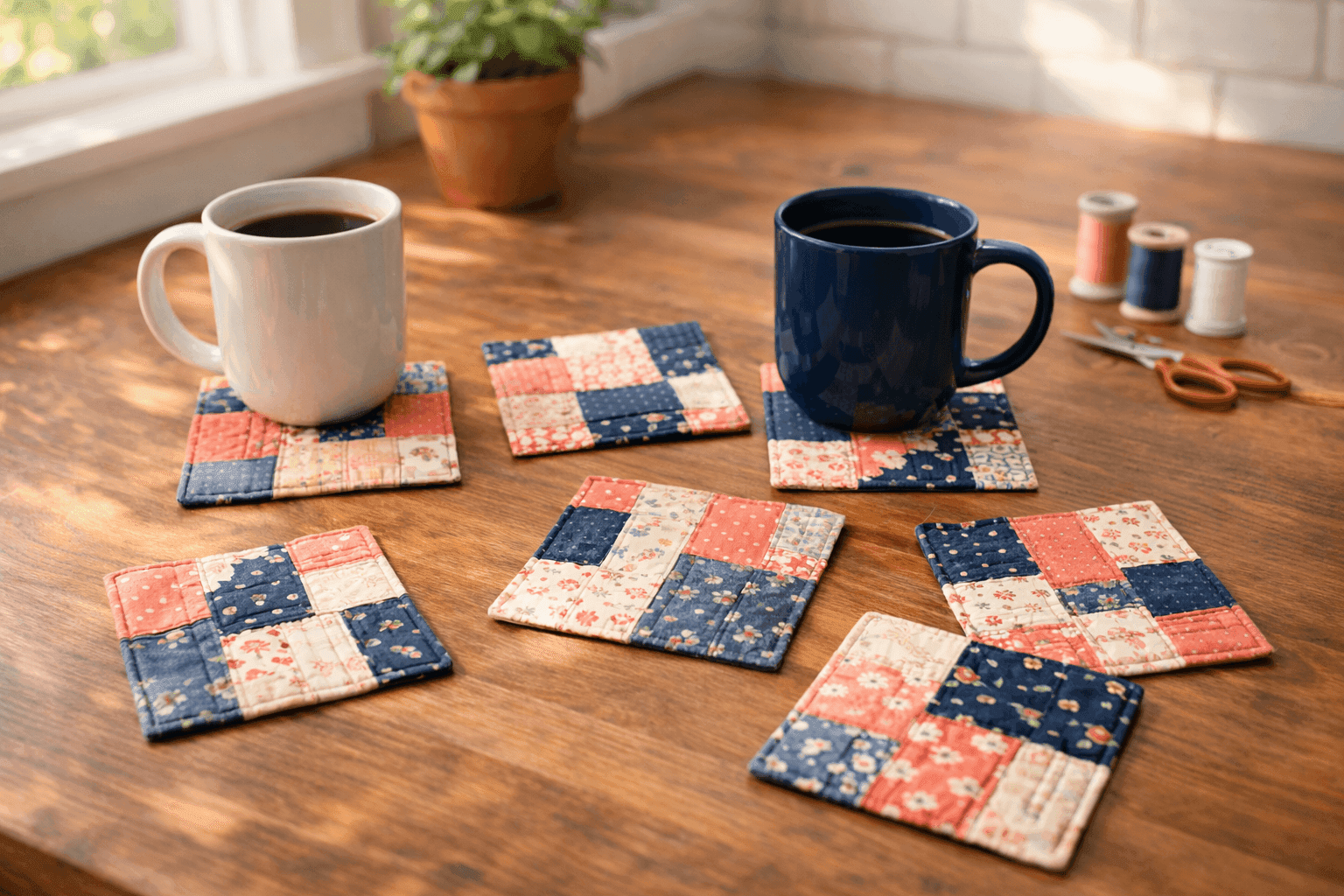
That bag of fabric scraps from past sewing projects sits in your craft closet making you feel guilty because you can't bring yourself to throw away perfectly good material, but you also have no idea what to actually do with random pieces too small for most projects. Store-bought coaster sets cost $15-30 for decent quality, but you literally have the materials to make beautiful quilted versions sitting unused while you keep buying paper napkins to protect your furniture from water rings. Creating fabric scrap coasters takes about two hours to make a set of six, costs absolutely nothing if you're using scraps you already own, and gives you functional kitchen accessories that are genuinely pretty rather than just utilitarian. This project combines practical quilting techniques with sustainable crafting, proving that the most satisfying makes use materials you already have while solving real household needs instead of creating more decorative items that just collect dust.
What You'll Need
- Fabric Scraps: Cotton remnants in coordinating or contrasting colors from your stash
- Batting: Cotton or polyester quilt batting for absorbency and padding ($5-8 for enough to make dozens)
- Backing Fabric: Solid coordinating cotton for coaster backs
- Sewing Supplies: Sewing machine or needle for hand-stitching, thread, pins
- Cutting Tools: Rotary cutter and mat or fabric scissors, ruler for measuring
- Binding: Fabric strips for finishing edges or use scraps cut into bias strips
- Time Investment: 2 hours for set of 6 coasters including cutting and stitching
Step-by-Step Method
- Cut fabric scraps into small squares or strips—2-inch squares work well for patchwork coasters, or cut random shapes for improvisational piecing
- Arrange your fabric pieces into pleasing 4x4 inch compositions, playing with color placement until you have designs you actually like looking at
- Sew pieces together using quarter-inch seams, pressing seams open as you go to reduce bulk in the finished coasters
- Layer your pieced top with batting and backing fabric, creating a quilt sandwich that provides absorbency and structure
- Pin layers together securely to prevent shifting during quilting, placing pins away from where you'll be stitching
- Quilt through all layers using simple straight lines, X patterns, or meandering stitches—this both decorates and holds layers together permanently
- Trim edges even and square, removing any excess batting or backing that extends beyond your pieced top
- Bind raw edges using fabric strips sewn around the perimeter, or simply zigzag stitch edges for a quicker casual finish
Professional quilters recommend making coasters in sets with coordinating but not identical designs—this looks more intentional than trying to create perfectly matching pieces from random scraps. Use the same color palette across all coasters but vary the fabric placement and patterns, which creates cohesion without requiring precise matching. Also, consider making coasters slightly larger than standard 4x4 inches if you regularly use oversized mugs or water bottles that need more coverage. For maximum absorbency, use two layers of cotton batting instead of one, which also creates more substantial coasters that feel quality rather than flimsy. The binding step takes the most time but dramatically improves durability; coasters without bound edges tend to fray after repeated washing even if you use a zigzag stitch. These make excellent last-minute gifts when you need something thoughtful but don't have time to shop—create sets in recipient's favorite colors using your scrap stash and suddenly you have personalized presents that cost nothing but look intentional and handmade rather than just using up your leftovers.