Scent Stories: Handcrafted Spring Diffusers for Every Room
Create custom essential oil blends in decorative vessels that evoke spring's fresh, natural fragrances
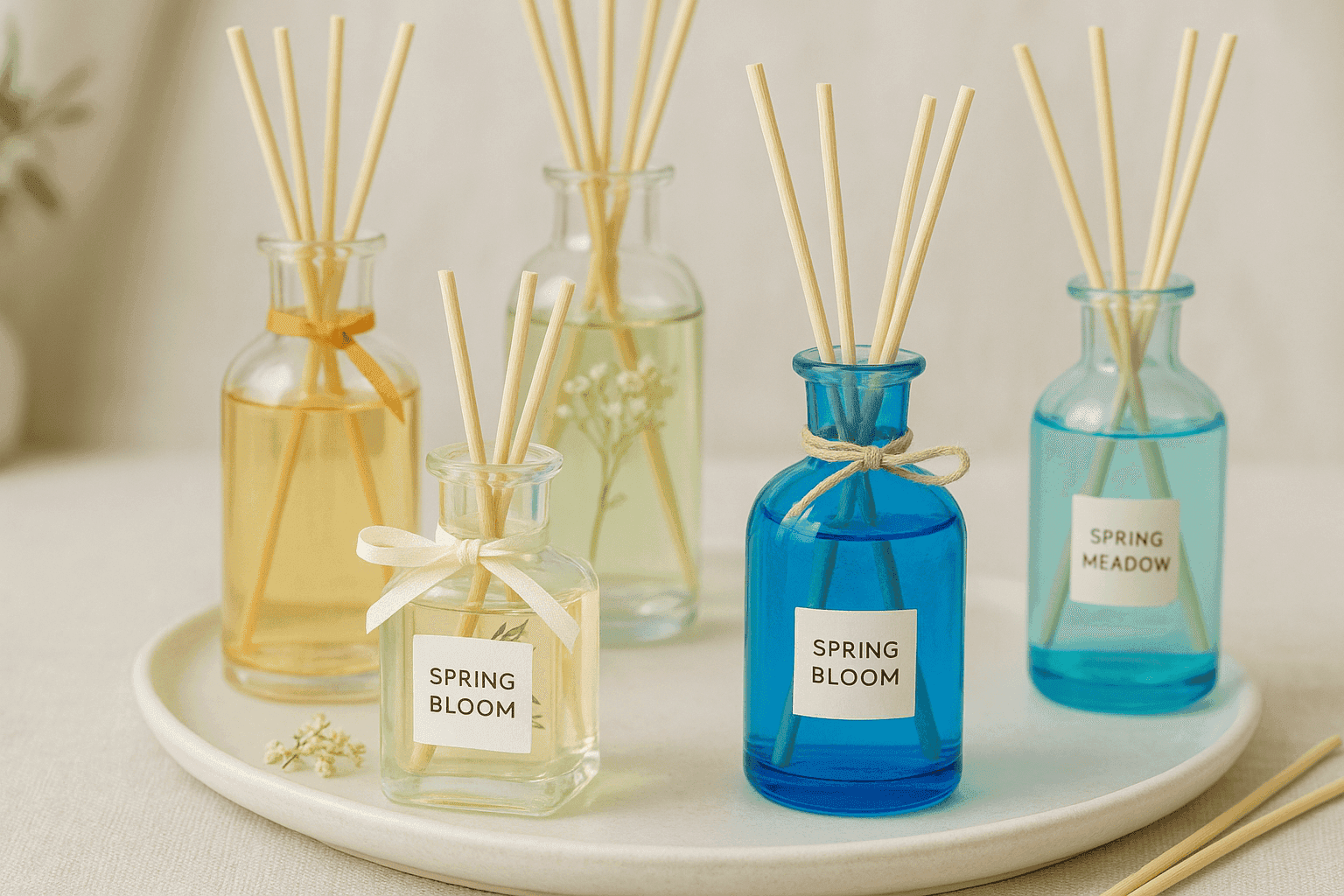
Homemade reed diffusers offer a chemical-free, flame-free way to infuse your home with the authentic scents of spring using natural essential oils. Unlike commercial air fresheners that often contain synthetic fragrances, these DIY diffusers allow you to create custom blends that evoke specific spring memories—from rain-washed gardens to sun-warmed herbs. Beyond their aromatic benefits, these diffusers double as decorative elements when crafted in beautiful vessels that complement your decor. Creating a collection of diffusers with different scent profiles for various rooms lets you subtly transition your home's sensory experience to match the season, engaging one of our most powerful senses—smell—in your spring refresh.
What You'll Need
| Base Materials: |
| • Decorative glass bottles or containers (4-8 oz size) |
| • Reed diffuser sticks (rattan or bamboo) |
| • Carrier oil (fractionated coconut oil or sweet almond oil) |
| • High-proof vodka or rubbing alcohol |
| • Measuring cups and small funnels |
| Spring Essential Oils: |
| • Lemon, lime, or other citrus oils |
| • Lavender for floral notes |
| • Rosemary or basil for herbal freshness |
| • Eucalyptus or mint for energizing scent |
| • Bergamot or grapefruit for uplifting aroma |
| Decorative Elements: |
| • Decorative labels or tags |
| • Thin ribbons or twine |
| • Fresh herbs or dried flowers for bottle decoration |
| • Small decorative stones or glass pebbles |
| • Wooden beads or decorative elements for reeds |
| Tools: |
| • Small glass dropper bottles for mixing oils |
| • Glass stirring rods or wooden skewers |
| • Small scissors for trimming reeds |
| • Permanent marker or label maker |
| • Small trays for displaying diffuser groups |
| Optional Additions: |
| • Dried citrus slices for visual interest |
| • Natural food coloring (1-2 drops for subtle tint) |
| • Baking soda (stabilizer for scent) |
| • Small funnels for filling narrow bottles |
| • Glass bottles with cork tops for storage |
How To Do It
- Select and prepare your containers:
- Choose narrow-necked bottles to slow evaporation
- Clean thoroughly with soap and water, then dry completely
- Consider decorative bottles that complement your decor
- Use bottles with varying heights for visual interest
- Test the opening to ensure it accommodates your reeds
- Create your base carrier mixture:
- Mix 1/4 cup carrier oil with 2-3 tablespoons high-proof alcohol
- The alcohol helps the oils travel up the reeds
- For a longer-lasting diffuser, use a higher ratio of carrier oil
- For stronger scent throw, increase the alcohol portion slightly
- Stir gently to combine without creating bubbles
- Design spring-inspired scent blends:
- Fresh Garden Blend: 10 drops lavender, 8 drops lemon, 5 drops basil
- Citrus Sunshine: 12 drops sweet orange, 8 drops bergamot, 3 drops mint
- Spring Rain: 10 drops eucalyptus, 7 drops lavender, 5 drops cedarwood
- Herb Garden: 10 drops rosemary, 8 drops sage, 5 drops lemon
- Floral Bouquet: 12 drops geranium, 8 drops lavender, 4 drops ylang-ylang
- Mix your custom scent blends:
- Add 25-30 total drops of essential oils to the carrier base
- Start with less and adjust to preference
- Combine oils in a separate container before adding to base
- Stir gently with glass rod to fully incorporate
- Let the mixture rest for 30 minutes to allow scents to meld
- Prepare your diffuser reeds:
- Count 6-8 reeds per diffuser for standard-sized bottles
- Cut reeds to appropriate height (approximately twice the bottle height)
- Rattan reeds work better than bamboo for oil absorption
- For visual interest, cut reeds at varying heights
- If reeds are too long, trim with sharp scissors at an angle
- Assemble your diffusers:
- Pour your scented oil mixture into the prepared bottles
- Fill to about 3/4 full, leaving room for the reeds
- Insert reeds into the bottle and allow to soak for 1 hour
- After initial soaking, flip reeds to activate scent dispersal
- Arrange reeds to fan out slightly for better diffusion
- Enhance with decorative elements:
- Add dried citrus slices or small sprigs of dried herbs to bottles
- Tie decorative ribbons or twine around bottle necks
- Create beautiful labels with scent names and ingredients
- Add small decorative stones at the bottom of clear bottles
- Thread wooden beads or small decorations onto reed ends
- Position diffusers strategically:
- Place in areas with some air movement but not direct drafts
- Keep away from direct sunlight to prevent oil degradation
- Position out of reach of children and pets
- Consider room-specific scents: energizing for offices, calming for bedrooms
- Group smaller diffusers on decorative trays for impact
- Maintain your diffusers:
- Flip reeds once or twice weekly to refresh scent
- Add more oil mixture when level drops significantly
- Replace reeds every 2-3 months as they become saturated
- Clean and refill bottles every 1-2 months for freshness
- Store unused oil mixture in dark glass bottles with tight seals
- Create a seasonal rotation plan:
- Develop different scent profiles for changing seasons
- Keep notes on successful blends for future reference
- Create gift sets with seasonal themes for friends
- Adjust oil strength based on room size and ventilation
- Experiment with new combinations as your skills develop
Professional aromatherapists and interior stylists use a principle called "scent zoning" when creating custom diffuser blends for different areas of the home. This approach matches fragrance profiles to the specific function of each space: citrus and mint-based blends in kitchens to cut through food odors, lavender and chamomile in bedrooms to promote relaxation, and rosemary or peppermint in home offices to enhance focus. For the most sophisticated room scenting, experts recommend the "three-note composition" technique borrowed from perfumery: combining top notes (immediate, volatile scents like citrus), middle notes (the heart of the blend like florals or herbs), and base notes (long-lasting anchors like woods or resins). Another industry secret is "scent synchronization"—aligning your diffuser fragrances with seasonal blooms in your garden or local area, creating a seamless transition between indoor and outdoor environments. For the most elegant presentation, professional stylists recommend selecting diffuser vessels that disappear into your decor rather than announcing themselves as air fresheners, allowing the fragrance itself to be the star of the sensory experience.