Roll & Glow: Craft Beeswax Candles in Minutes Without Melting
Transform honeycomb sheets into natural candles that smell like summer meadows
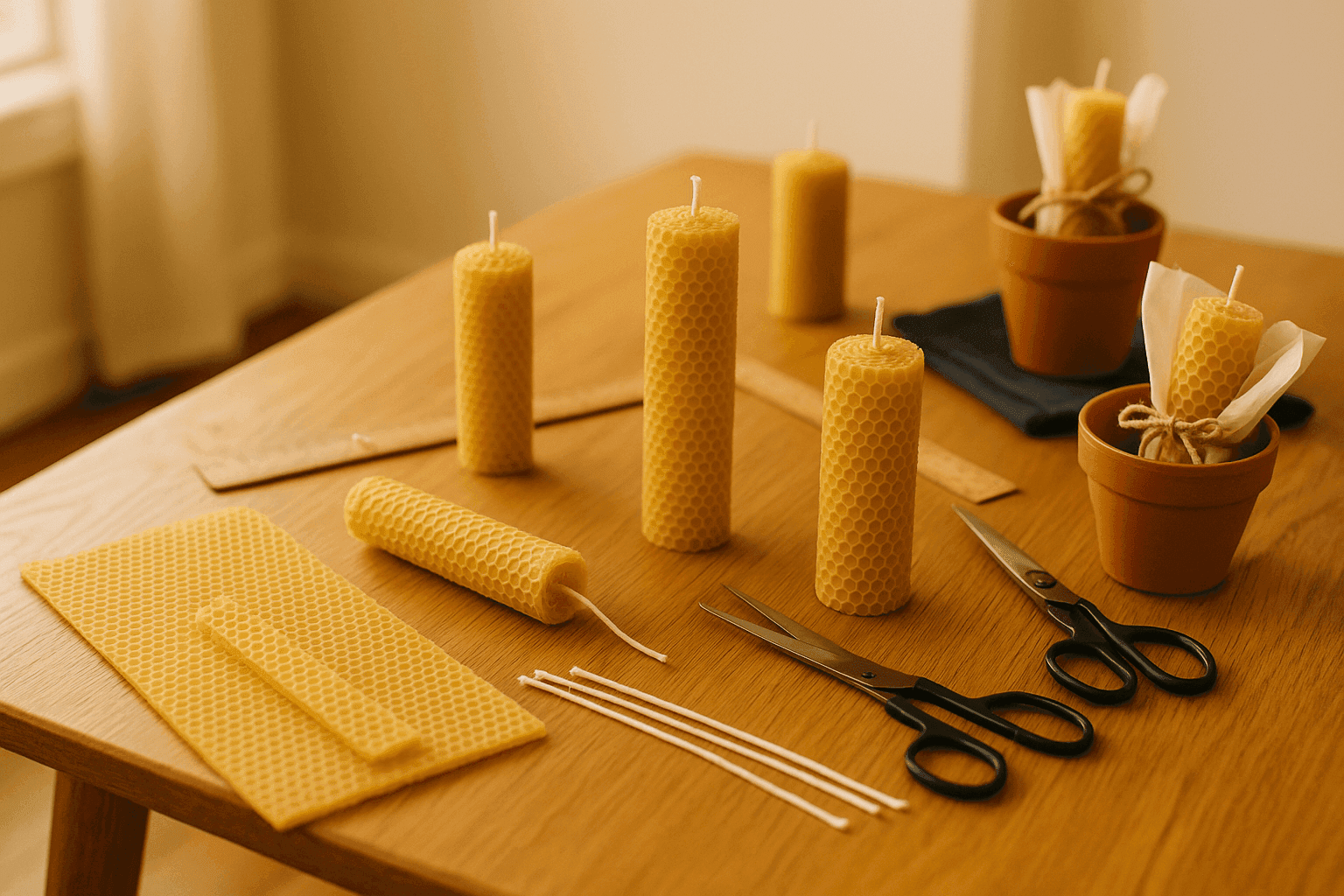
If you've avoided candle-making because the thought of melting wax, managing temperatures, and dealing with potential burns sounds intimidating, rolled beeswax candles are about to become your new favorite craft—they require literally zero melting, take about 5 minutes per candle to create, and produce gorgeous natural candles with that subtle honey scent that makes rooms smell like summer meadows in winter. The secret is honeycomb beeswax sheets that come pre-textured with the beautiful hexagonal pattern bees naturally create, providing both visual interest and structural integrity that makes rolling as simple as wrapping a burrito. This project costs around $15-20 for supplies to make 6-8 candles (approximately $2-3 per finished candle), requires no special equipment beyond scissors and a ruler, and creates gifts that look and smell far more expensive than their actual cost or effort would suggest. The natural golden color of beeswax needs no dyes, the honeycomb texture provides built-in decoration that needs no embellishment, and the subtle honey fragrance comes from the wax itself without adding synthetic scents—making these candles perfect for people with fragrance sensitivities who still want pleasantly scented ambiance. Whether you're batch-gifting to coworkers, creating teacher presents, or building your own candle collection, rolled beeswax candles solve the "I want homemade but don't have time for complicated" dilemma perfectly.
What You'll Need
- Beeswax Materials:
- Honeycomb beeswax sheets, natural or colored ($12-18 per pack)
- Standard pack makes 6-8 candles
- Natural golden color most popular
- Available at craft stores or online
- Wick Selection:
- Square braided cotton wicks ($5-8 per pack)
- Choose wick size based on candle diameter
- Pre-cut wicks with metal tabs simplify process
- 100% cotton burns cleanest
- Basic Tools:
- Sharp scissors or craft knife
- Ruler or measuring tape
- Cutting mat (optional but helpful)
- Hair dryer for softening (optional)
- Optional Enhancements:
- Decorative ribbon for finished candles
- Gift tags or labels
- Tissue paper for wrapping
- Essential oils for added scent (optional)
Rolling Steps
- Warm beeswax sheets slightly if they feel stiff or brittle, using a hair dryer on low heat for 10-15 seconds or placing near (not on) a warm radiator—pliable wax rolls smoothly without cracking.
- Cut sheets to desired candle size using scissors or craft knife—standard 8x16 inch sheets make pillar candles about 8 inches tall, or cut in half for shorter votives or tapers.
- Position your wick along one short edge of the beeswax sheet, leaving about 1/2 inch of wick extending beyond the top edge for lighting later, and ensuring wick runs perfectly straight for even burning.
- Press the edge of the beeswax sheet firmly over the wick, using your fingers to seal the wax around the cotton, creating a secure anchor that prevents the wick from shifting during rolling.
- Roll the sheet tightly around the wick, maintaining even pressure and keeping edges aligned so the finished candle has straight, professional-looking sides rather than crooked, amateurish wrapping.
- Press the final edge against the rolled candle body, using warmth from your hands to help the natural wax adhesion seal the seam—no glue needed since beeswax naturally sticks to itself.
- Smooth the seam by gently running your finger along it, ensuring a clean finish where the sheet meets the candle body, and checking that no gaps exist where wax could drip during burning.
- Trim the bottom wick flush with the candle base using scissors, creating a flat stable surface for the candle to stand on, while leaving the top wick at proper 1/2 inch length for easy lighting.
- Shape the finished candle by gently pressing the bottom on a flat surface to ensure it stands perfectly straight, and smoothing any imperfections with warm hands that naturally soften the wax for minor adjustments.
Professional candlemakers create more interesting shapes by varying the rolling technique: roll tightly for slim tapers, loosely for pillars with more texture, or diagonally for spiral effects that showcase the honeycomb pattern beautifully. For gift-giving, wrap finished candles in tissue paper and tie with natural jute twine or hemp cord that complements the organic aesthetic of beeswax, avoiding synthetic ribbons that clash with the natural materials theme. The temperature trick that prevents cracking: work in a warm room (70-75°F) where beeswax remains pliable, and if sheets feel stiff from storage in cold spaces, warm them slightly before rolling rather than forcing brittle wax that cracks along the honeycomb pattern. Consider mixing colors by using two different colored sheets—roll the first color halfway, then add a second color sheet and continue rolling, creating beautiful striped or ombre effects that look professionally designed. For uniform gift sets, measure and cut all sheets to identical sizes before starting any rolling, which ensures consistent candle dimensions that look intentional when grouped together rather than obviously handmade in various sizes. The burn-time calculation that helps with sizing: beeswax candles burn approximately 1 hour per 1/2 inch of diameter, so a 2-inch diameter pillar provides roughly 4 hours of burn time, helping you size gifts appropriately for their intended use. Store finished candles in cool places away from direct sunlight which can soften or melt the rolled structure, and they'll maintain their shape and scent indefinitely since beeswax doesn't degrade like paraffin candles that yellow and lose fragrance over time. The ultimate customization is adding a few drops of complementary essential oils (lavender, vanilla, cinnamon) to the wax sheet before rolling, though many purists prefer beeswax's natural honey scent unaltered since it's part of what makes these candles special and distinctive from synthetic alternatives.