Rock Solid: Paint a Garden Border for $12
Free rocks from a creek bed, two colors of exterior paint, and a Sunday afternoon — the garden border that looks intentional, ties into your house palette, and costs almost nothing
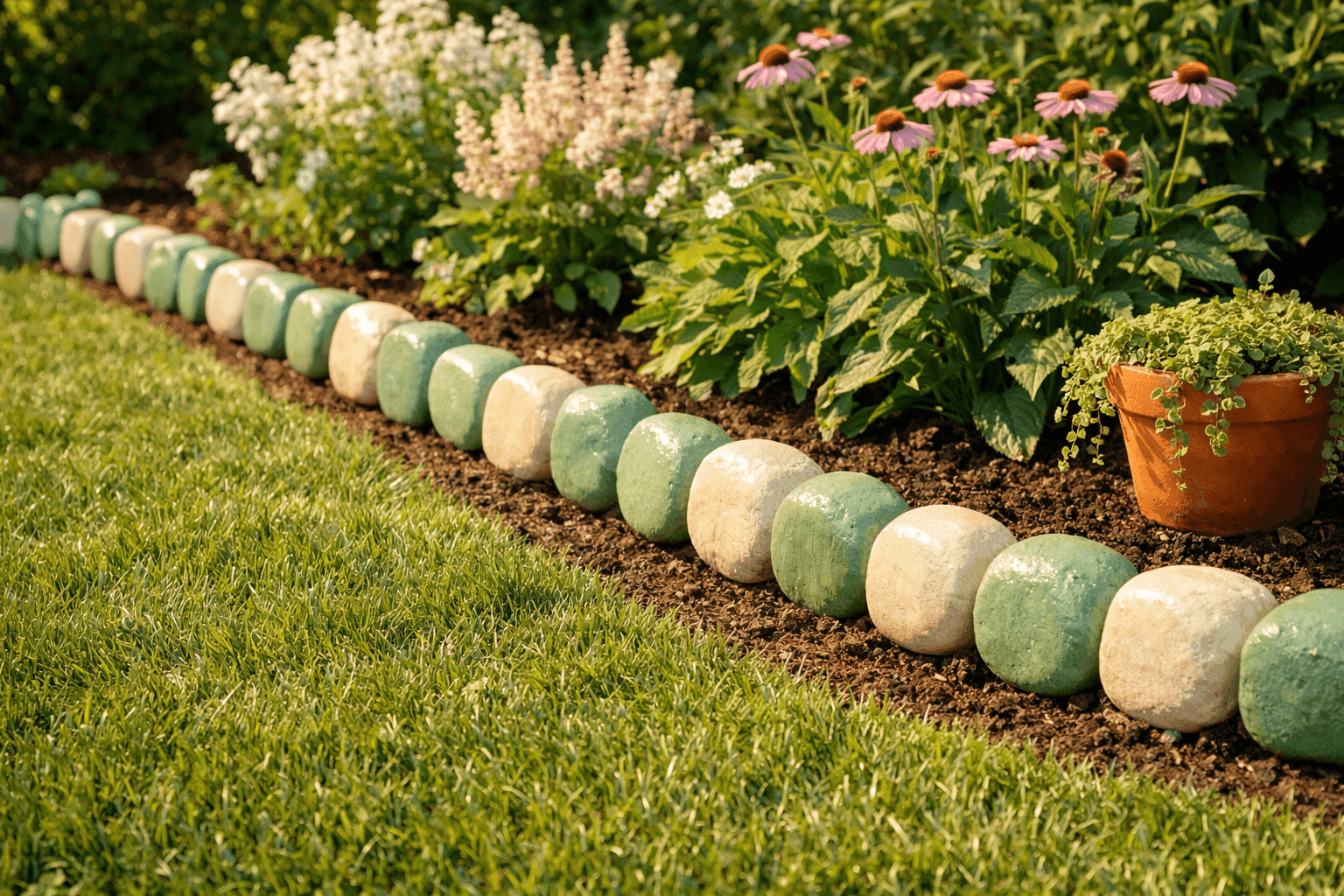
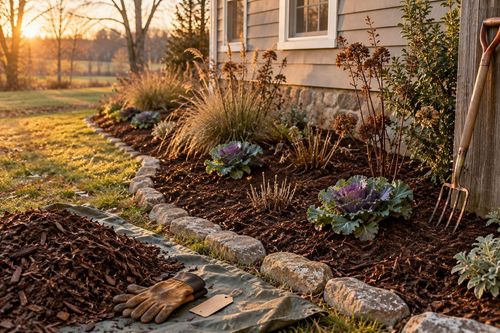
A garden bed without edge definition is a garden bed that's always fighting a losing battle against encroaching lawn grass — and the metal or brick edging solutions that actually solve the problem permanently tend to cost more than most gardeners want to spend on what amounts to a border. A painted rock border costs $12 in paint and sealer if you gather the rocks for free, solves the edge definition problem, and adds a decorative element so charming and personal that it becomes the feature people comment on rather than the plants behind it. The color choices are what elevate this from a craft project to a genuine design decision — choosing paint colors that echo your house trim, your front door, or your existing garden palette creates the kind of cohesion between the house and the landscape that usually requires a professional landscape designer. Paint the rocks on a Sunday afternoon, seal them thoroughly, and set them along the bed edge in an alternating pattern or a deliberate color sequence. Then wait for the first neighbor to stop and ask about it, because they will.
What You'll Need
- The Rocks
- Fist-sized smooth rocks — 3 to 5 inches across — in relatively consistent sizes so the finished border reads as a unified row rather than a random collection of different-sized stones. Smooth river rocks or creek rocks take paint most evenly; rough or porous rocks absorb paint unevenly and require more coats for full coverage
- Collect from a creek bed, a gravel pit, a construction site with permission, or a landscape supply company — typically free or very low cost for the quantities needed. One standard wheelbarrow load covers approximately 8–10 linear feet of border at tight spacing
- Landscaping rocks from a home improvement store as a purchased alternative — sold by the bag in consistent sizes for ~$4–$6 per bag. The consistency of purchased rocks produces a more uniform border than collected rocks but sacrifices some of the organic, natural character that makes a rock border charming rather than formal
- Wash all rocks thoroughly with soap and water and let them dry completely for at least 24 hours before painting — paint applied to dirty or damp rock surfaces peels within the first rain regardless of the paint quality or sealer applied over it
- Paint
- Outdoor acrylic craft paint in two coordinating colors — the most widely available and most cost-effective option for rock painting. Choose colors that relate directly to your home's exterior palette — house trim color, front door color, shutter color, or any accent color already present in the landscape — for a border that reads as a deliberate design decision rather than a colorful addition that doesn't quite belong — ~$2–$3 per bottle, one bottle covers 20–25 rocks per coat
- Soft sage green, warm cream, dusty blue, terracotta, and matte black are the most versatile color choices for painted rock borders — all complement a wide range of plant colors and house palettes without competing with the garden plants behind the border
- A primer coat of white outdoor acrylic paint before the color coat dramatically improves color vibrancy and coverage on darker rocks — particularly important for achieving clean, true sage green or soft cream over gray or brown rock surfaces where the stone color shows through the topcoat
- Sealer
- Clear outdoor acrylic sealer — the single most important material in the project for long-term durability. Two coats of sealer over fully dried paint is what separates a rock border that looks fresh after a full year of outdoor exposure from one that's faded, chipped, and chalky by midsummer — ~$6–$8 per can of spray sealer that covers all rocks in a standard border with coats to spare
- Matte finish sealer preserves the natural stone-like quality of the painted rocks; satin or gloss sealer produces a more polished, lacquered look that shows water beading clearly but reads as more obviously painted from a distance
- Reapply sealer once per year at the beginning of the growing season for rocks that experience significant freeze-thaw cycling — the annual sealer refresh is a 10-minute job that extends the border's lifespan indefinitely
- Tools
- Foam brushes or round craft brushes — foam brushes produce the smoothest, most even coverage on curved rock surfaces while round craft brushes allow more controlled detail work around texture variations
- A plastic egg carton, cardboard box, or small plastic cups for holding individual rocks upright while painting and drying — rocks that roll during drying produce uneven paint coverage and smeared surfaces on whichever side contacts the drying surface
- A drop cloth or old newspaper for the painting work surface
- A small trowel for setting rocks along the bed edge at consistent depth and spacing during installation
How to Make It
- Collect and prepare more rocks than you think you need — gather 20–30 percent more rocks than your border length calculation suggests, because some will paint unevenly, some will crack during the freeze-thaw of the first winter, and having extras means you can always extend the border or replace damaged rocks without a second collection trip. Wash all collected rocks thoroughly, scrubbing off any algae, mud, or mineral deposits with a stiff brush and soap, then spread them in a single layer to dry completely in sun for at least 24 hours before any paint is applied.
- Apply a white primer coat to darker rocks before the color coat — load a foam brush with white outdoor acrylic and coat the full visible surface of each rock, setting it in the egg carton or cup holder to dry upright. The white primer both improves color vibrancy dramatically on gray or brown rocks and seals the porous surface so the topcoat doesn't sink unevenly into the stone. Let the primer coat dry for at least 30 minutes before adding color — painting over wet primer produces a muddy, uneven surface that no amount of additional coats fully corrects.
- Paint all rocks in one color first before starting the second — paint all the sage green rocks in a single session, let them cure completely, then paint all the cream rocks. Working through one color completely before starting the second prevents color contamination from a brush that's picked up residue from a previous color and keeps the two paint bottles from being used simultaneously with the risk of mixing. Two thin coats per color produce a more even, vibrant result than one thick coat — apply the second coat only after the first is fully dry to the touch.
- Paint the bottom third of each rock a neutral gray or leave it unpainted — the portion of the rock that will be buried in the soil or touching the ground gets no visual benefit from paint and the buried paint degrades faster than exposed paint due to constant soil moisture contact. Painting only the visible two-thirds of each rock conserves paint, reduces the surface area vulnerable to soil moisture damage, and produces a cleaner transition between the painted rock and the soil surface when the border is installed.
- Apply two coats of clear outdoor sealer over all fully cured painted rocks — let the first coat dry for the manufacturer's recommended time before applying the second. Hold the spray can 8–10 inches from the rock surface and apply in even, sweeping passes so the sealer coats the full painted surface without pooling in rock texture depressions. Two sealed coats is the minimum for meaningful weather resistance; a third coat on rocks in especially exposed locations (full sun, heavy rain exposure, significant freeze-thaw cycling) adds meaningful additional durability for very little extra effort.
- Plan the installation pattern before placing a single rock — lay all the painted rocks out on the lawn or driveway in your planned alternating or sequential pattern to confirm the color distribution reads as intended before any rocks go into the ground. An alternating pattern of two colors reads as the most controlled and formal; a random distribution of the same two colors reads as more organic and casual; a sequential pattern (three of one color, then three of the other) reads as deliberately patterned. Choose the arrangement that suits your garden's overall aesthetic rather than defaulting to the first arrangement that comes to mind.
- Install the border rocks at a consistent depth — use a small trowel to create a shallow trench along the bed edge approximately one-third the height of each rock deep, set each rock into the trench with its flattest face forward, and press soil firmly against the base on both sides. Rocks set at inconsistent depths — some sitting high, some sitting low — produce a visually uneven border that reads as casually placed rather than intentionally installed. A consistent installation depth where each rock's top sits at approximately the same height above the soil surface is what makes the finished border read as designed rather than scattered.
- Touch up any damaged or chipped rocks at the start of each growing season — keep a small amount of each paint color and a can of sealer stored from the original project for this purpose. A touch-up that takes 60 seconds per rock when the paint is available and fresh is the maintenance habit that keeps a painted rock border looking pristine for years; rocks with visible chips or color loss that go untouched gradually reduce the overall quality of the border until the whole thing needs repainting rather than spot treatment.
Landscape designers who work on residential garden projects consistently use a color connection strategy for decorative garden elements that most homeowners discover only after making the opposite mistake — choosing border colors based on the flowers in the garden bed rather than the fixed architectural elements of the house itself. Flower colors change season to season and year to year; the house trim, front door, and exterior cladding colors stay fixed for years. A painted rock border that echoes the front door color, picks up the trim color, or references the shutter color creates a continuous visual thread between the architecture and the landscape that reads as professionally designed and intentional regardless of what's blooming in the bed behind it at any given moment. A border painted to match a specific flower risks looking mismatched when that flower isn't blooming, replaced with something else, or simply out of season. The architectural color connection is permanent and always relevant — and it's the design decision that most reliably makes a simple painted rock border look like a considered design detail rather than a colorful craft project that happened to end up in the garden.