Reel Talk: Install a Garden Hose Reel in 30 Minutes
End the tangle of hose sprawled across your yard for good — a wall-mounted reel near your spigot is a 30-minute install that pays off every single day
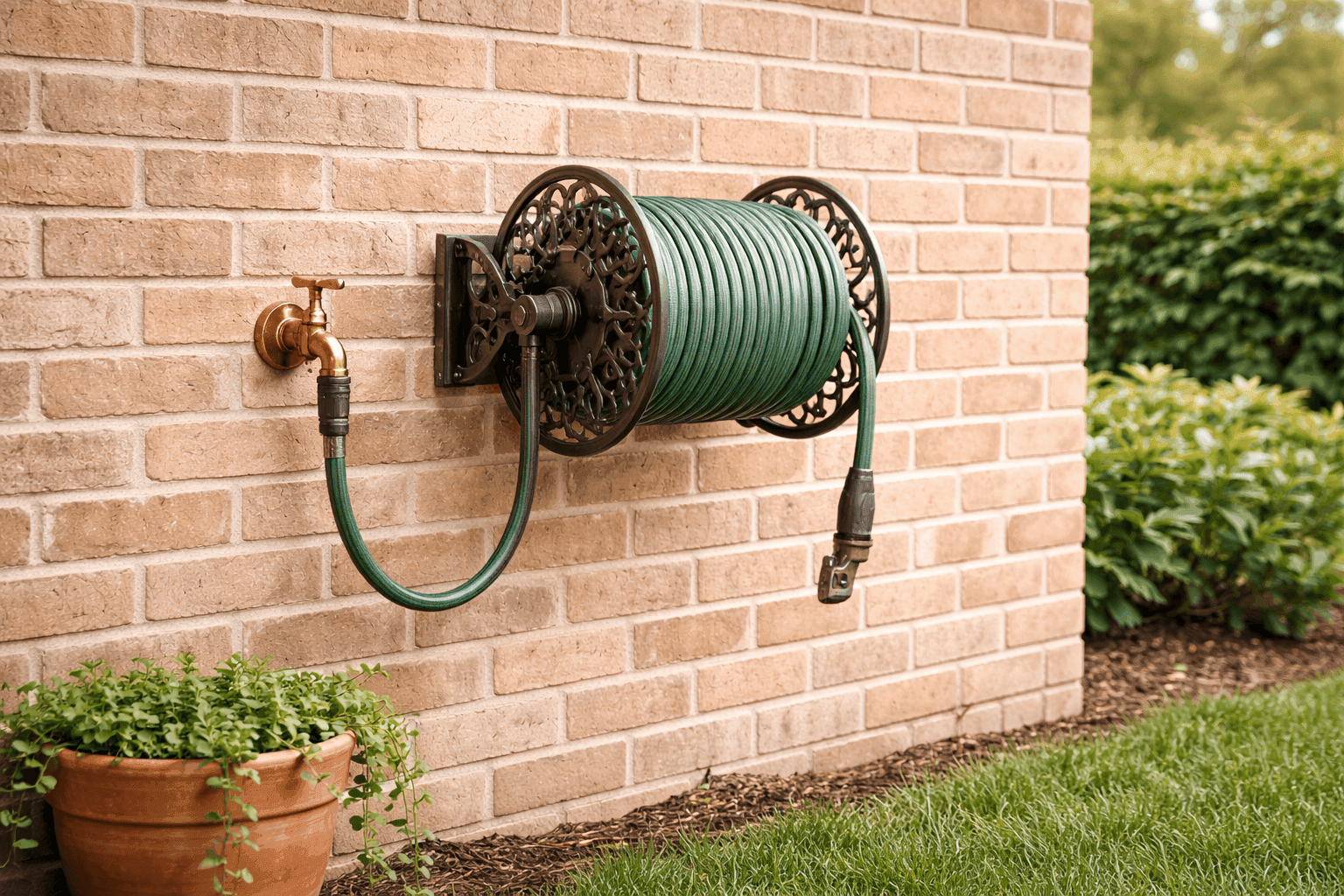
A garden hose left on the ground is one of those things that starts as a minor annoyance and quietly escalates into a genuine problem — it kinks, it trips people, it gets run over by the lawnmower, it degrades faster in UV exposure, and it guarantees that every single watering session begins with five minutes of untangling before you can actually do anything useful. A wall-mounted hose reel installed near your outdoor spigot solves every one of those problems in a single 30-minute project that costs $25–$45 and requires nothing more than a drill and the right anchors for your wall surface. The hose winds on cleanly after every use, stays off the ground and out of the way between uses, and the whole setup looks intentional and tidy rather than like an afterthought. It's the kind of small infrastructure upgrade that you wonder how you tolerated not having for so long the moment it's done.
What You'll Need
- The Hose Reel
- Wall-mounted hose reel rated for your hose length — most standard reels handle 100–150 feet of ⅝-inch hose comfortably — ~$25–$45 at hardware stores or online
- Look for a reel with a built-in inlet elbow connector that swivels — this lets the reel pivot outward for easy winding without fighting the hose connection every time
- Cast aluminum or heavy-duty resin construction holds up significantly better outdoors than lightweight plastic, which becomes brittle in UV exposure within a season or two
- Confirm the mounting bracket plate dimensions before buying if you're working with a narrow space — some reel brackets are wider than they look in product photos
- Mounting Hardware
- Most reels include mounting screws — check the package, but have extras on hand in case the included screws are too short for your wall surface
- For wood siding or wood fence mounting: 2½-inch exterior lag screws — ~$3–$5 for a small pack
- For brick, concrete, or stucco mounting: masonry anchors or sleeve anchors sized to your screw diameter — ~$4–$8 for a pack of four
- For vinyl siding: a mounting block or spacer board cut to fit between the siding channels — skip this and the reel will crack the siding under load
- Connection Hardware
- A short leader hose (also called a lead hose) — typically 6–12 inches — to connect the spigot to the reel inlet, allowing the reel to sit beside rather than directly on the spigot — ~$5–$8, or often included with the reel
- Teflon thread tape for wrapping all threaded hose connections — ~$2–$3 for a roll that lasts forever
- Two hose washers for the leader hose connections if not already installed inside the fittings
- Tools
- Drill/driver with appropriate bit — standard twist bit for wood, masonry bit for brick or concrete
- Level for confirming the mounting bracket is perfectly horizontal before driving final screws
- Pencil for marking hole locations on the wall
- Adjustable wrench or channel-lock pliers for tightening hose connections
- Tape measure for positioning the reel at the right height and distance from the spigot
How to Install It
- Choose your mounting location carefully before marking a single hole — the ideal spot is within 12 inches of your spigot on a flat, solid wall surface that can bear the combined weight of the reel and a full hose, which can exceed 20 pounds for a 100-foot hose loaded with water. Position the reel at roughly hip to waist height so winding the hose requires no crouching or awkward reaching, and confirm the reel will swing open freely in both directions without hitting the spigot handle, the wall corner, or any other obstruction.
- Identify your wall material before selecting drill bits and anchors — tap the wall with your knuckle to distinguish hollow vinyl or wood siding from solid brick, concrete, or stucco, and use a stud finder on wood-framed walls to locate solid framing behind the siding. A hose reel mounted into solid framing or masonry will stay put for decades; one mounted into vinyl siding with no backing or into hollow wall cavity with no anchor will pull free the first time someone gives the hose a firm tug.
- Mark your hole locations by holding the mounting bracket against the wall at your chosen position, using a level to confirm it's perfectly horizontal, and marking through each mounting hole with a pencil. Double-check your marks by re-holding the bracket and confirming all marks align with the holes before drilling — a misaligned hole in brick or concrete cannot be easily corrected and leaves a permanent visible mark on your exterior wall.
- Drill your mounting holes using the appropriate bit for your wall material — for masonry, use a hammer drill setting if your drill has one, applying steady forward pressure and letting the bit do the work rather than forcing it. Drill to a depth slightly deeper than your anchor length, vacuum or blow out all dust from the holes before inserting anchors, and tap masonry anchors flush with the wall surface using a hammer before threading in any screws.
- Mount the bracket by holding it against the wall with all holes aligned, threading screws through the bracket holes and into the wall anchors or studs, and tightening firmly but not so aggressively that you crack the bracket or strip the anchor — snug and immovable is the goal, not maximum torque. Give the mounted bracket a firm downward pull and a side-to-side shake to confirm it's genuinely solid before attaching the reel and trusting it with a full hose load.
- Attach the reel to the bracket according to your specific model's instructions — most wall-mounted reels drop onto a fixed pin or slide into a channel on the bracket and then lock with a retaining clip or screw. Confirm the reel swings freely on the bracket pivot point and that the inlet connection port lines up naturally toward the spigot before proceeding to the hose connections.
- Connect the leader hose by wrapping two layers of Teflon tape clockwise around the threads of the spigot outlet, threading the leader hose female end onto the spigot by hand until snug, then tightening a final half-turn with pliers — never overtighten brass fittings against brass threads, which gall and seize permanently. Connect the other end of the leader hose to the reel inlet the same way, confirming the reel can still pivot freely after the connection is made without putting stress on the hose threads.
- Wind on your garden hose by threading the hose end through the reel guide, connecting it to the reel drum outlet fitting with Teflon tape on the threads, then turning on the spigot briefly to check every connection for drips before winding the full hose length onto the drum in neat, even overlapping coils. Turn the water off, wind the last few feet of hose, and make your first clean, tangle-free hose retrieval — and enjoy the fact that this is now just how watering works at your house.
The detail that separates a hose reel installation that works flawlessly for years from one that develops annoying problems within a season is winterization — and most people either skip it entirely or do it incorrectly. Before the first hard freeze, disconnect the leader hose from the spigot, turn the spigot off at the indoor shutoff valve if you have one, then open the spigot briefly to drain any water remaining in the line. Wind the full hose onto the reel with the nozzle end open so residual water drains out as you wind rather than freezing inside the hose walls and cracking them. A hose left full of water through a freeze will develop pinhole leaks that are impossible to find and annoying to repair — draining it takes three extra minutes and extends hose life by years. For the reel itself, a seasonal spray of silicone lubricant on the pivot bearings and drum axle keeps the winding mechanism smooth and prevents the rust and seizing that turns a good reel into a frustrating one after a few winters of neglect.