Press Spring Flowers Into Bookmarks and Art
The slow, quiet craft that turns five minutes of collecting into weeks of gentle, focused work
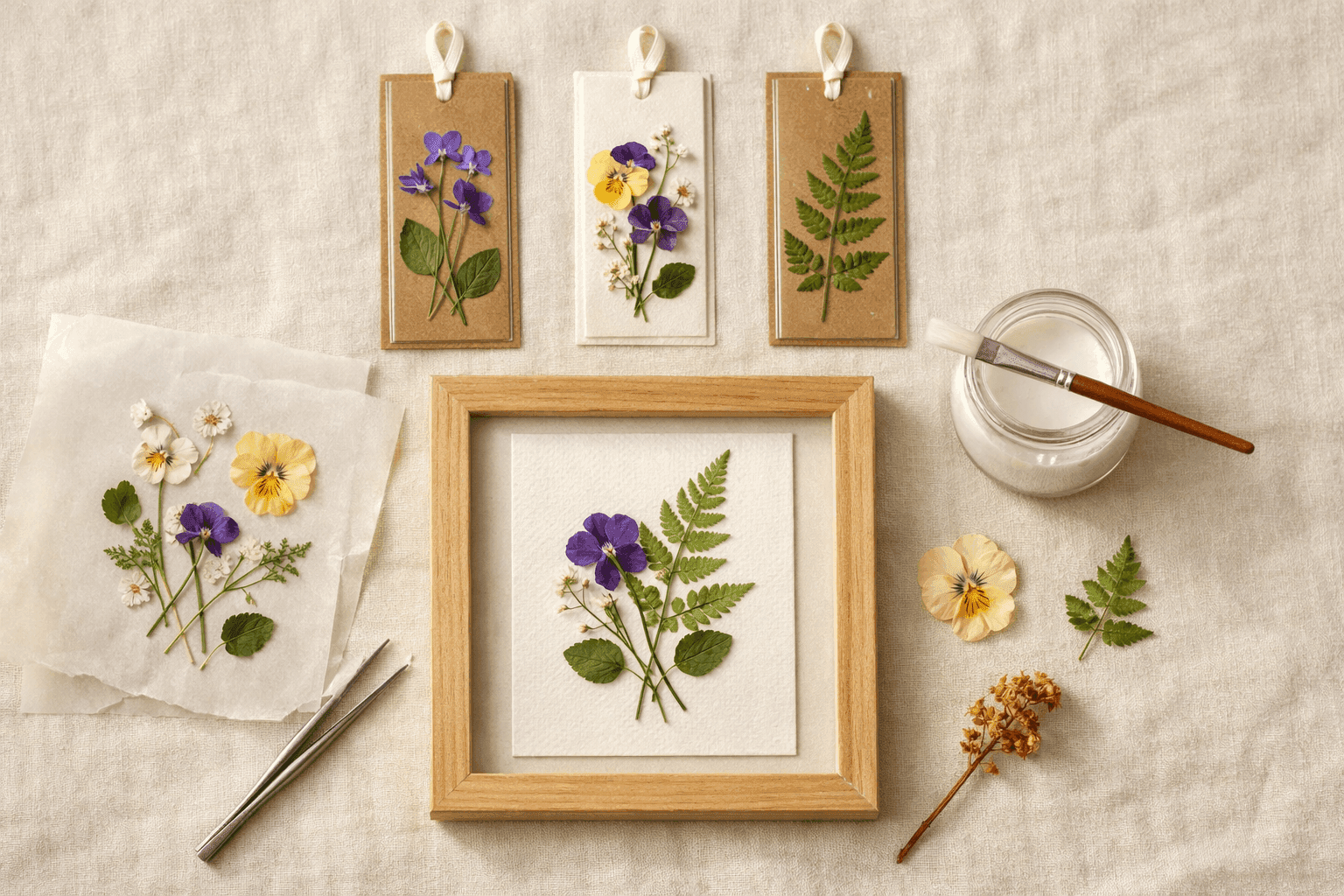
There are very few crafts that ask you to slow down the way flower pressing does — to actually look at a violet or a small fern closely enough to position each petal deliberately, to make careful decisions about composition with tweezers rather than your fingers, to let the process unfold over days and weeks rather than an afternoon. That quality is precisely what makes it a genuinely therapeutic practice rather than just a project, and why it keeps coming back in every era as something people reach for when they want to feel grounded and present. The flowers themselves cost nothing beyond a few minutes of collecting, the supplies run well under $15, and what you end up with is both the finished pieces — bookmarks, small framed botanicals, greeting cards — and the experience of having made them slowly and with full attention. Starting a pressing today means having materials ready to work with in one to two weeks, so this is a project you begin now and return to, which is part of the point.
What You'll Need
- For Collecting and Pressing
- Fresh flowers and botanicals — violets, pansies, small daffodil faces, violas, fern fronds, clover, and interesting leaves all press beautifully; flat or single-layer flowers press more cleanly than thick layered blooms like roses, which need to be disassembled petal by petal
- Parchment paper or coffee filters — both absorb moisture from the flowers during pressing without sticking to petals the way plain paper can
- Heavy books — two or three thick hardcovers stacked on top of each other create enough weight; old phone books and encyclopedias are ideal and don't suffer from the moisture the way books you actually use would
- A dedicated flower press — optional but worthwhile if this becomes a regular practice; a basic wooden screw press runs $10–20 and produces more even, consistent results than the book method (~$10–20)
- For Making Bookmarks
- Heavyweight cardstock cut to 2x7 inches — cream, white, or kraft tones complement pressed flower colors beautifully without competing with them
- Clear contact paper or laminating sheets for sealing finished bookmarks — contact paper is the most accessible option, available at any dollar or office supply store for $2–4 a roll
- A hole punch and thin ribbon or twine for the top loop (~$1–2)
- Mod Podge or clear-drying craft glue for adhering flowers to the card stock before sealing
- For Framed Botanical Art
- Small frames in 4x6 or 5x7 sizes — dollar store frames are perfectly adequate since the glass is what protects and displays the work (~$1–3 each)
- Watercolor paper or cream cardstock as the backing surface for the arrangement
- UV-resistant glass or UV spray sealer to prevent the inevitable color fading that affects all pressed botanicals over time (~$6–9 for a spray can)
- Tools
- Fine-tipped tweezers — essential for handling delicate dried petals that will crumble or stick if touched with fingers
- Small paintbrush for applying glue precisely without flooding delicate petal edges
- Scissors with fine points for trimming stems and compositional adjustments
- Total Cost
- Under $15 for bookmarks using supplies you likely partially own; $15–30 if adding frames and a dedicated press for ongoing botanical art practice
How to Press and Create
- Collect mindfully on a dry morning after any dew has evaporated — flowers collected when wet press with more mold risk and lose color more readily than dry specimens. Pick more than you think you need since not every flower will press perfectly, and variety in size and shape gives you more compositional options when the creating stage arrives in a week or two. Collect stems, leaves, and fern fronds alongside blooms for the layered, naturalistic compositions that look most finished.
- Arrange flowers on parchment as soon as possible after collecting — flowers begin losing their optimal pressing condition within a few hours of picking. Lay each bloom face-down on a sheet of parchment, spreading petals gently with a fingertip so they lie flat and don't overlap themselves. For flowers with bulky centers like daffodils, slice the flower head in half from behind to reduce thickness before pressing. Place a second sheet of parchment on top.
- Load the press by placing the parchment sandwich inside a heavy book, leaving at least 10–15 pages of buffer between your flowers and the nearest other pressing so moisture doesn't migrate between them. Stack two or three additional heavy books on top and place in a dry indoor location away from humidity — a bathroom shelf or basement is the worst choice; a bedroom bookshelf or dry closet is ideal. Label the book spine with a sticky note marking the date so you know when the pressing is ready.
- Wait one to two weeks without checking — lifting the parchment to peek is the single most common way to damage a pressing in progress, as partially dried petals tear easily when disturbed mid-press. Two weeks produces fully flattened, papery, stable specimens that handle well with tweezers; one week produces flowers that are pressed but still slightly fragile. When the wait is finished, open to find spring preserved exactly as you placed it.
- Plan your compositions before gluing anything — lay pressed flowers and botanicals on the bookmark or backing paper using tweezers and move them around until the arrangement feels balanced and complete. For bookmarks, a single dramatic bloom with two or three supporting leaves reads more elegantly than a cluttered full-coverage arrangement. For framed art, an asymmetrical botanical spray with varying heights creates a more naturalistic, less craft-project feeling result.
- Glue with precision by applying a tiny amount of Mod Podge or craft glue to the back of each piece with a small brush, then lowering it into position with tweezers rather than your fingers. Press each element lightly with a clean fingertip and hold for ten seconds. Work from background elements forward — stems and leaves first, then larger blooms, then small accent flowers on top — so the layering reads naturally rather than flat.
- Seal bookmarks by carefully placing the finished card stock face-down onto clear contact paper, smoothing from the center outward to eliminate air bubbles, then folding the contact paper over the back and trimming the edges with fine scissors. Punch a hole at the top and thread a 6-inch length of ribbon or twine, knotting it at both ends. For framed art, simply place the finished composition under glass in the frame — no additional sealing needed — and apply a UV spray coat to the glass face for color longevity.
Botanical artists and professional flower pressers almost always press far more material than any single project requires, treating the pressing stage as a separate season of collection rather than a project-specific supply run — because having a deep archive of pressed botanicals in varied sizes, colors, and species is what allows truly considered compositions rather than arrangements limited by what happened to be available on one afternoon. Store finished pressings in labeled envelopes or glassine sleeves between sheets of acid-free paper in a flat box away from light and humidity, and they'll remain workable for years. The best botanical compositions almost always draw from multiple pressing sessions across different seasons, which means starting your archive now — even with a single violet and a small fern — is the most valuable thing you can do for every project that follows.