Peaceful Practice: Paint Your Way To Calm With Flowing Colors
Create gentle greeting cards through meditative watercolor play
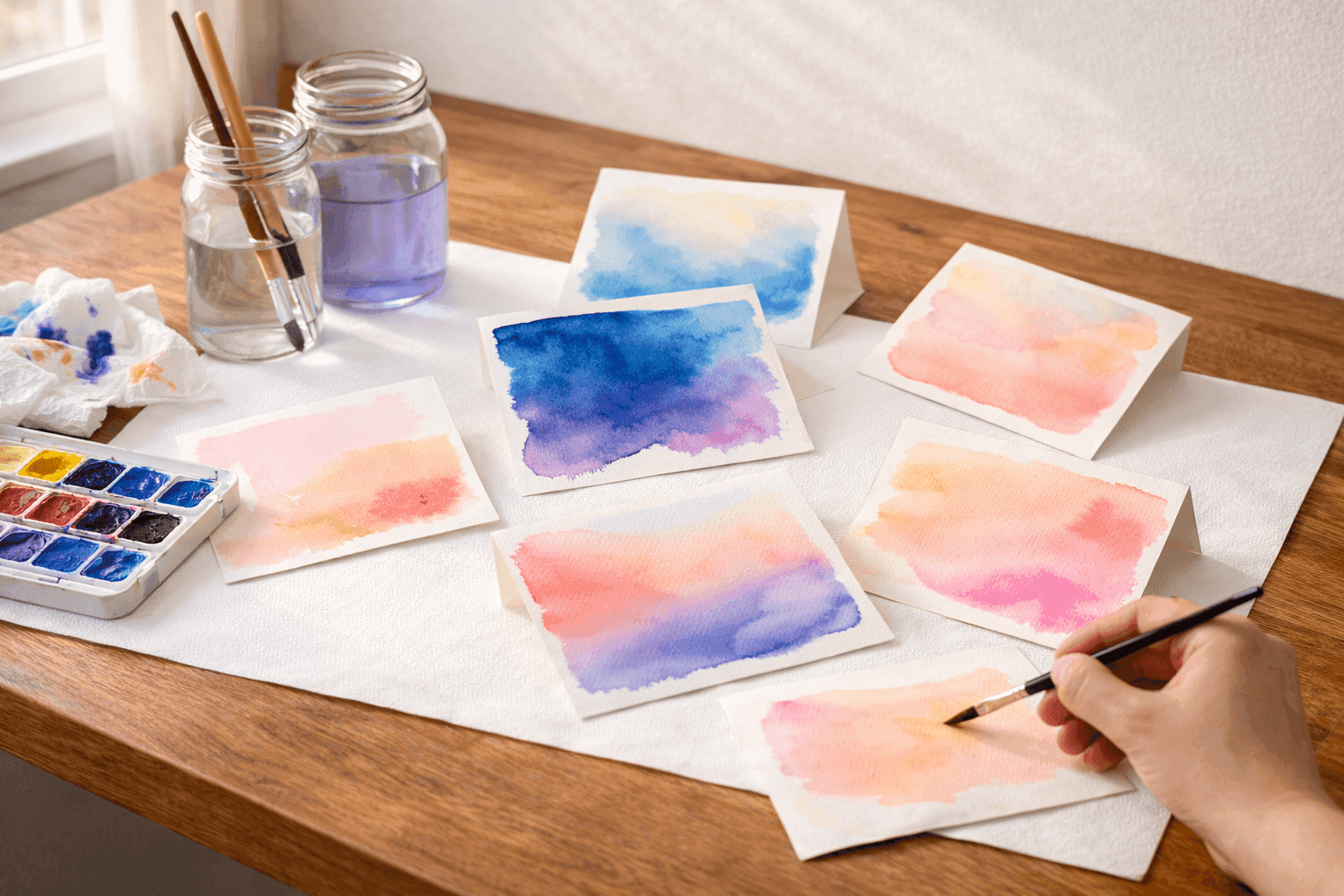
The world constantly demands perfection, productivity, and immediate results, creating relentless pressure that leaves little room for process-oriented activities where outcomes matter less than the peaceful journey of creation itself. Mindful watercolor card-making offers the rare gift of purposeful slowness—each card takes 10-15 minutes of gentle focused attention where you watch colors blend, flow, and bloom in unpredictable beauty that cannot be completely controlled no matter how skilled you become. This lack of absolute control is precisely what makes watercolors therapeutic rather than stressful; you collaborate with water and pigment rather than commanding them, embracing the unexpected blooms, soft edges, and organic color mixing that happen when you release perfectionism and simply observe what emerges. The sensory experience grounds you firmly in the present moment—brush gliding through water, pigment releasing into wetness, colors bleeding together in ways you couldn't plan—creating meditative states that quiet racing thoughts without requiring empty-mind meditation skills many people find frustratingly elusive. Beyond the therapeutic painting process, you create genuinely useful greeting cards carrying personal touches that recipients treasure far more than store-bought alternatives, making this practice both self-care and gift-giving simultaneously. The gentle unpredictability of watercolors teaches valuable lessons about accepting imperfection, finding beauty in spontaneity, and trusting processes rather than forcing outcomes—principles that apply far beyond painting into daily life where control is often illusory and acceptance brings more peace than resistance ever could.
What You'll Need
- Paper Foundation ($8-12):
- Watercolor paper or heavy cardstock (140lb minimum)
- Pre-cut blank cards or full sheets to cut after painting
- Cold-press texture works beautifully for soft washes
- White or cream base shows colors best
- Watercolor Supplies ($10-15):
- Basic watercolor paint set (8-12 colors sufficient)
- Tubes or pans both work well for card-making
- Emphasize colors you find calming (blues, purples, soft pinks)
- Quality matters less than quantity for this purpose
- Brushes & Tools ($5-8):
- 2-3 round brushes in varying sizes (4, 8, 12)
- One flat brush for washes (1-inch width)
- Two water containers (one for cleaning, one for mixing)
- Paper towels or cloth for controlling water
- Finishing Supplies ($3-5):
- Fine-tip pens for greetings once paint dries
- Envelopes matching card size
- Optional: white gel pen for highlights
- Optional: salt for texture effects
Paint Mindfully
- Create peaceful space with soft music, comfortable seating, good lighting, and all supplies within easy reach—environment dramatically affects your ability to enter meditative creative states rather than feeling rushed or frustrated.
- Begin with simple wet-on-wet technique by brushing clean water across your paper first, then dropping in color and watching it bloom organically—this technique produces the most unpredictable, therapeutic results that quiet controlling minds.
- Choose 2-3 colors that speak to your current mood rather than planning specific outcomes, allowing intuition to guide color selection and trusting that whatever emerges will be exactly what needs creating in this moment.
- Paint soft washes letting colors flow together naturally—watch blues melt into purples, oranges blend into pinks, observing how water carries pigment in ways you cannot fully predict or control no matter your skill level.
- Embrace imperfection and unexpected results as the entire point rather than mistakes needing correction—blooms, bleeds, and organic edges create beauty that planned perfection could never achieve through rigid control.
- Try simple subjects if abstract feels uncomfortable: loose florals without defined petals, flowing branches without perfect leaves, soft landscapes suggesting rather than depicting—imprecision is the aesthetic here, not deficiency.
- Create several cards in one sitting without judgment, allowing practice and repetition to quiet your inner critic while the rhythmic motions of brush-to-water-to-paper create meditative flow states naturally.
- Add greetings only after paint dries completely, using simple messages that match the gentle aesthetic—"Thinking of You," "With Love," or even just "Hello" maintains the peaceful quality throughout your creation.
Art therapists emphasize that the therapeutic value comes from process rather than product, so resist judging cards as they emerge and instead focus on sensations: water's coolness on your brush, pigment's silky texture, colors' unexpected interactions, paper's gentle resistance under bristles. If perfectionism creeps in with harsh self-criticism about "ruining" cards, intentionally create several cards specifically to "mess up"—paint with opposite hand, use colors you normally avoid, or deliberately over-wet paper until it buckles, proving that even "failures" produce interesting beauty worth appreciating. For deeper meditative experience, set intentions before painting—dedicating cards to specific recipients while thinking loving thoughts about them, or using color choices to explore current emotions rather than suppressing feelings demanding acknowledgment and expression. Sprinkle salt onto wet washes for magical texture effects as crystals push pigment around creating organic patterns—this technique particularly delights beginners while reinforcing lessons about releasing control and trusting spontaneous beauty. The most important reminder: these cards need no recipients to justify creation—painting watercolors benefits you regardless of whether cards ever get mailed, making this practice valuable self-care rather than productive task requiring completion or utility to merit the time invested in your own peace and presence.