Pattern Perfect: DIY Stenciled Planters for Spring
Transform ordinary containers into custom botanical showcases with simple stenciling techniques
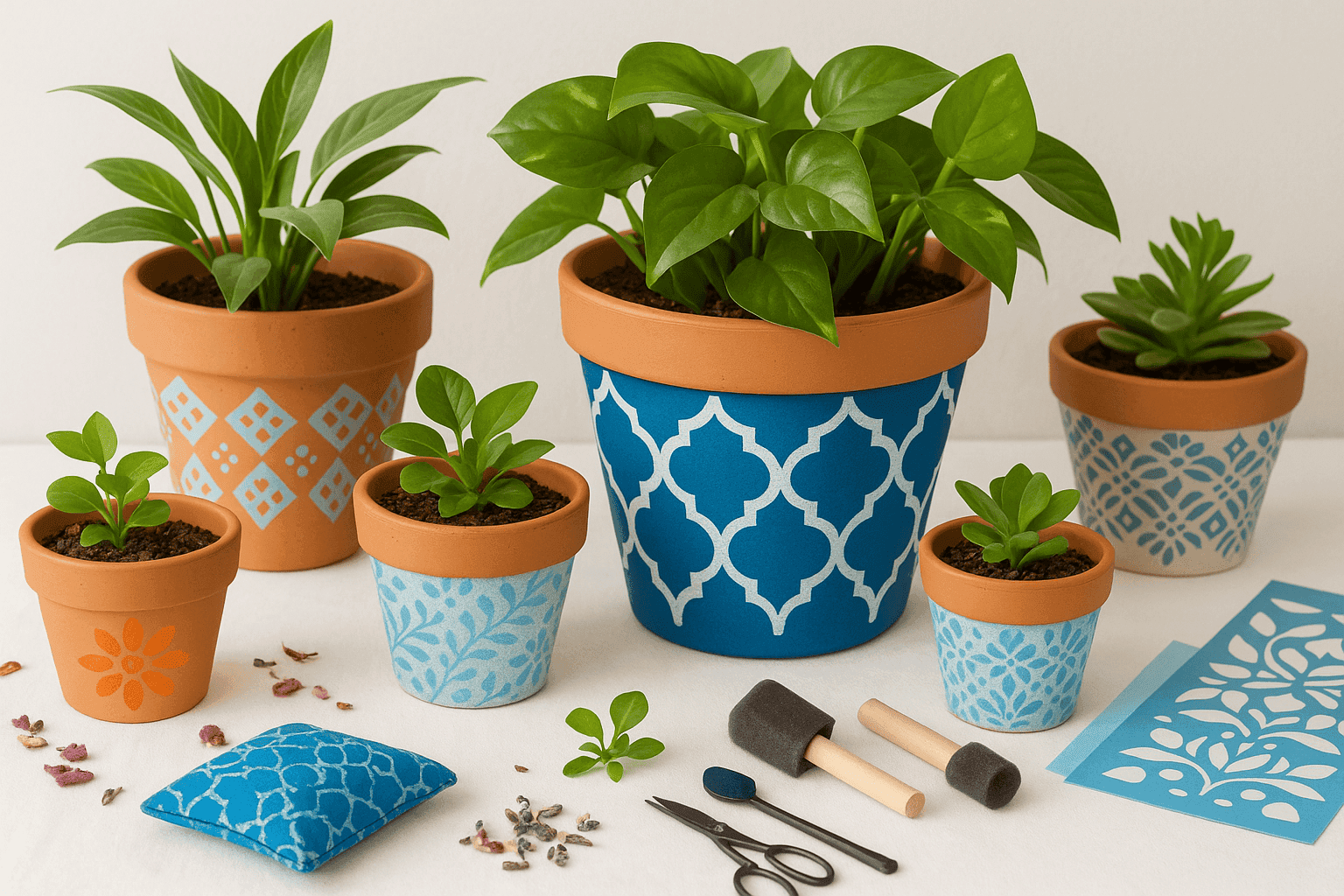
As spring arrives, indoor and outdoor plants come to life with new growth. Give your greenery the perfect home by transforming ordinary planters with custom stenciled designs. This simple yet impactful project allows you to coordinate containers with your existing decor or create a fresh seasonal theme. With basic supplies and a few creative techniques, you can design planters that look professionally finished while showcasing your personal style—the perfect complement to spring's botanical bounty.
What You'll Need
| Basic Supplies: |
| • Planters (terracotta, ceramic, or plastic) |
| • Acrylic paint in your chosen colors |
| • Paintbrushes (various sizes) |
| • Stencils (floral, geometric, or leafy designs) |
| • Stencil adhesive or painter's tape |
| • Foam pouncer brushes or sponges |
| Surface Preparation: |
| • Fine-grit sandpaper (for terracotta) |
| • White primer or base coat paint |
| • Clean cloth and rubbing alcohol |
| Finishing Materials: |
| • Clear acrylic sealer (matte or gloss) |
| • Fine-tip paint pens (for details) |
| • Metallic paint (optional, for accents) |
| • Wax paper or drop cloth for workspace |
How To Do It
- Prepare your planters: Clean thoroughly and let dry completely. For terracotta pots, lightly sand the surface to remove any rough spots. Wipe plastic or ceramic planters with rubbing alcohol to remove any residue.
- Apply a base coat: Paint the entire planter with primer or base coat color. For best results, apply 2-3 thin coats rather than one thick coat, allowing each to dry completely (usually 1-2 hours between coats).
- Plan your stencil placement: Consider whether you want a repeating pattern, a single focal design, or a border. For multiple planters, decide if you want them to match exactly or complement each other with different patterns in the same color scheme.
- Apply your stencil: Secure stencil to the planter using stencil adhesive or carefully placed painter's tape. For curved surfaces, you may need to bend the stencil slightly or work in smaller sections.
- Stencil technique:
- Load a small amount of paint onto your foam pouncer or sponge
- Dab excess paint onto paper towel (less paint means crisper lines)
- Apply paint with a gentle up-and-down motion, not a brushing motion
- Hold the stencil firmly to prevent bleeding under edges
- Remove stencil carefully while paint is still wet
- Add details and accents: Once the stenciled design is dry, use fine-tip paint pens to add details like stems, veins in leaves, or outlines. Consider adding metallic accents for dimension and visual interest.
- Apply sealer: Once all paint is completely dry (at least 24 hours), apply 1-2 coats of clear acrylic sealer to protect your design. This is particularly important for outdoor planters that will be exposed to moisture and weather.
- Finishing touches: For a cohesive look, paint the planter's rim in a coordinating color or use metallic paint for an elegant accent. Allow to dry completely before adding plants.
For a truly professional finish, consider the "rule of three" when designing your stenciled planters. Professional designers often create collections with three complementary approaches: one pot with an all-over pattern, one with a focused single motif, and one with a simple border design. This creates visual cohesion while providing interest through variation. Another designer secret is to create an "ombré" effect by gradually decreasing the paint opacity as you move down the planter—simply mix increasing amounts of water with your acrylic paint for each row of the pattern. Finally, for outdoor planters that will receive direct sunlight, choose light-colored base paints that won't absorb heat (which can damage plant roots) and be sure to use a UV-resistant sealer to prevent fading.