Patch It Like a Pro: Drywall Repairs That Actually Disappear
From nail holes to fist-sized disasters — every wall repair you'll ever need
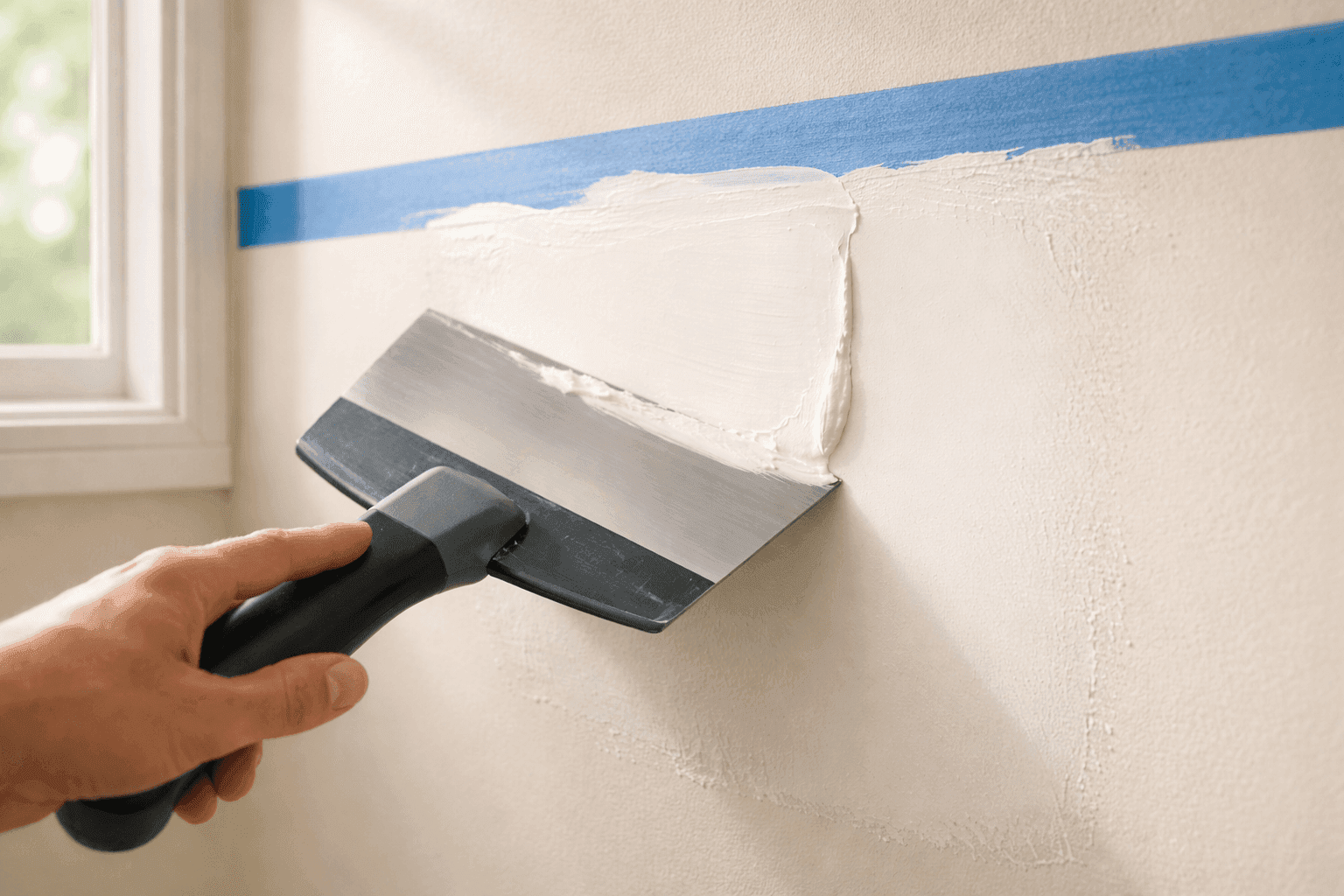
Drywall repair is one of those skills that looks difficult until you understand why it goes wrong — and then it's surprisingly manageable. The reason most DIY patches are visible after painting isn't that the technique is wrong, it's that people rush the drying process and skip the feathering step. Do those two things right, and your repairs genuinely disappear. Here's how to handle every size of drywall damage, from the tiny nail hole to the genuine oh-no moment.
Small Holes (Nail Holes, Screws, Picture Hooks)
For anything under about half an inch, lightweight spackling is all you need. Apply a small amount with your finger or a putty knife, slightly overfilling the hole. Once dry (usually 30–60 minutes for lightweight spackling), sand with 120-grit sandpaper using a circular motion until it's flush, then wipe away dust and paint. The key: don't try to get it perfectly flat on the first application. Let it dry, sand, and if there's a slight depression, apply a tiny second coat. Two thin coats always look better than one thick one that cracks as it dries.
Medium Holes (1–4 Inches)
This range is where a self-adhesive mesh patch kit earns its keep. Peel and stick the mesh patch over the hole (it comes in sizes from 2"x2" up to 6"x6"), then apply joint compound over it with a 6-inch putty knife. Feather the edges — meaning spread the compound out past the patch at a very thin, tapered angle, so it blends into the surrounding wall rather than sitting on top of it like a bump.
Let it dry completely (joint compound dries white when ready — don't rush it), sand with 120-grit, then apply a second wider coat with an 8-inch knife. The second coat should extend 2–3 inches beyond the first on all sides. Sand again, prime, paint. The feathering is everything here — the wider you spread each successive coat, the more invisible the repair.
Large Holes (4+ Inches)
Anything bigger needs a backing piece to give the joint compound something to grip. Cut the damaged area into a clean square or rectangle with a drywall saw. Cut a piece of new drywall slightly larger than the hole. Score the back paper of this patch piece and snap it — what you'll end up with is a drywall patch with a paper border that acts as your tape. This "California patch" method drops into the hole and the paper border adheres to the surrounding wall with joint compound. From there, it's the same feathering process as smaller holes — multiple thin coats, wide feathering on each pass, patience with drying time.
Matching Texture
This is where most drywall repairs fail — the patch is invisible until the light hits it at an angle and reveals a perfectly smooth island in a textured wall. If your walls have orange peel texture (the most common), you can buy orange peel texture spray for about $8. Practice on cardboard first to get the distance and spray pattern right. For knockdown texture, apply thinned joint compound with a roller, let it partially set, then "knock down" the peaks with a wide drywall knife held almost flat. Both are learnable with a bit of practice — always apply texture before priming.
Prime before you paint — always, without exception. Unprimed joint compound absorbs paint differently than the surrounding wall, creating a dull "flashing" effect that's visible in certain lighting even if the texture matches perfectly. A coat of PVA drywall primer ($10–$15) seals the repair and gives you a consistent surface for your finish coat. Also: take a photo of your paint can label before you open it, or scrape a chip of your wall paint onto a piece of cardboard to bring to the hardware store — matching paint color accurately is the most underestimated part of any wall repair.