Paint Your Calm: Create Watercolor Cards as Moving Meditation
Transform holiday card-making from task into peaceful creative ritual
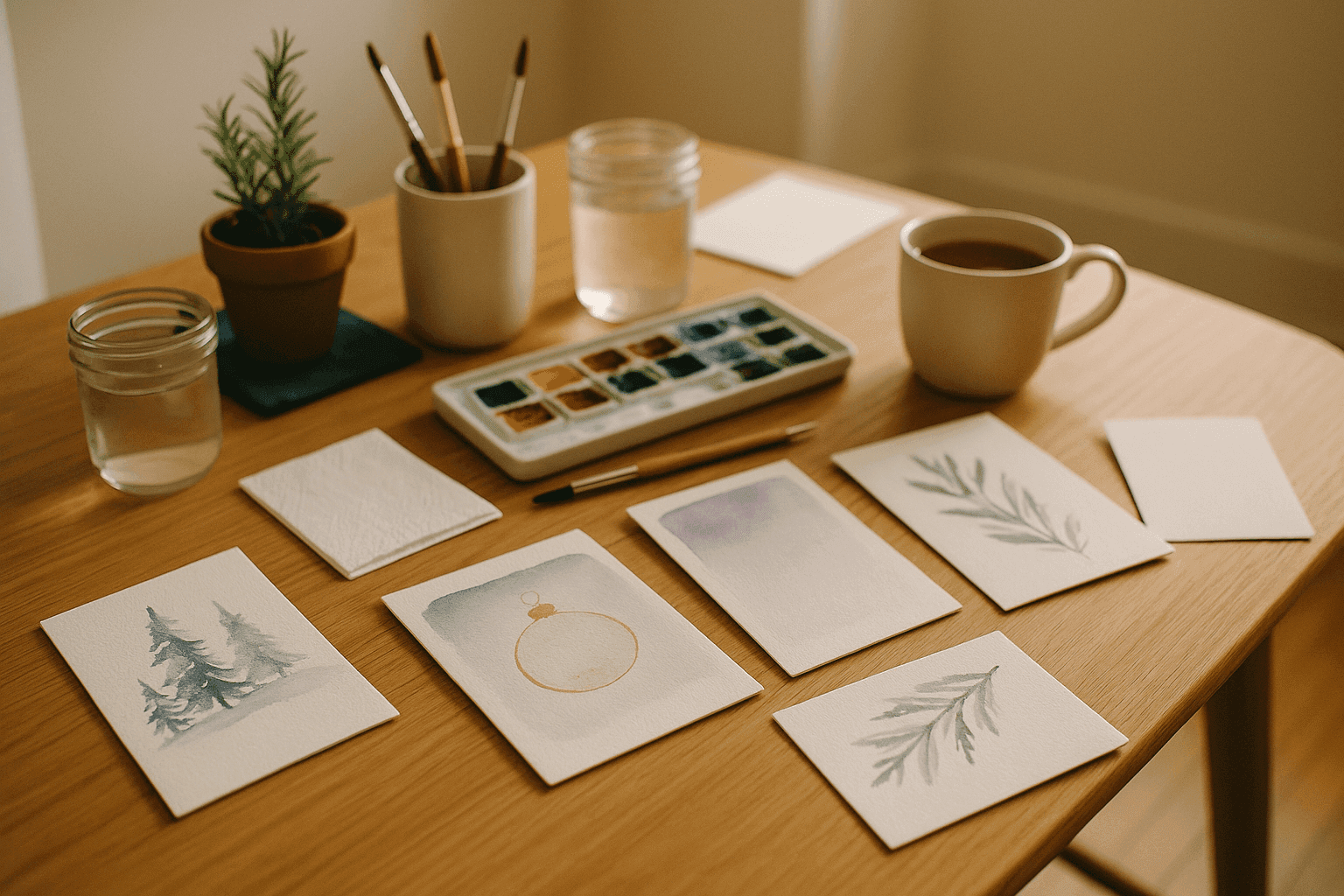
In the midst of holiday chaos filled with shopping lists, cooking schedules, and social obligations that exhaust rather than energize, watercolor card painting offers a rare invitation to slow down completely—to breathe, to watch paint bloom across paper, to let your mind quiet as your brush moves in gentle, repetitive motions that feel more like meditation than craft project. There's no pressure for perfection here, no Pinterest-worthy standards to meet, just the forgiving nature of watercolors that blend and flow in ways you can't entirely control, teaching acceptance and presence with every brushstroke. This mindful practice takes about an hour to create 5-10 cards, costs around $20-30 for basic supplies that last for dozens of cards, and produces gifts that recipients treasure not because they're technically flawless but because they carry the authentic energy of someone who took time to slow down and create something beautiful specifically for them. The gentle repetition of painting simple winter trees, soft gradient skies, basic ornament circles, or flowing evergreen sprigs becomes a moving meditation where holiday stress melts away and the act of making replaces anxiety with calm, proving that sometimes the best holiday preparations aren't about accomplishing more—they're about finding pockets of peace within the busy season.
What You'll Need
- Paper Foundation:
- Cold-press watercolor paper, 5x7 inches ($8-12 for 20 sheets)
- Pre-cut blank watercolor cards with envelopes ($10-15)
- Cardstock folded in half as budget option ($5-8)
- 140lb weight minimum for proper water absorption
- Paint Supplies:
- Basic watercolor set (12 colors sufficient, $10-20)
- Round brushes in small and medium sizes ($8-15)
- Water containers (two cups—one clean, one dirty)
- Paper towels or clean rags for blotting
- Palette or white plate for mixing colors
- Optional Enhancements:
- Metallic watercolors or gold pen for accents ($5-10)
- Fine-tip pen for adding greetings ($3-5)
- Masking fluid for reserved white spaces (optional)
- Salt for textured snow effects
- Mindful Atmosphere:
- Calm instrumental music or nature sounds
- Comfortable seating with good natural light
- Protected work surface (plastic tablecloth or mat)
- Hot tea or beverage for sipping between cards
Meditative Process
- Create your peaceful space by finding quiet time when you won't be interrupted, putting on gentle music, and arranging supplies within comfortable reach so nothing breaks your flow once you begin painting.
- Breathe intentionally for a few moments before starting, setting an intention to be present with the process rather than focused on producing perfect results, releasing pressure and expectation that block creative flow.
- Wet your paper lightly with clean water if you want soft, dreamy backgrounds, or leave it dry for more controlled lines—both approaches work beautifully and there are no mistakes, only different effects to explore.
- Choose one simple motif to repeat across cards rather than attempting different designs on each, which allows you to sink into meditative repetition where muscle memory develops and thinking mind quiets naturally.
- Paint abstract winter trees with delicate upward brushstrokes that mimic bare branches reaching skyward, using minimal paint and embracing the way watercolor thins and spreads organically without your control.
- Layer soft gradient backgrounds by loading your brush with diluted blue or purple, sweeping horizontally across the top third of the card, then rinsing your brush and blending downward into lighter tones that fade toward white.
- Add simple ornament circles by touching a loaded brush to paper and letting paint pool naturally, then adding metallic gold or silver pen accents once dry for subtle holiday sparkle that elevates simple shapes.
- Paint flowing greenery sprigs with loose, confident strokes that don't aim for botanical accuracy but rather capture the essence and movement of evergreen branches through gestural marks.
- Embrace happy accidents—colors that blend unexpectedly, paint that blooms in interesting ways, edges that blur softly—these organic occurrences create the unique character that makes watercolors beautiful and each card one-of-a-kind.
- Pause between cards to let paint dry, sip your tea, notice your breathing, and observe how the meditative rhythm of creating has quieted mental chatter and replaced holiday stress with peaceful presence in this moment.
- Write simple greetings once cards are completely dry—"Peace," "Joy," "Warmth," or traditional messages—using fine-tip pen that won't bleed on the watercolor surface, keeping words minimal to let paintings speak.
Mindfulness teachers emphasize that watercolor's unpredictability becomes the practice itself—you cannot control exactly how paint will flow, how colors will blend, or where water will carry pigment, forcing you into acceptance and presence that mirrors meditation's core teachings about letting go of control. For deeper meditative experience, try painting the same simple design on every single card rather than varying motifs, which transforms the practice from creative exploration into pure repetition where the goal becomes the doing itself rather than the finished product. The color palette that enhances calm: limit yourself to 2-3 colors per card—blues and purples for serenity, greens and teals for nature connection, warm grays and soft browns for grounded peace—avoiding the mental stimulation that comes from too many color choices requiring decisions. Consider the recipients while painting—holding each person in your thoughts as you create their card transforms the activity from production into loving-kindness meditation where the act of making becomes prayer or blessing sent through your hands. Store finished cards flat as they dry completely, which takes 10-20 minutes depending on paint wetness, and resist the urge to hurry this drying time with heat tools that can warp paper and disrupt the meditative rhythm of patient creating. The perfectionism antidote that defines watercolor meditation: before starting, intentionally create one "practice card" where you give yourself permission to make every possible mistake, proving that nothing terrible happens when paintings don't turn out as imagined and freeing you to play rather than perform. Remember that recipients treasure handmade watercolor cards not despite their imperfections but because of them—the visible brushstrokes, the organic color variations, the slight unevenness all communicate that someone slowed down enough to make something by hand specifically for them, which carries emotional value that machine-printed cards cannot replicate regardless of technical polish.