Paint Meditative Watercolor Plant Portraits for $15
One leaf, a brush, and twenty minutes of unhurried looking — the practice that turns garden observation into something you keep
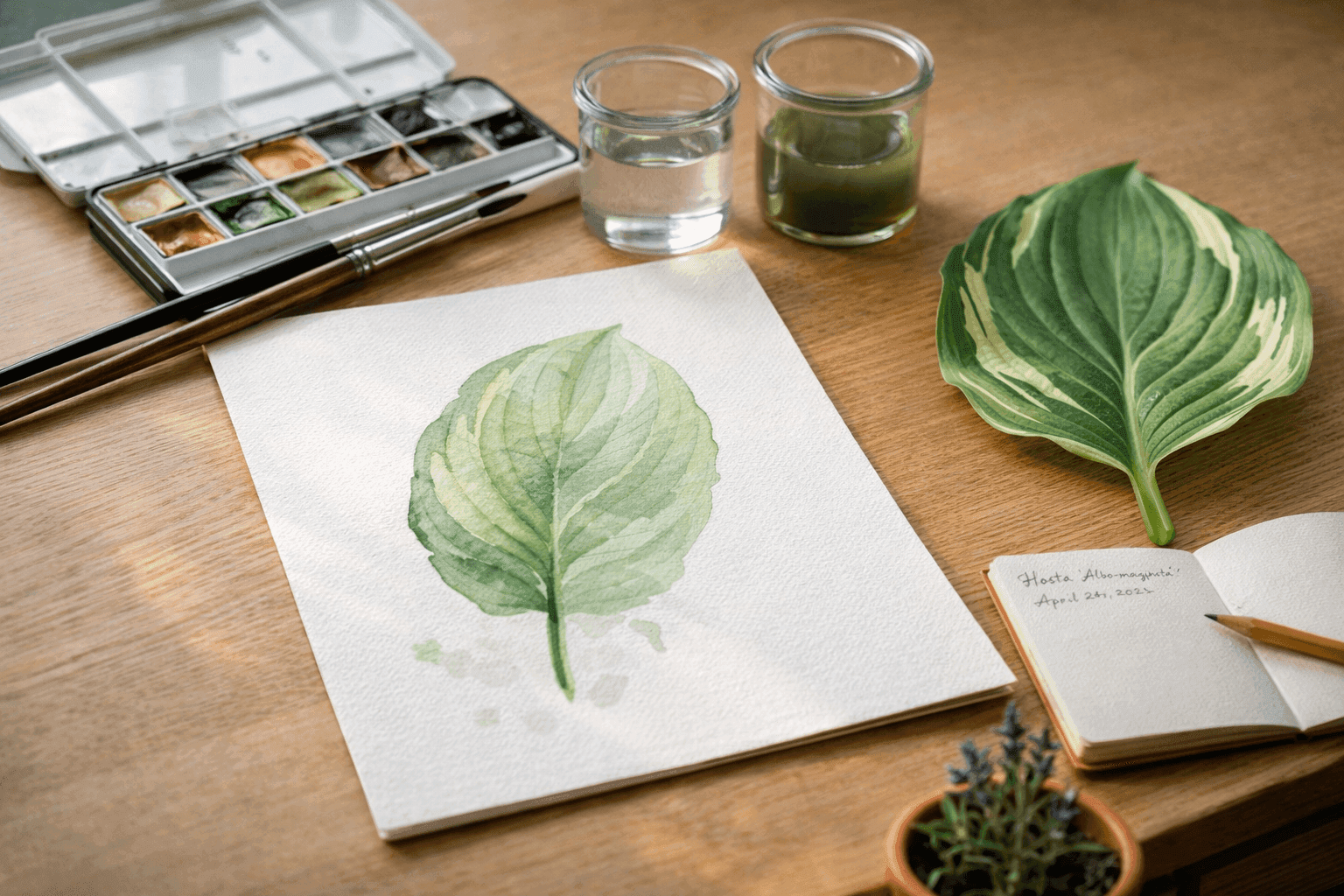
Most creative practices ask you to produce something — a finished piece, a polished result, a thing worth showing. Meditative watercolor botanical painting asks something entirely different: it asks you to look. Really look, the way you almost never look at anything in a day full of screens and tasks and efficient half-attention. Bring a single leaf or flower sprig in from the garden, sit with it at a table with watercolor paper and a basic paint set, and spend twenty minutes observing the way light falls across its surface, the variation of green within what seemed like a single color, the network of veins that crosses every leaf face in a pattern that turns out to be entirely unique. Then paint what you see, slowly, without pressure for accuracy or outcome. The watercolor does unexpected things — colors bloom and blend in ways you didn't plan — and that unpredictability is precisely the point. Under $15 in materials lasts for dozens of sessions. What accumulates over weeks is both a collection of botanical portraits and a practice of unhurried attention that is genuinely hard to find anywhere else.
What You Need
- Watercolor paper, cold-press, 140lb weight — heavier paper doesn't buckle and warp when wet the way regular paper does, which matters enormously for a practice that involves repeated wet washes; a small pad of 5×7 or 6×8 sheets is the ideal size for single plant subjects (~$6–8 for a small pad)
- Basic watercolor set, 12–24 colors — student-grade sets like Winsor & Newton Cotman or Sakura Koi produce genuinely beautiful results for this kind of observational practice; professional paints are not necessary and the difference is undetectable in meditative painting (~$8–12)
- Round watercolor brushes, sizes 4 and 8 — a medium round for broad washes and a smaller round for vein detail; natural hair brushes hold water and release paint more smoothly than synthetic, but synthetic brushes are perfectly adequate for a beginning practice (~$4–8 for a basic set)
- Two water containers — one for rinsing brushes, one for clean mixing water; keeping them separate maintains the clarity of mixed colors and prevents muddy wash water from contaminating delicate transparent washes
- A single garden specimen — one leaf, one flower, one herb sprig; the constraint of a single subject is what makes this practice meditative rather than a still-life composition exercise (free from the garden)
- Small notebook for dating and noting subjects — a simple record of what plant was painted on what date transforms individual paintings into a seasonal botanical journal over weeks of practice (~$3–5, or any notebook you already have)
How to Do It
- Choose a single plant subject from your garden — one leaf, one open flower, one small sprig with two or three elements — and bring it inside to a comfortable, well-lit table. The single-subject constraint is intentional and important: a complex arrangement gives the analytical mind too many decisions to make and defeats the meditative quality of the practice before the first brushstroke lands on paper.
- Observe before painting — spend at least five minutes simply looking at your subject before picking up the brush. Turn it slowly. Notice the color variation within what seemed like a single green. Find the places where light makes the surface appear almost translucent. Trace the vein structure from main stem to the finest secondary branches. This observation phase is not preparation for the painting — it is the most important part of the practice, and the paintings that feel most alive are always the ones where this looking happened slowly and without rushing toward the brush.
- Wet the area of the paper you'll paint into with a clean brushful of water before laying down the first color — painting wet-on-wet creates the soft blooming edges and unexpected color movement that are the most characteristic and beautiful quality of watercolor. Dry paper produces hard, controlled edges that look tighter and more labored than the loose, luminous quality that makes botanical watercolors feel alive.
- Start with the lightest color you observe in your subject and lay it down in a loose, light wash across the wet paper — do not try to match the color exactly on the first pass. Watercolor builds from light to dark through successive transparent layers, and the painting that begins with the lightest wash and gradually deepens always looks more luminous than one that starts dark and tries to lighten areas afterward, which watercolor resists doing gracefully.
- Let the first wash dry or near-dry before adding the next layer of color — damp paper accepts new color with soft, diffused edges, while very wet paper causes new color to bloom unpredictably and extensively in ways that can be beautiful but also lose the structure of the plant form entirely. Learning to read the sheen of the paper surface and time subsequent layers accordingly is the primary skill that develops through this practice, and it develops naturally through repetition rather than instruction.
- Add vein detail and darker shadow areas in the final layer once the broader washes are dry, using the smaller brush and a slightly more concentrated paint mix. Work vein lines from the central stem outward in single confident strokes rather than building them from short overlapping marks — a single stroke that wavers slightly looks like an observed natural line, while short overlapping marks look constructed and lose the spontaneous quality that makes botanical watercolor so appealing.
- Resist the urge to correct or overwork areas that don't look the way you intended — watercolor that has been worked repeatedly loses its transparency and luminosity and becomes muddy and opaque in the overworked areas in ways that cannot be reversed. If a passage goes wrong, let it dry completely and move on to a different area, or begin a fresh sheet. The practice of leaving imperfect passages alone and continuing is itself a significant part of what makes this meditation useful beyond the painting session.
- Date and note the subject in pencil in the lower corner of each finished painting before setting it aside to dry completely flat — a date and the plant name written in your own handwriting is what transforms a collection of paintings into a botanical journal, and the cumulative record of what was blooming or growing in your garden across a season is something that grows more meaningful with every entry that joins it.
Art therapists who use watercolor botanical practice in clinical settings always begin sessions with what they call a color inventory — before painting the subject at all, the patient mixes and strokes out every color they observe in the specimen onto a scrap of watercolor paper, naming each one aloud or in writing as they mix it. The inventory serves two functions: it slows the transition from ordinary cognitive activity into the receptive, observational state the practice requires, and it reveals the surprising complexity of color within what appears at first glance to be a simply green leaf or a single-color flower. Most people discover five to eight distinct colors within a subject they initially described as one or two, and that discovery is both the foundation of a richer painting and a small but genuine expansion of perceptual capacity that carries into how they see the rest of the day.