Paint a Rainbow Planter Collection for $20
Seven pots, seven colors, one display that stops everyone who walks past your porch
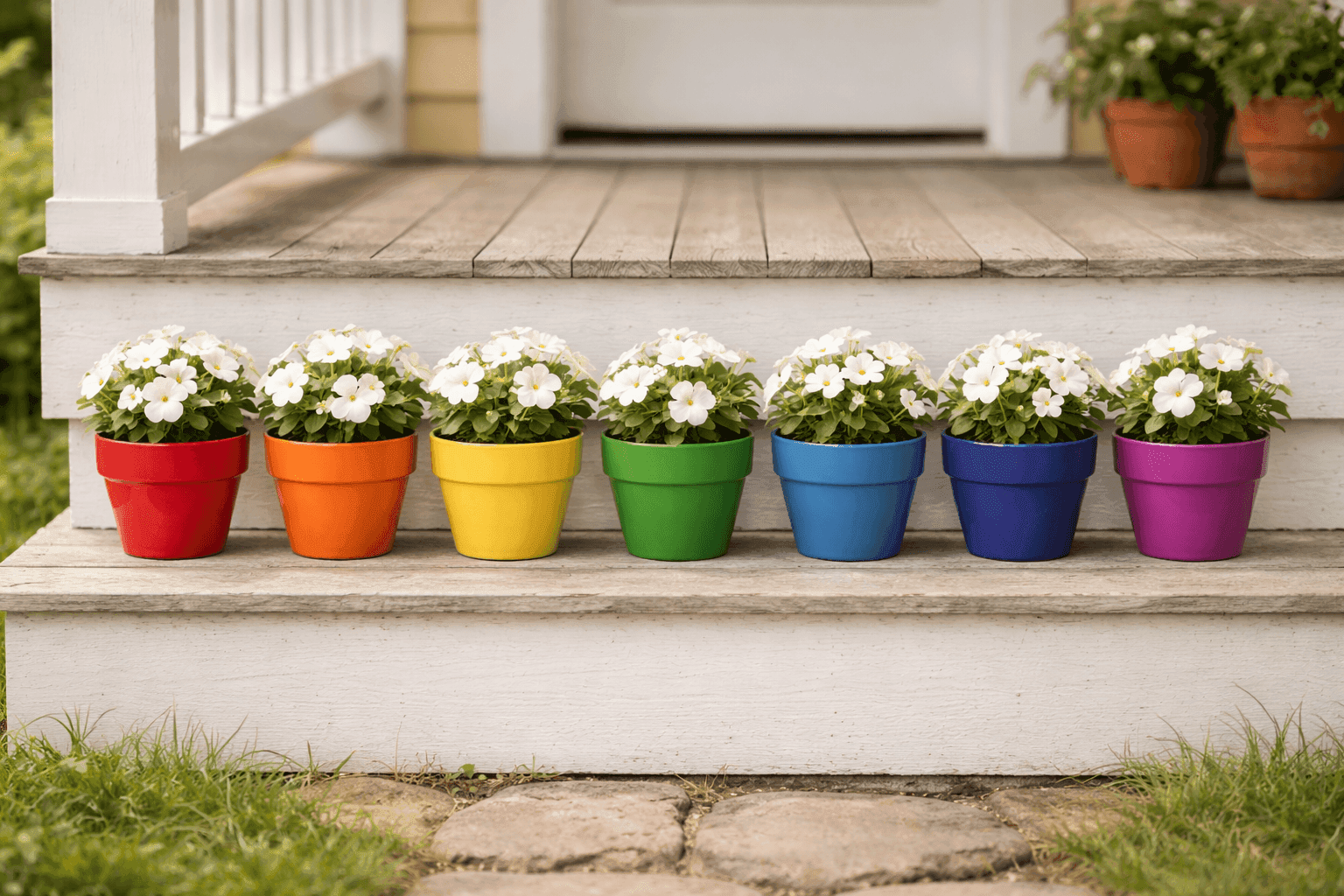
Some projects are about solving a problem. This one is purely about joy — the full, saturated, unapologetic kind that turns a porch railing or a set of front steps into something people slow their car down to look at. A row of seven pots painted in every color of the rainbow, arranged in spectrum order, is one of those displays that works entirely because you committed to it — no muted pastels, no toning things down, no "maybe I should make them coordinate better." The whole point is the full rainbow, in order, loud and proud. At $15–25 total for pots and paint, this is also one of the most cost-effective personality upgrades your outdoor space will ever get. Each pot takes about 20 minutes to paint, which means you can knock out the entire collection in an afternoon and have something genuinely show-stopping ready to plant by evening. This is the project for anyone who has ever looked at their front porch and thought it needed more of something — turns out that something was every color at once.
What You'll Need
- The Pots
- 7 ceramic or plastic planters in the same size and shape — matching silhouettes are what makes the rainbow effect read as intentional rather than chaotic (dollar stores, IKEA, and garden centers all carry uniform pots in multipacks for $1–3 each)
- 4–6 inch pots work beautifully on railings and windowsills; 6–8 inch pots have more presence on stairs or shelves
- Plastic pots are lighter for railings and easier to paint; unglazed ceramic takes paint more readily than glazed
- Paint (one color per pot)
- Outdoor acrylic craft paint or spray paint in all seven rainbow colors: red, orange, yellow, green, blue, indigo, and violet (~$1–2 per color in craft paint; $4–5 per can in spray paint)
- Outdoor-rated formula is non-negotiable — indoor acrylic will chalk and peel within one rainy season
- For plastic pots, use spray paint labeled "for plastic" or apply a plastic-bonding primer coat first so paint doesn't chip or peel
- Supplies
- Foam brushes or wide flat paintbrushes for smooth, even coverage with craft paint
- Outdoor clear sealant spray — one coat over finished pots dramatically extends paint life through rain and sun (~$5–7 for a can that covers all seven pots)
- Drop cloth or newspaper for painting surface
- Painter's tape if you want a clean line between pot body and drainage hole rim
- Total Cost
- $15–25 for pots and paint; add $5–7 if you purchase sealant, which is strongly recommended for outdoor longevity
How to Make Them
- Gather all seven pots and lay them out in rainbow order — red, orange, yellow, green, blue, indigo, violet — before you open a single paint bottle. Seeing the sequence in front of you makes the whole project feel intentional from the start and prevents the very common mistake of painting two pots too similar in tone and losing the spectrum effect.
- Prep the surfaces by wiping each pot clean with a damp cloth and letting them dry completely. For glazed ceramic, lightly scuff the surface with fine-grit sandpaper to give the paint something to grip. For plastic, apply a bonding primer and let it cure for at least 30 minutes before painting — skipping this step is the main reason paint peels off plastic pots after the first few rain showers.
- Paint each pot its assigned color in two thin coats rather than one thick one — thin coats dry faster, cover more evenly, and don't drip or puddle at the rim. Work from the top of the pot downward and let the first coat dry to the touch before applying the second. Twenty minutes per pot is realistic when you're working down the line color by color.
- Commit to full saturation — this is the most important instruction in the entire project. The rainbow display only works when every color is bold and true. If your yellow looks greenish or your blue looks gray, apply a third coat. Muted or muddy colors break the spectrum effect and the whole display loses its impact. This is not the project for restraint.
- Seal all seven pots with one even coat of outdoor clear sealant spray once the paint has fully dried — at least two hours after the final coat, or overnight to be safe. Hold the can 8–10 inches from the surface and use smooth sweeping passes. This single step is the difference between a display that looks great all season and one that starts chipping and fading by midsummer.
- Arrange in spectrum order in your chosen location before planting — railings, stair steps, a windowsill, or a porch shelf all work beautifully. Stand back and look at the full sequence from a distance of about ten feet, which is approximately how far away most people will see it. Adjust spacing so the pots sit evenly and the color transition reads smoothly from one end to the other.
- Plant for maximum effect by choosing one of two approaches: match flowers to pot color (red geraniums in the red pot, yellow marigolds in the yellow pot) for a fully committed rainbow moment, or plant every pot with the same white flower or simple trailing greenery to keep the focus entirely on the pots themselves. Both strategies work — the only approach that doesn't is mixing random colors, which muddies the display and fights against the whole concept.
Display designers and visual merchandisers who work with color sequences almost always vary the height of objects in a spectrum arrangement rather than keeping everything at the same level — staggering pot heights by even two or three inches between each one creates a sense of movement and flow that makes the rainbow feel dynamic rather than flat. On stairs this happens naturally, but on a flat railing or shelf you can achieve the same effect by placing small wooden blocks, upside-down saucers, or cut sections of 2x4 lumber under alternating pots to create a gentle wave or arch across the full display. The color does the dramatic work; the varied height adds the professional finishing touch that makes it look styled rather than simply lined up.