Paint a Rainbow Ombré Garden Gate for $40
Bold, unapologetic, and absolutely guaranteed to make your neighbors stop and stare
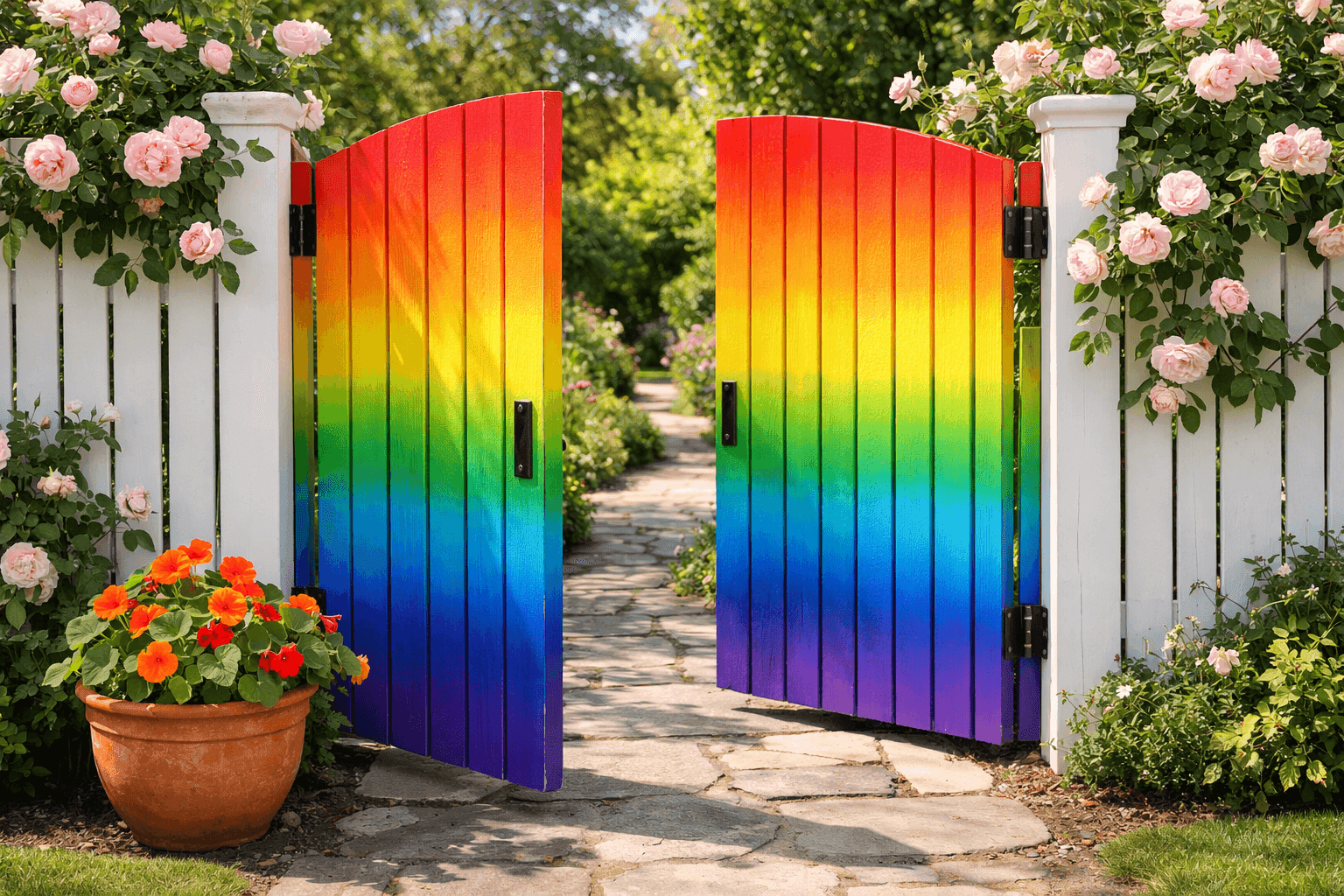
There is a category of garden project that is purely, defiantly joyful — no practical justification required, no neutral palette, no apologies — and a rainbow ombré garden gate is the most committed member of that category. Seven colors blending seamlessly from red to violet across your garden entrance transforms the most overlooked architectural feature in your yard into the thing every single person mentions the moment they walk through it. Exterior acrylic paint in $5 sample pots, a couple of hours of wet-into-wet blending, and somewhere between $30 and $50 depending on your gate size is all that stands between you and a garden entrance that makes you genuinely happy every time you come home. This is not a subtle project. It is not meant to be. It is meant to be the boldest, most unapologetically cheerful thing on your street, and it will be exactly that.
What You Need
- Exterior acrylic paint in seven colors — red, orange, yellow, green, blue, indigo, violet; sample-size pots ($3–5 each) are plenty for most standard garden gates and give you more color variety per dollar than full quarts (~$25–35 total)
- Exterior primer — one coat on bare or previously painted wood gives the ombré colors something to grip and dramatically improves color vibrancy, especially for the lighter shades (~$8–10 for a small can)
- 2-inch synthetic bristle paintbrush — for applying and blending colors wet-into-wet at the transition zones
- 1-inch detail brush — for working color into tight corners, edges, and any decorative ironwork on the gate
- Painter's tape — for protecting hinges, hardware, and any adjacent fence panels you don't want painted
- Sandpaper, 120-grit — for scuffing glossy or peeling existing paint so new coats bond properly
- Disposable palette or paper plates — for mixing the 50/50 transition colors between each rainbow section
- Exterior clear sealer, satin finish — a top coat over the finished ombré protects the gradient through seasons of weather without dulling the color (~$10–12)
- Drop cloth — to protect the ground beneath the gate during painting
How to Paint It
- Prepare the gate surface by cleaning it thoroughly with soapy water and a stiff brush, removing all dirt, mildew, and loose paint. Sand any glossy or peeling areas with 120-grit paper, wipe away dust, and tape off all hardware. A well-prepped surface is what separates a rainbow that still looks brilliant in year three from one that starts peeling before the season ends.
- Prime the entire gate with one even coat of exterior primer and allow it to dry fully — at least one hour in warm weather, longer in humidity. Primer is the step most people skip on an existing painted gate, and it is exactly what makes the yellow section look as vivid and saturated as the red rather than thin and washed out.
- Divide the gate into seven roughly equal sections by marking light pencil lines across the surface — these are your color zone guides, not hard boundaries. For a vertical gradient, divide top to bottom; for horizontal, divide left to right. Vertical reads more dramatically from a distance and works beautifully on most standard picket or board gate styles.
- Paint the first color section — red at the top for a vertical gradient — with confident, even strokes, extending slightly beyond your pencil line into the zone where the first transition will happen. Work quickly enough that the paint edge stays wet; ombré blending only works wet-into-wet, and a dried edge creates a harsh line no amount of additional blending will fully soften.
- Mix a 50/50 blend of red and orange on your palette and paint the transition zone where the two colors meet, using a dry brush in light feathering strokes to work the mixed color into both the wet red above and the fresh orange below simultaneously. This blended middle zone — not the individual colors — is where the magic happens, so give each transition generous space rather than rushing to the next pure color.
- Continue across all seven color sections in sequence — red, red-orange transition, orange, orange-yellow transition, yellow, yellow-green transition, and so on through indigo and violet — working steadily and keeping wet edges active at every transition zone. If a section starts to dry before you reach the next blend, lightly mist it with water from a spray bottle to reactivate the surface just enough to blend.
- Step back every fifteen minutes to assess the gradient from a distance of six to eight feet — transition zones that look rough up close almost always read beautifully from the distance at which the gate will actually be viewed, but a color section that is too wide or too narrow is much easier to correct while everything is still wet.
- Seal the finished gate with two coats of exterior clear sealer in a satin finish once the paint has dried fully — at least four hours, ideally overnight. The sealer coat is what locks the gradient in place through rain, UV exposure, and seasonal temperature swings, and a satin sheen gives the finished gate the kind of depth and richness that makes the colors look intentionally professional rather than DIY.
Muralists and decorative painters who work with exterior ombré techniques always choose paint colors from a single brand's line rather than mixing manufacturers — different paint brands formulate their pigments and binders differently, and mixing brands in wet-into-wet transitions can produce muddy, unpredictable results at the blend zones rather than the clean gradient you're after. They also pull their colors toward the warm side of each hue — a red-leaning orange rather than a brown-leaning one, a yellow-leaning green rather than a blue-leaning one — because warm-biased rainbow palettes blend more cleanly and photograph more vibrantly than palettes built from cooler, more muted hues. Both choices cost nothing and make a dramatic difference in how polished the finished gradient reads from the street.