No Drip: Fix Leaky Hose Connections in 5 Minutes
A $3 pack of rubber washers fixes every leaky hose connection in your entire yard — the repair so fast and cheap it's almost embarrassing to have waited this long
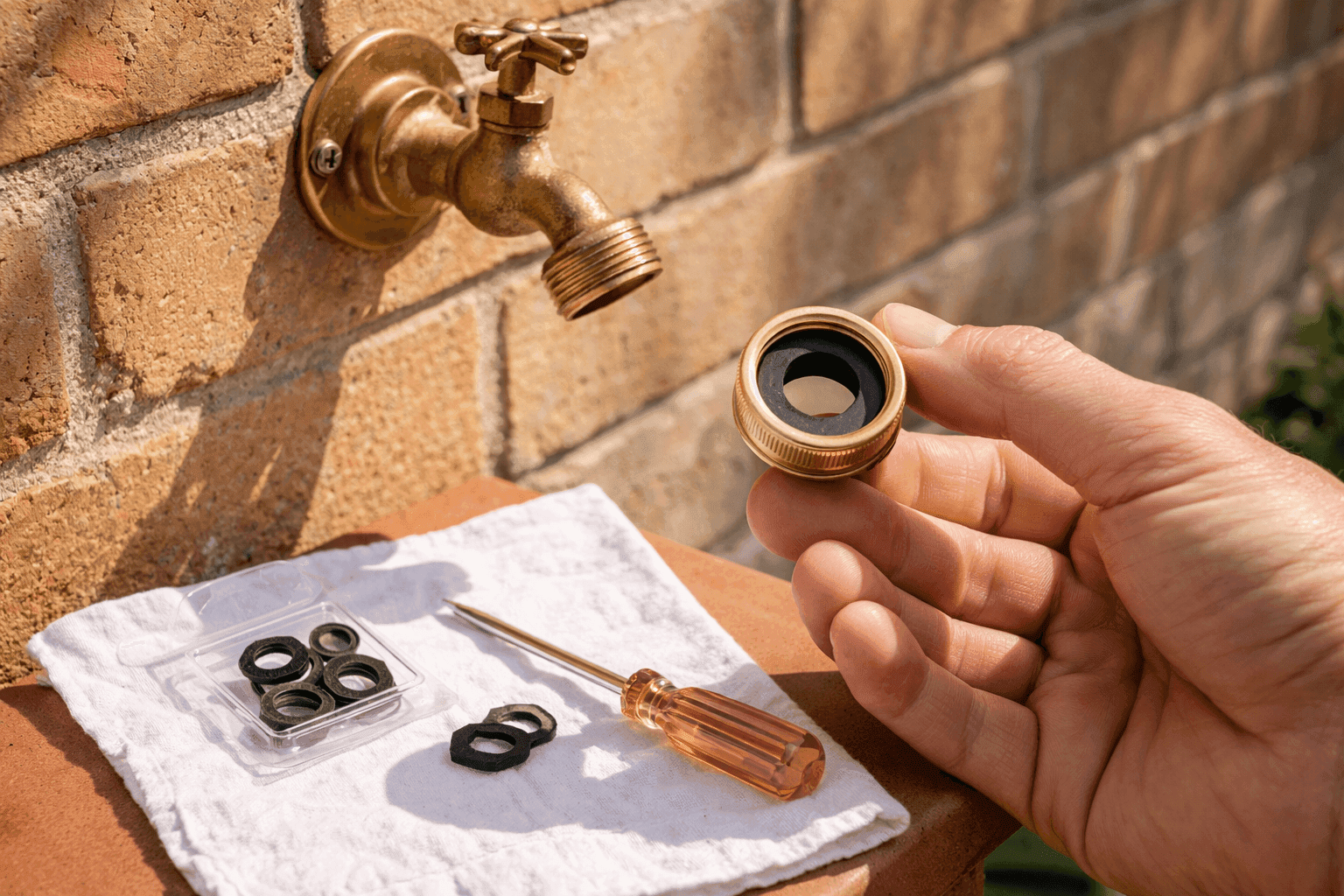
If your garden hose drips steadily at the connection point where it meets the spigot, the sprinkler, or any attachment — that puddle forming on the ground every time you water is not a hose problem and it's not a spigot problem. It's a washer problem, and the washer costs about twenty-five cents. The small rubber disc inside every hose fitting is what creates the watertight seal between two threaded metal surfaces, and it wears out, compresses, and hardens over seasons of use until it simply can't do its job anymore. Replacing it takes five minutes, costs under $3 for a multipack that fixes every connection in your entire yard with leftovers for next season, and requires nothing more than a flathead screwdriver and your hands. The number of garden hoses that get thrown away each year because of a leaky connection that a quarter-sized rubber washer would have fixed permanently is genuinely staggering — and if you've been stepping around a puddle at your spigot all summer, today is the day that stops.
What You'll Need
- The Washers
- A multipack of standard ¾-inch garden hose rubber washers — the universal size that fits the vast majority of residential garden hose fittings, spigots, sprinkler attachments, and nozzle connections — ~$2–$4 for a pack of 10–25 washers at any hardware store, garden center, or home improvement store
- Rubber washers specifically — not fiber, not foam, not plastic. Rubber is the material that seals correctly against metal threads under water pressure and lasts a full season before needing replacement, while alternative materials either compress immediately or degrade quickly in outdoor moisture
- Buy the multipack rather than individual washers — at roughly $0.15–$0.25 per washer in a pack, replacing every connection in a typical yard costs under $3 total, and keeping the extras in a small labeled bag in the garage means the next repair takes thirty seconds to find the part
- For connections that continue to leak after a new washer — typically older brass fittings with worn threads — plumber's thread tape (PTFE tape) wrapped clockwise around the male threads before connecting provides additional sealing that a washer alone can't achieve on damaged threads — ~$2–$3 per roll
- Tools
- A flathead screwdriver for prying out the old washer — the tip fits perfectly behind the washer rim to lever it out of the fitting recess without damaging the fitting itself
- Adjustable pliers or channel-lock pliers for any fitting that has been hand-tightened past the point where hand-loosening is comfortable — use these to break the initial resistance, then finish unscrewing by hand
- A clean dry rag for wiping threads before reassembly — grit and debris on the threads is a secondary cause of leaks that a new washer alone won't resolve if the threads aren't clean
- Inspect While You're There
- Check every hose connection in the yard while you have the washer pack out — spigot to hose, hose to splitter, splitter to each secondary hose, hose to sprinkler, and hose to nozzle. A connection that isn't visibly dripping yet but has a slightly compressed or flattened washer is a drip waiting to start, and replacing it proactively takes ten seconds
- Look for cracking, splitting, or hardening on the hose body near the fittings — old hoses develop stress cracks near the fittings that no washer replacement can fix and that indicate the hose itself needs replacement rather than just the washer
- Note any fittings where the threads feel rough or gritty during removal — these may need a light cleaning with an old toothbrush before reassembly to prevent the thread damage that causes leaks that no washer thickness can compensate for
- Preventive Supplies
- A small zip-lock bag for storing leftover washers labeled with the date and size — finding the right washer in thirty seconds next season versus hunting through a junk drawer for twenty minutes is a quality-of-life improvement that costs nothing to set up
- A permanent marker for writing the replacement date on each fitting with a paint pen or a small tag — tracking washer replacement dates lets you replace them proactively every two to three seasons before they fail rather than reactively after you've stepped in a puddle all week
How to Fix It
- Turn off the water at the spigot before disconnecting anything — not because the repair requires the water to be off, but because disconnecting a pressurized hose fitting releases a jet of water that soaks everything in a three-foot radius instantly. Turn the spigot handle fully clockwise to close, then open the nozzle or the end of the hose briefly to release residual pressure in the line before unscrewing any fitting.
- Unscrew the leaking fitting by hand or with pliers if necessary — grasp the fitting body rather than the hose body when applying plier pressure, since gripping the hose itself compresses and can permanently crease the hose wall near the fitting. Turn counterclockwise to loosen, and if the fitting hasn't been removed in several seasons expect significant initial resistance from mineral deposits and weathering that locked the threads together — break that initial resistance with a firm plier grip and it will turn freely from there.
- Look inside the fitting for the old washer — it sits in a shallow circular recess just inside the threaded end of the female fitting, and it may be barely visible if it's compressed flush with the recess or dark with age and dirt. A washer in good condition sits plump and slightly raised above the recess; a washer that needs replacing is visibly compressed flat, cracked around the outer edge, hardened like plastic rather than rubber, or simply missing because it disintegrated and washed away over time.
- Remove the old washer by inserting the tip of a flathead screwdriver between the washer edge and the fitting wall and levering it out — work around the circumference if it's stuck rather than digging the screwdriver tip into the center of the washer, which can leave fragments in the recess that prevent the new washer from seating flat. If the washer comes out in pieces, use the screwdriver tip to remove every fragment before installing the replacement — even a small piece of old washer under the edge of a new washer creates a gap that leaks.
- Clean the fitting recess and threads with a dry rag or an old toothbrush to remove any mineral deposits, dirt, or washer fragments before the new washer goes in — a clean, dry recess is what allows the new washer to seat perfectly flat and create a full circumference seal rather than sealing only where it makes contact around an uneven or debris-covered surface. Hold the fitting up to the light and look directly into the recess to confirm it's clean and the seating surface is undamaged before proceeding.
- Press the new washer into the recess by placing it centered over the opening and pressing firmly with your thumb until it clicks into the recess and sits flat — a correctly seated washer sits flush with or very slightly raised above the fitting end face, perfectly centered with no gaps visible between the washer edge and the recess wall. A washer that sits tilted or off-center will leak from the gap side regardless of how tightly the fitting is tightened, so confirm it's flat and centered before threading the fitting back on.
- Reattach the fitting by hand until it's snug — thread it clockwise onto the spigot or the mating fitting by hand until you feel resistance, then give it a final quarter-turn snug with pliers. Hand-tight plus a quarter-turn is the correct tightness for a hose fitting with a new rubber washer — the washer does the sealing work and a correctly seated washer seals completely at this torque level. Overtightening crushes the new washer immediately and reproduces the same compressed-flat failure you just replaced, so resist the urge to crank it down as hard as possible.
- Turn the water back on and test by opening the spigot slowly and watching the repaired connection for ten seconds — a correctly installed washer produces a completely dry connection from the first moment of water pressure with no drips, no weeping, and no tightening required. Walk every other hose connection in the yard while the water is running and press a dry finger against each one to check for moisture — any connection that dampens your finger gets the same washer replacement treatment before you put the screwdriver away, since you already have the pack open and the fix takes three minutes per connection.
Irrigation contractors who maintain residential and commercial watering systems do one thing at the end of every season that dramatically reduces hose connection failures the following spring: they disconnect every hose from every spigot, drain the hoses completely, and store them coiled loosely in a garage or shed rather than leaving them connected and pressurized through winter. A hose left connected to a spigot through freezing temperatures traps water in the fitting connection that expands as it freezes, compressing and cracking rubber washers in a single freeze event — which is why so many hose connections start leaking in the very first watering session of spring. Draining and storing hoses for winter costs nothing and takes about five minutes per hose, and it's the maintenance habit that makes a $3 pack of washers last two to three seasons rather than needing replacement every spring. While disconnecting for winter, apply a thin coat of plumber's grease to the threads of both fittings before storing — it prevents the corrosion and galling that makes spring reconnection frustratingly difficult on older brass fittings and costs nothing if you already own a tube from a bathroom plumbing project.