New Floors, No Contractor: Your DIY Flooring Playbook
The right floor for every room and exactly how to install it yourself
Flooring installation is probably the highest-value DIY skill a homeowner can develop. Professional installation typically costs $3–$8 per square foot on top of materials — on a 500 square foot main floor, that's $1,500–$4,000 in labor alone. And most flooring products today, particularly LVP (luxury vinyl plank), are genuinely designed for DIY installation. The click-lock systems are smart enough that a careful first-timer can do a room in a day and have results that look professionally done. Here's what you need to know about the most common flooring types and how to install them.
Luxury Vinyl Plank (LVP) — Best for Most Rooms
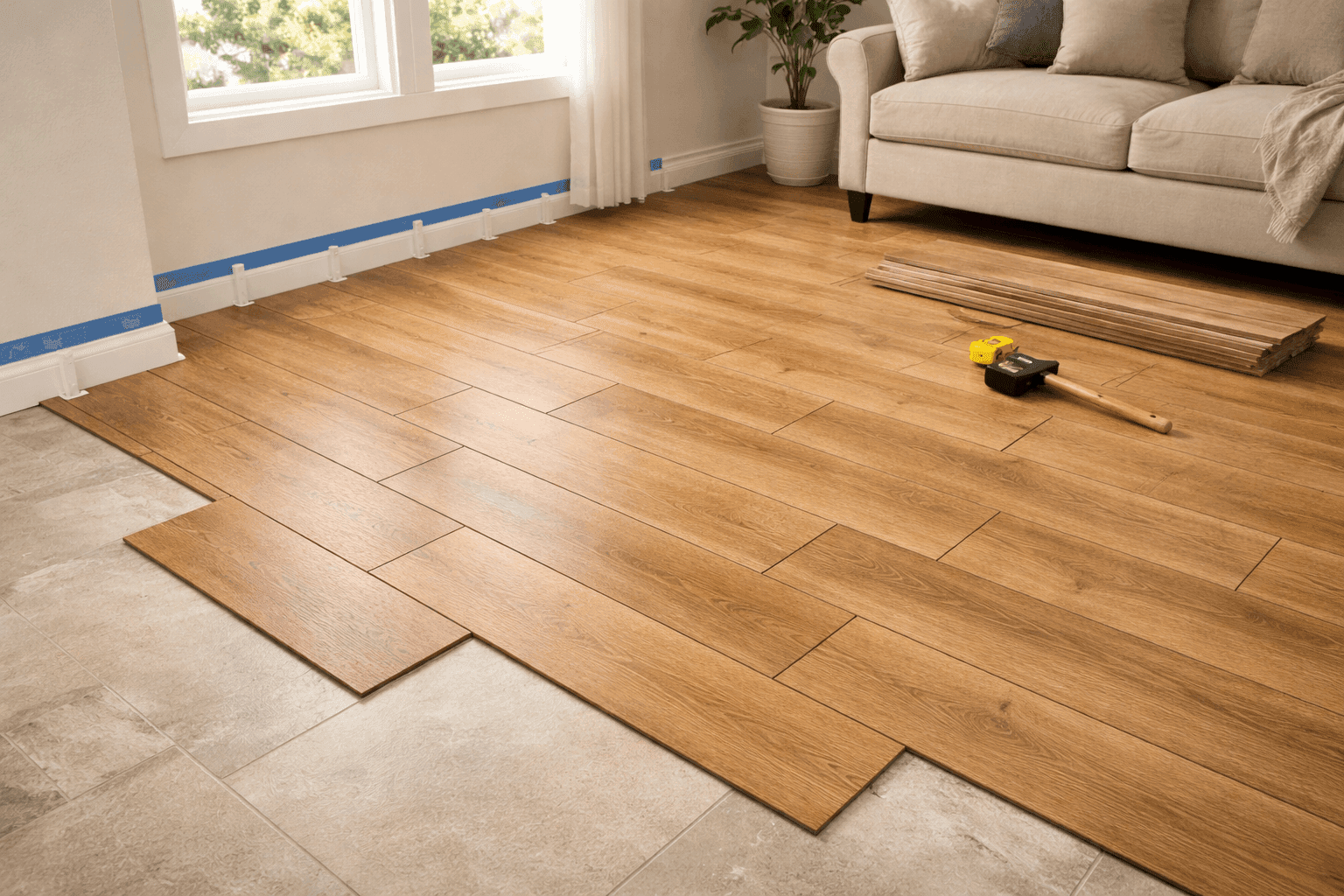
LVP is the current darling of DIY flooring — waterproof, durable, comfortable underfoot, and available in wood looks that are genuinely hard to distinguish from the real thing at normal viewing distance. It goes over most existing floors without removal (as long as the subfloor is level), and the click-lock planks snap together without glue or nails.
Key installation steps: acclimate the flooring in your home for 48 hours before installation. Start from the straightest, most visible wall. Leave a 1/4-inch expansion gap around all walls and obstacles (it will be covered by baseboards). Stagger the end joints between rows by at least 6 inches so they don't line up. Cut planks with a utility knife and a straight edge (score deeply, then snap) or a miter saw. Use pull bars and a tapping block to seat the joints — don't beat directly on the planks. The whole job for an average room takes 4–6 hours.
Laminate — Similar Process, Different Considerations
Laminate installs nearly identically to LVP and uses the same click-lock system. The critical difference: laminate is not waterproof. It will swell and buckle if moisture gets under it, which makes it a poor choice for basements, bathrooms, and laundry rooms. For main floors and bedrooms in dry climates, it's an excellent, budget-friendly option — often 30–40% cheaper per square foot than comparable LVP.
Hardwood — Beautiful, More Demanding
Solid hardwood installation is DIY-able but genuinely more demanding — it typically requires a flooring nailer (rentable for about $40/day), and the subfloor prep needs to be more precise since wood telegraphs subfloor imperfections more than LVP. Engineered hardwood (a plywood core with a real wood veneer top layer) is more dimensionally stable, tolerates slightly more moisture variation, and can also be installed as a floating floor using click-lock, making it a better intermediate option. Acclimate hardwood for at least 5–7 days before installation.
Tile — The Most Durable, The Most Forgiving of Mistakes
Tile requires more prep — a truly flat, rigid substrate is essential (cement board over the subfloor is standard in wet areas), and thinset mortar cures on its own schedule. But tile is genuinely forgiving of cosmetic mistakes during installation since grout lines hide a lot of imperfection. For small bathrooms or kitchen backsplashes, tile is a very achievable first project. Start with larger format tile (12x24 or 18x18) — fewer grout lines means faster installation and a more modern look. Always dry-lay your entire pattern before mixing a single bag of thinset.
Buy 10% more flooring than your square footage calculation. Every project generates waste from cuts, and some planks or tiles arrive damaged. Running short mid-project and finding your flooring is backordered (or discontinued) is one of the worst possible situations. The extra 10% costs you relatively little upfront and saves enormous headaches later. Store a few extra planks or tiles in a closet after installation — if you ever need to repair a damaged section years later, having material from the exact same dye lot is invaluable.