Mulch Flower Beds: Winter Protection That Works Year-Round
Shield roots from winter extremes while creating beautiful, weed-free beds for spring
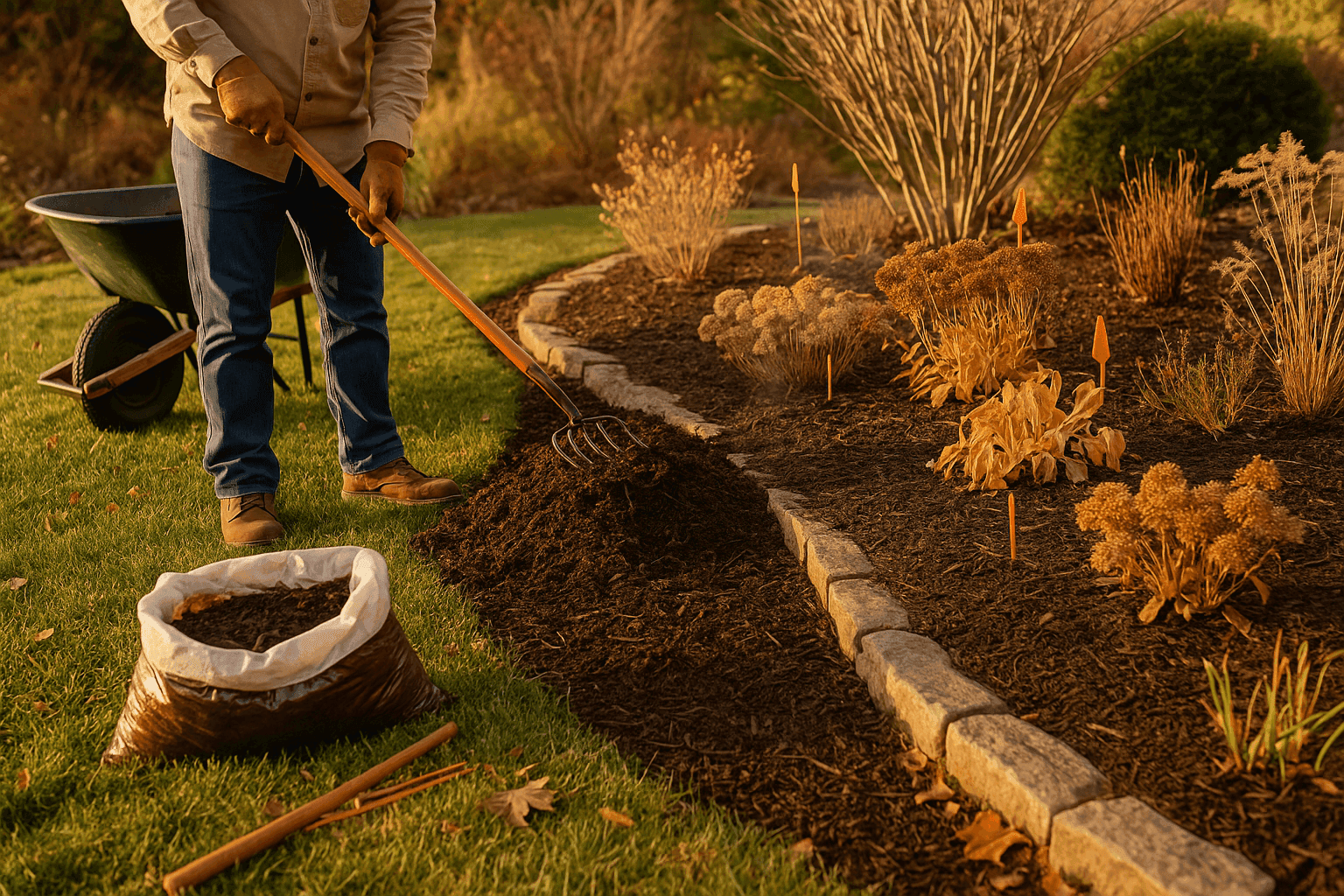
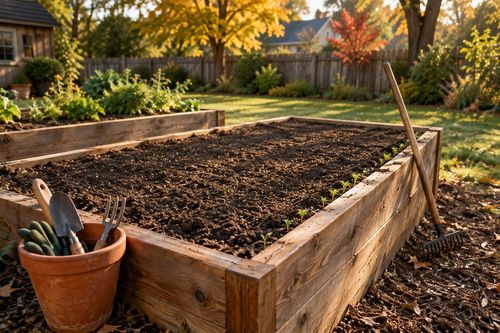
Fall mulching is one of those garden tasks that separates thriving landscapes from struggling ones, providing critical winter insulation that protects plant roots from the freeze-thaw cycles that can heave perennials right out of the ground. A proper mulch layer acts as nature's blanket, moderating soil temperature extremes while retaining moisture and preventing erosion during winter storms and spring thaws. The benefits extend far beyond winter protection – that same mulch layer suppresses spring weeds, enriches soil as it decomposes, and creates the polished, professional appearance that makes gardens look intentionally designed rather than accidentally assembled. Applying mulch before the ground freezes is essential timing that ensures your perennials and shrubs enter dormancy with the protection they need to emerge healthy and vigorous when spring arrives.
Mulching Materials
- Mulch Selection: Shredded hardwood bark, pine bark nuggets, or leaf compost (2-3 cubic yards per 100 square feet)
- Tools Required: Wheelbarrow for transport, rake for spreading, garden fork for breaking up compacted mulch
- Bed Preparation: Weeding tools, edging spade for clean borders, garden hose for pre-mulch watering
- Optional Additions: Landscape fabric for severe weed areas, soil amendments to mix in before mulching
- Safety Gear: Work gloves to protect hands, knee pads for ground-level work, dust mask if mulch is dry
Application Process
- Remove all weeds from beds before mulching, as covering them only provides temporary suppression
- Edge bed borders cleanly using a spade to define boundaries and prevent mulch migration into lawn areas
- Water beds thoroughly if soil is dry, as mulch helps retain existing moisture but won't add any
- Clear old mulch from plant crowns and stems to prevent rot and pest problems during winter months
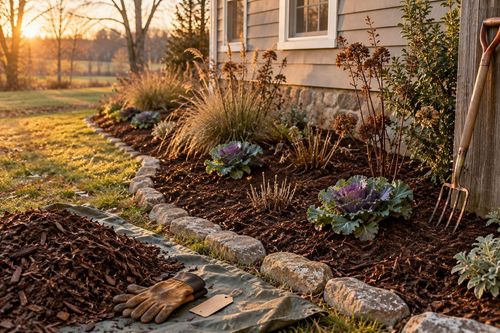
- Apply fresh mulch in 2-3 inch layers around perennials, keeping it 2-3 inches away from plant stems
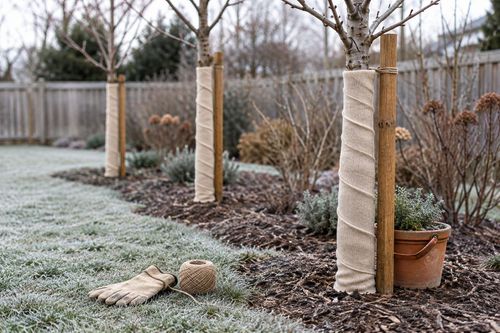
- Spread 3-4 inches around shrubs and trees for adequate insulation of larger root systems
- Rake mulch evenly, avoiding thick piles that prevent air circulation and create moisture problems
- Create slight depressions around plants to direct water toward roots while maintaining proper drainage
Master gardeners wait until after the first hard frost to apply winter mulch, allowing plants to properly harden off before insulation. Mulching too early can delay dormancy and make plants more vulnerable to winter damage. For the most polished appearance, create smooth, gently sloped mulch surfaces that transition naturally from bed centers to edges rather than abrupt mounds that look amateurish. Professional landscapers also "fluff" existing mulch before adding new layers, breaking up compacted material to improve air circulation and water penetration while reducing the total amount of new mulch needed.