Move the Sofa: Furniture Arrangement Rules Worth Breaking
Why your room doesn't feel right — and how to fix it without buying anything
Before you buy a single new thing for a room that isn't working, try rearranging what you already have. I've seen rooms transformed completely — made to feel larger, warmer, and more functional — just by moving furniture to positions that made more spatial sense. The principles are learnable, and once you understand them, you'll never walk into a room without immediately seeing how it could be better.
Pull Furniture Away from Walls
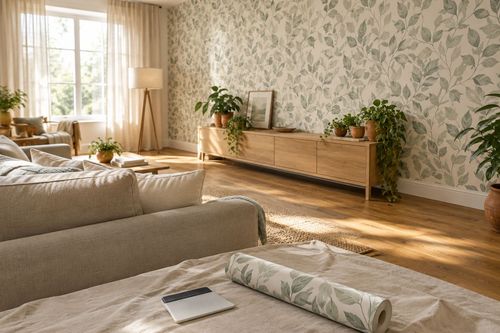
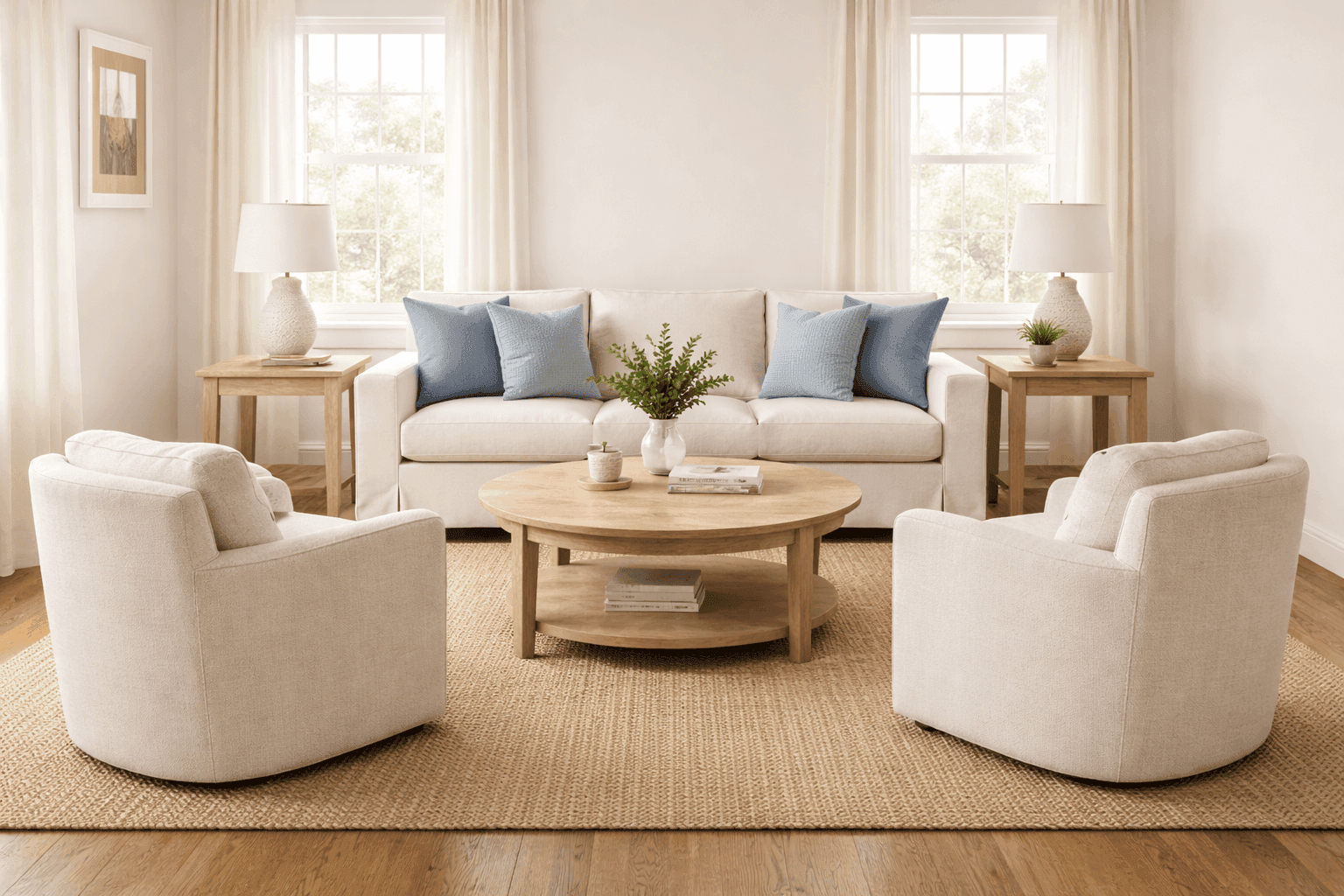
The default arrangement in most living rooms — sofa pushed to one wall, chairs pushed to others, everything as far apart as possible — creates a room that feels like a waiting room. Pulling the sofa 12–18 inches from the wall and grouping seating inward around a central coffee table creates a conversation area that feels intimate and intentional. The breathing room behind the sofa isn't wasted; it makes the room feel larger by creating depth.
Define Zones with Rugs
A rug visually defines a zone — it tells the eye "this is one area." In an open-plan space, multiple rugs can define separate zones (living, dining) within the same room. The most common rug mistake is buying one too small. In a living room, the rug should be large enough that at least the front legs of every seating piece rest on it. A rug that sits only under the coffee table with all the furniture floating beyond it looks like an afterthought. Standard living room rugs: 8x10 for most spaces, 9x12 for larger rooms.
Create a Focal Point
Every well-arranged room has one clear focal point — the element your eye goes to first and that the furniture arrangement responds to. This is usually a fireplace, a large window, or the TV. Arrange seating to face the focal point, with clear sightlines and comfortable angles. If your room doesn't have a natural focal point, create one: a gallery wall, an oversized piece of art, a large plant with a floor lamp beside it. Then arrange everything else in relation to it.
Traffic Flow and Clearances
The path people naturally walk through a room should never cut through the primary seating arrangement. Allow at least 36 inches for a main walkway, 24 inches for secondary paths. Between a sofa and coffee table, 14–18 inches is the sweet spot — enough to move easily but not so much that you can't reach things. Between facing sofas or chairs, 8–10 feet maximum before the distance feels socially disconnected. Measure these things before you move furniture, not after — tape on the floor saves a lot of heavy lifting.
Before moving anything heavy, tape out your proposed layout on the floor with painter's tape. Mark the outlines of furniture pieces based on their actual dimensions. Walk through it, sit in the approximate locations, and check sight lines. This costs nothing and takes 20 minutes — and it reveals immediately whether your planned arrangement creates a traffic flow problem or awkward spacing that would only become apparent after moving everything. Designers do this for every project before any furniture moves.