Mindful Succulent Propagation for Under $5
The slowest, gentlest craft in the garden — and the one most worth doing
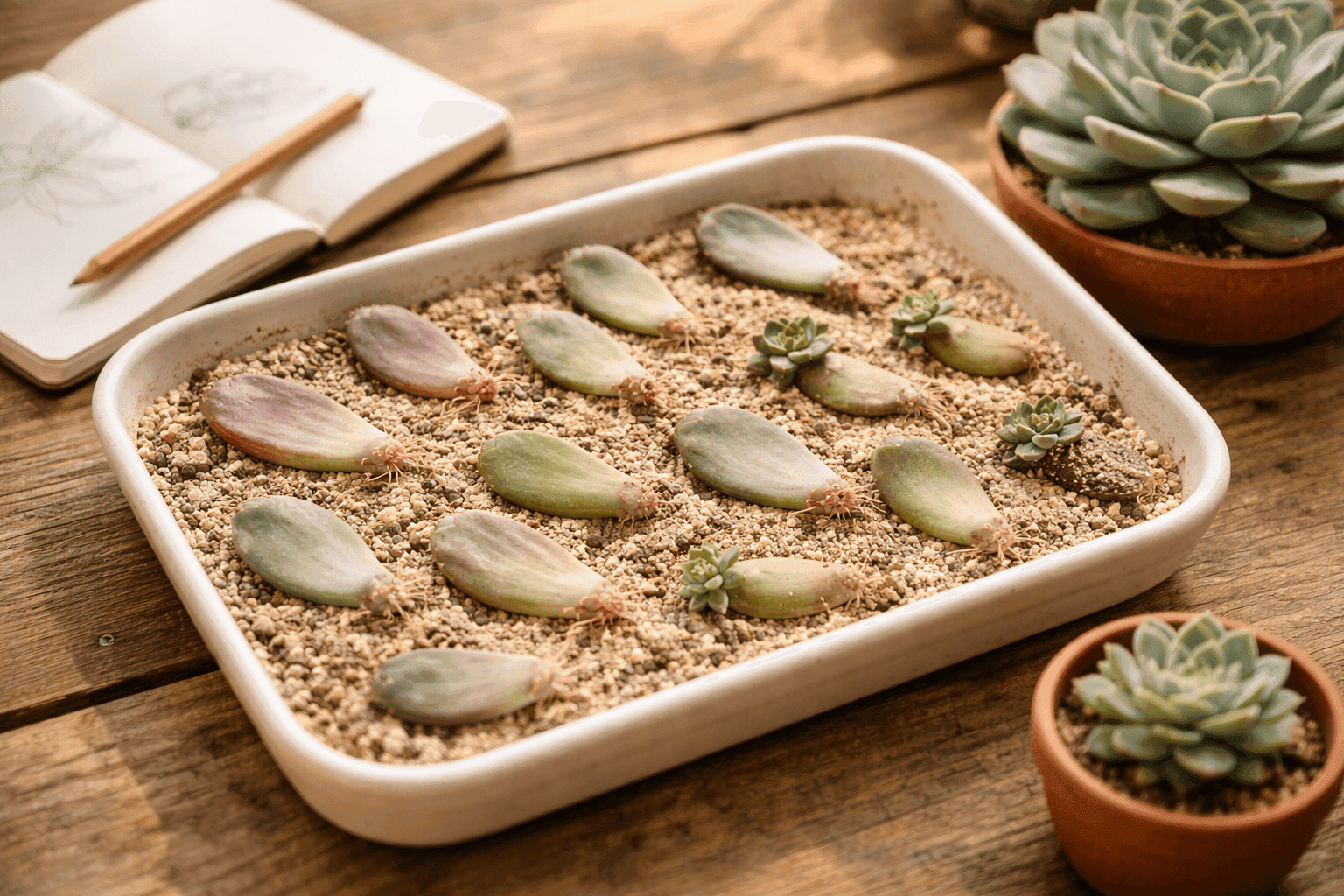
Most garden projects ask you to build something, fix something, or finish something — succulent propagation asks you to slow down, pay attention, and trust a process that unfolds entirely on its own schedule. A single healthy leaf twisted gently from a parent plant and laid on dry soil will, over the course of two to four quiet weeks, produce roots, then a tiny rosette, then a complete new plant — and the daily ritual of checking for signs of progress becomes one of those small, grounding habits that anchors a busy day in something genuinely peaceful. This costs nothing if you already grow succulents, or under $5 for a starter plant from any garden center. There is no tool required, no skill to master, no deadline to meet. There is only the leaf, the soil, the light, and the slow reliable miracle of a plant deciding to become more of itself.
What You Need
- Healthy succulent plant — Echeveria, Sedum, and Graptopetalum propagate most reliably from leaves; avoid Haworthia and Aloe, which do not propagate this way (~$3–5 for a starter plant if you don't have one)
- Shallow tray or nursery flat — a repurposed baking tray, plastic lid, or any wide, flat container with low sides works perfectly
- Cactus and succulent potting mix — or regular potting mix cut with coarse perlite at a 50/50 ratio for the drainage succulents require (~$5–8 for a small bag)
- Small spray bottle filled with water — for the light misting that begins only after roots appear; never water propagating leaves before then
- Bright indirect light source — a windowsill with morning light or a spot under a grow light; direct afternoon sun scorches the delicate new roots before they can establish
- Patience — genuinely the only non-negotiable ingredient in this entire process
How to Do It
- Select healthy, plump leaves from the lower portion of your parent plant — avoid any that are shriveled, damaged, or show signs of rot. The healthiest leaves produce the most vigorous new plants, so this first quiet moment of selection is worth taking slowly.
- Remove each leaf with a gentle side-to-side twist rather than a straight pull or a cut — the entire base of the leaf where it attached to the stem must come away cleanly and intact. A leaf with a torn or missing base will not propagate. This is the single step that determines whether your propagation succeeds or stalls entirely.
- Rest the removed leaves on a dry surface in bright indirect light for one to three days before placing them on soil. This allows the wound at the base to callous over — a bare, uncalloused base placed directly on moist soil will rot rather than root, and no amount of patience will recover it from there.
- Fill your shallow tray with a one-inch layer of dry cactus mix and arrange the calloused leaves across the surface, laying them flat or at a very slight angle with the base end resting just at the soil surface — touching but not buried. Space them an inch or two apart so the eventual rosettes have room to develop without crowding.
- Place the tray in a spot with bright indirect light and leave it completely undisturbed and unwatered. The leaves contain enough stored moisture to sustain the propagation process through the rooting phase — adding water before roots appear interrupts the stress response that triggers root development in the first place.
- Check daily from about the ten-day mark onward, looking for the first threadlike pink or white roots emerging from the leaf base. This daily checking is not impatience — it is the ritual. The moment you spot the first roots is one of the quietest and most disproportionately satisfying experiences in all of gardening.
- Mist lightly with your spray bottle once roots are visible and again every few days as the tiny rosette begins to form at the base of the leaf. The original leaf will gradually shrivel as the plant draws its energy inward to fuel new growth — this is entirely normal and means things are going exactly as they should.
- Pot up each new rosette individually once it has developed several leaves of its own and the original propagation leaf has fully shriveled and detached on its own. Settle each tiny plant into its own small pot of fresh cactus mix, water gently, and watch it grow into a full plant over the coming months — or gift it to someone who needs a little slow green magic in their life.
Horticultural therapists who use plant propagation as a mindfulness practice with patients often keep a simple propagation journal alongside their trays — just a small notebook where they record the date each leaf was placed, make brief daily observations, and sketch or photograph the first roots and rosettes as they appear. The journal transforms the waiting from passive to actively observational, which research in horticultural therapy consistently shows deepens the calming effect of the practice and strengthens the sense of connection to natural growth cycles. It also becomes a genuinely lovely record of patience made visible — something worth keeping long after the plants have been potted up and gifted away.