Medicine Cabinet Makeover: Purge, Clean, and Organize for Safety
Start the year with safe, organized health supplies by checking dates and creating functional categories
Your medicine cabinet is probably harboring expired pain relievers from 2019, prescription bottles you finished years ago but never threw away, and band-aids so old the adhesive no longer sticks—a chaotic collection that makes finding what you actually need during illness or injury unnecessarily frustrating. Taking expired or degraded medications isn't just ineffective; it can be genuinely dangerous, and cluttered medicine storage means you waste time searching for supplies when you're already feeling terrible and just want relief. Organizing your medicine cabinet takes about 30 minutes and costs nothing beyond possibly a few small organizing containers, but it transforms your health supplies from hazardous chaos into a safe, functional system where everything is current and findable. This isn't about creating Instagram-worthy perfection; it's about ensuring your family's health and safety by eliminating expired medications, verifying what you actually have on hand, and creating logical organization that works when you're sick and can't think straight.
What You'll Need
- Trash Bag: For disposing of expired medications and empty containers
- Cleaning Supplies: All-purpose cleaner and cloth for wiping shelves
- Small Containers: Bins or baskets for grouping categories ($5-10 optional)
- Labels: Label maker or sticky notes for identifying categories
- Disposal Info: Location of nearest medication take-back program or pharmacy
- Shopping List: Paper for noting items that need replacing
- Time Investment: 30-45 minutes for complete purge and reorganization
Step-by-Step Method
- Empty your entire medicine cabinet onto the counter so you can actually see everything you've accumulated over the years
- Check expiration dates on every single item—medications, ointments, eye drops, even band-aids lose effectiveness and adhesive over time
- Discard anything expired, any prescription bottles from completed courses, and products you don't recognize or remember buying
- Dispose of medications properly through take-back programs at pharmacies rather than flushing or trashing where they contaminate water supplies
- Clean cabinet shelves thoroughly, removing sticky residue from spills and dust that accumulates in bathroom humidity
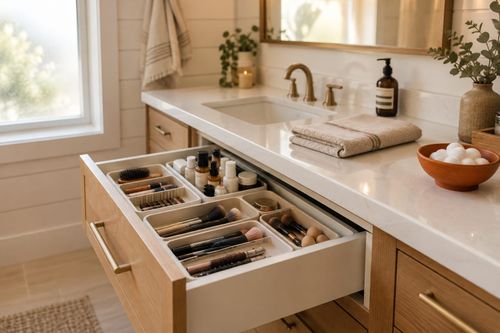
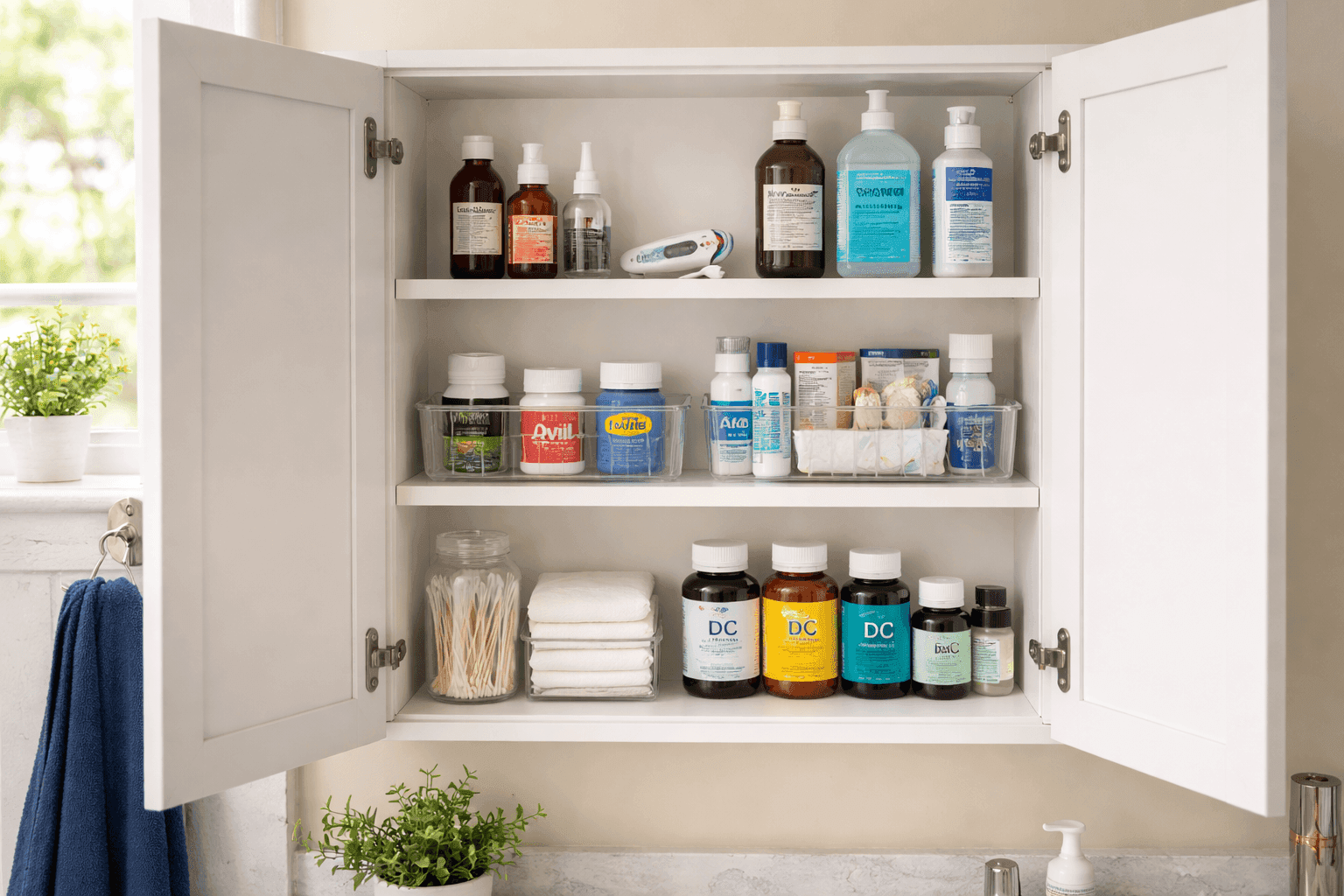
- Group remaining items by category—pain relievers together, cold/flu medicines together, first aid supplies together, daily vitamins together
- Arrange items with most frequently used products at eye level and front, less common items on higher or lower shelves
- List items that need replacing and stock up on basics so you're not making midnight pharmacy runs when someone gets sick
Pharmacists recommend storing medications in cool, dry places rather than humid bathrooms where heat and moisture accelerate degradation—consider moving daily medications to a bedroom drawer or kitchen cabinet away from the stove. Keep only true emergency supplies like pain relievers, first aid items, and thermometer in the bathroom cabinet for middle-of-the-night access. Also, write expiration dates on the top of bottles with permanent marker so you can check dates without removing everything from shelves—this simple habit makes quarterly checks effortless. Create a "sick day basket" within your medicine cabinet containing everything needed when illness strikes: thermometer, pain reliever, tissues, cough drops, and electrolyte packets so you're not searching through multiple locations when you feel terrible. The key to maintaining an organized medicine cabinet isn't complicated systems; it's checking expiration dates every six months (set a recurring calendar reminder) and immediately discarding anything expired rather than letting it accumulate. This regular maintenance takes five minutes but prevents the overwhelming chaos that makes you avoid the project until it becomes a two-hour ordeal.