Make Free Seed Pots From Newspaper in 15 Minutes
The only seed starting container that disappears into the soil when you're done with it
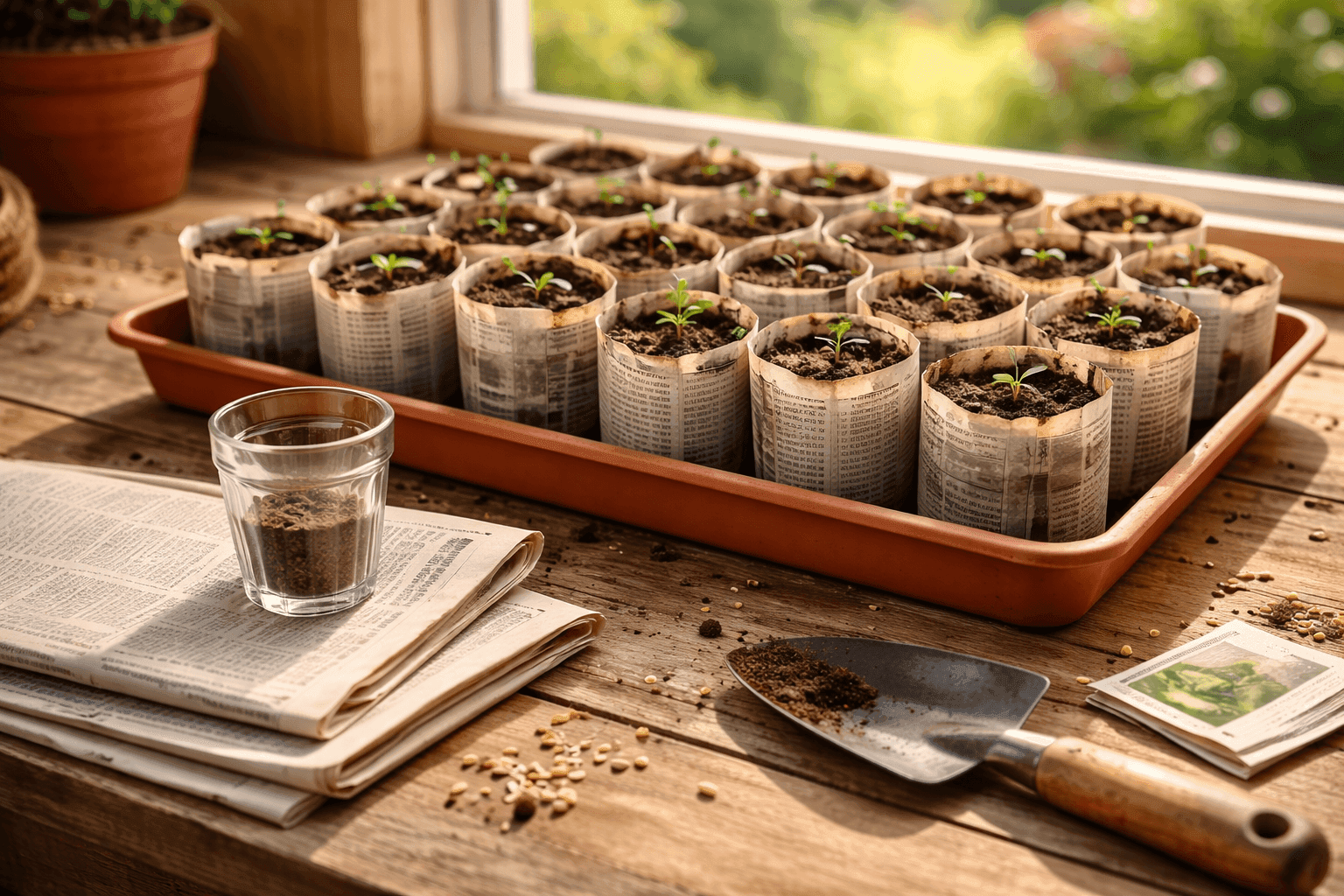
Every spring, gardeners spend real money on plastic seed trays and peat pots that either crack after one season or sit in a landfill forever — and the whole time, a perfectly good seed starting material has been landing on the doorstep every week. Newspaper pots cost absolutely nothing to make, take about 15 minutes to fold a whole tray's worth, and do something no plastic container can: they go directly into the ground at transplant time, pot and all, so you never disturb the roots and the paper composts itself within a few weeks. This is the kind of project that feels almost too simple to work right up until your seedlings are thriving in the garden with zero transplant shock and zero containers left to wash and store. It's genuinely one of the best zero-waste swaps in the gardening world, and the only supply you need is yesterday's news. If you've been buying seed starting supplies every year, this is the project that ends that habit for good.
What You'll Need
- The Pot Material
- Newspaper sheets — black-and-white or color pages both work fine; modern newspaper inks are soy-based and completely safe for food garden use
- Avoid glossy inserts or magazine pages — they don't fold as cleanly and break down far more slowly in soil
- The Forming Tool (pick one)
- A small glass or jar with a flat bottom — a standard 8-oz juice glass is the ideal diameter for most seedlings
- A dedicated newspaper pot maker tool — optional wooden or plastic press available at garden centers for about $10–12 if you want perfectly uniform pots at speed
- Your hands — honestly sufficient once you've made two or three and gotten the feel for the fold
- Filling & Planting
- Seed starting mix or fine potting mix — not garden soil, which compacts too densely in small containers
- Seeds of your choice
- A tray, baking pan, or shallow box to hold the finished pots upright and catch drainage water
- Total Cost
- Absolutely zero — assuming you have newspaper and a glass already, which you almost certainly do
How to Make Them
- Tear a single newspaper page in half along the fold so you have two rectangular sheets. Each half makes one pot, so a single full page of newspaper yields two containers — plan accordingly based on how many seedlings you're starting.
- Fold each half-sheet lengthwise into thirds, creating a long narrow strip about 4–5 inches wide. This triple-layer thickness is what gives the finished pot enough structural strength to hold soil and moisture without falling apart before transplant day.
- Position your glass horizontally at one end of the strip with about 2 inches of newspaper extending past the bottom of the glass. This overhang is what you'll fold in to form the pot's base, so don't skip it — a pot with no bottom is just a paper tube.
- Roll the newspaper strip tightly around the glass, working toward the open end until the full strip is wrapped and the seam overlaps by at least an inch. Hold it firmly — the wrap will want to loosen slightly while you work the base folds.
- Fold the overhanging paper at the bottom of the glass inward in overlapping segments, working around the circumference the way you'd wrap a gift — each flap tucking over the previous one to create a closed, layered base. Press firmly against a flat surface to flatten and set the bottom.
- Slide the glass out from the open top of the pot — the newspaper cylinder should hold its shape cleanly. If the base pops open when you remove the glass, re-fold and press more firmly, or make the overhang slightly longer on your next pot.
- Stand the finished pot in your tray and fill it with seed starting mix to about a half-inch from the top. Sow one or two seeds per pot according to packet depth instructions, then water gently — the newspaper will darken and soften slightly when wet, which is normal and won't affect the pot's integrity.
- Transplant the entire pot directly into the ground when seedlings are ready, peeling away the top inch of exposed newspaper above the soil line so it doesn't wick moisture away from the roots. The buried portion breaks down within two to four weeks, feeding the soil as it goes.
Market gardeners and nursery growers who use newspaper pots at scale almost always bottom-water their seedling trays rather than watering from the top — they pour water into the tray and let the pots absorb moisture upward through the newspaper base. This keeps the top layer of soil from washing seeds out of position, dramatically reduces the chance of damping-off fungus that thrives on wet surface soil, and actually strengthens the pot walls over time by allowing them to dry between waterings rather than staying perpetually soggy. Set your filled pots in about a half-inch of water, let them drink for 20–30 minutes, then drain the tray completely — your seedlings will establish faster and your pots will hold together right through to transplant day.