Make a $8 Spring Wreath That Looks Like $50
Density is the secret — pack those flowers in and nobody will believe where you bought the supplies
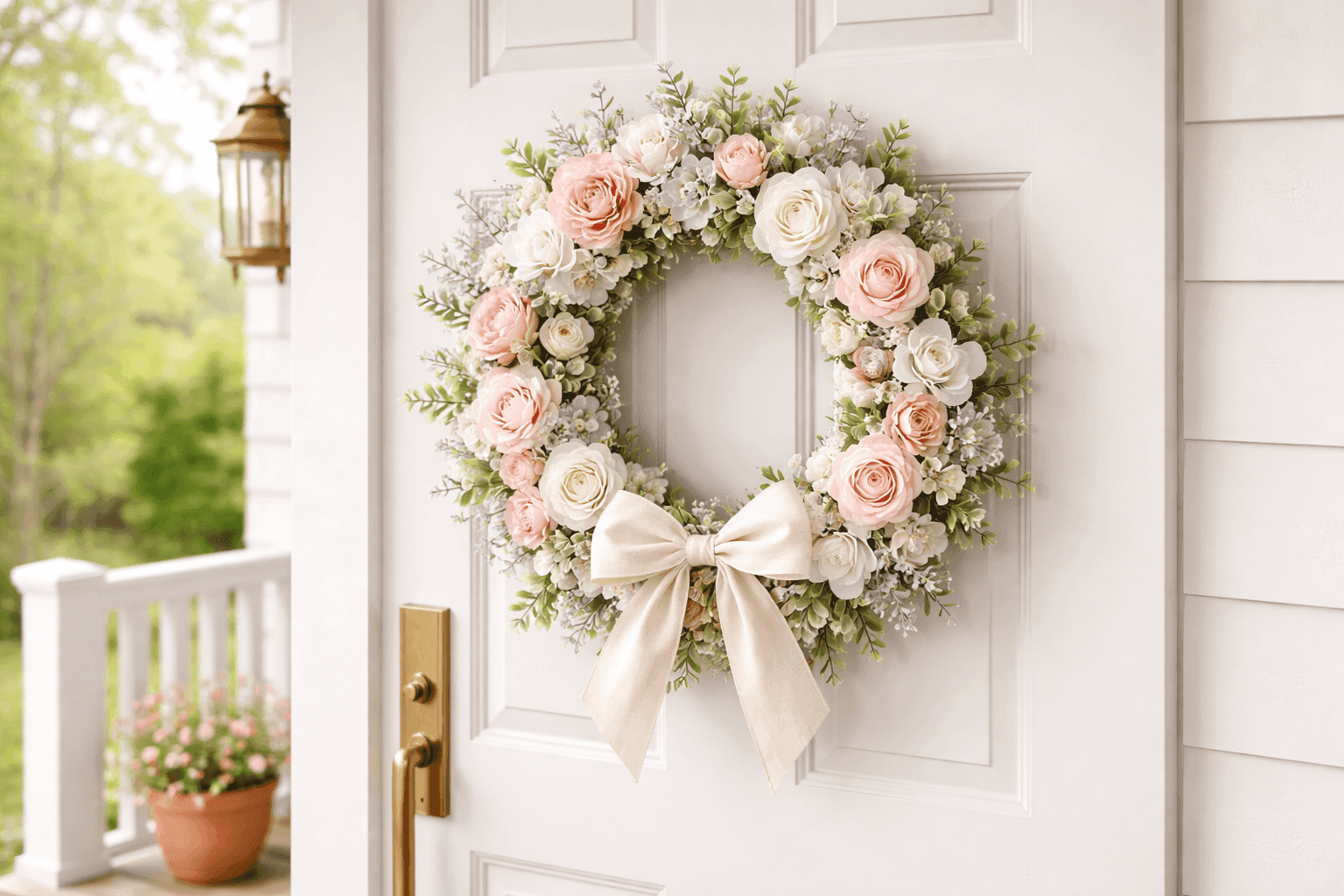
A spring wreath on the front door is one of those small things that makes a house feel genuinely alive and welcoming from the moment you pull into the driveway — but the ones at home décor stores that actually look full and lush tend to run $40–60, which is a lot to spend on something that'll be swapped out in two seasons anyway. The good news is that the difference between a wreath that looks expensive and one that looks homemade comes down to exactly one thing: density. Pack the flowers in with no foam showing through, mix your colors evenly throughout, and work in one consistent direction — and the finished result is indistinguishable from those overpriced store versions, for about $8 in dollar store supplies. This is a project that takes under an hour, requires no particular skill beyond patience and a hot glue gun, and produces something that genuinely makes your front door look cared-for and seasonal every single time someone walks up to it.
What You'll Need
- The Wreath Form
- 12-inch foam wreath form — the most beginner-friendly option; flowers glue directly to it with no fuss ($1–2 at dollar stores or craft stores)
- Grapevine wreath form — a natural alternative with more rustic character; flowers tuck and wire in easily without glue if preferred ($1–3)
- Flowers and Greenery
- 3–4 bunches of artificial flowers in 2–3 coordinating colors — most dollar store bunches contain 6–10 individual flower heads each, so four bunches gives you 25–35 blooms total, which is enough to cover a 12-inch form with the density this project requires ($1 per bunch)
- Color combinations that work beautifully: soft pink, white, and lavender for a classic spring look; yellow, peach, and cream for a warm sunny feel; all white and green for a modern, clean result
- 1–2 bunches of artificial greenery or filler flowers — small leaves, baby's breath, or tiny filler blooms fill gaps and add depth between larger flower heads ($1 per bunch)
- Tools and Extras
- Hot glue gun and glue sticks — a full-size gun holds heat better and gives you more working time than a mini glue gun
- Sharp scissors or wire cutters for trimming stems to 1–2 inches
- Ribbon — 1.5-inch wired ribbon in a coordinating color for a bow, or skip entirely for a cleaner modern look (~$1–2 for a yard at the dollar store)
- Floral wire for securing a hanging loop or anchoring any stems that won't glue flat
- Total Cost
- $6–10 for everything — compared to $40–60 for a similar-looking store-bought wreath
How to Make It
- Prep all your flowers first before heating the glue gun — cut every flower head from its stem leaving a 1–2 inch stub, and sort them into piles by color and size. Having everything prepped and organized before you start gluing is what lets you work quickly and place colors thoughtfully rather than scrambling with one hand while the other holds a dripping glue gun.
- Wrap the foam form with a strip of ribbon or floral tape in a matching color before any flowers go on — this covers the visible foam on the inner and outer edges of the ring that flowers won't reach, so if any gaps appear in the final result the background reads as intentional color rather than bare white foam.
- Establish your working direction by deciding whether you'll work clockwise or counter-clockwise around the form and stick to it throughout. Angling each flower head in the same direction as you work is what creates the flowing, professional look of a well-made wreath — flowers pointing in random directions is the single most common reason DIY wreaths look homemade rather than crafted.
- Start with your largest flower heads as the anchor blooms, spacing them evenly around the full form before filling in — place one at 12 o'clock, 3 o'clock, 6 o'clock, and 9 o'clock as anchor points. Apply a generous dot of hot glue to the foam, press the flower stem stub firmly into it, and hold for five seconds. These anchor blooms establish the visual rhythm everything else will follow.
- Fill in with your remaining flowers, distributing colors evenly throughout rather than grouping same-color blooms together — hold each flower over the wreath and eyeball the color balance before gluing. Each new flower should slightly overlap the previous one, tucking in toward the center of the form to build coverage. Work all the way around completing one full pass before going back to fill gaps.
- Pack the gaps with greenery and filler — tuck individual leaf sprigs and small filler flowers into any visible foam between larger blooms, gluing them flat against the form. Greenery recedes visually and makes the larger flowers pop forward, which adds the sense of depth and layering that separates a lush wreath from a flat one. No foam should be visible when you hold the wreath at arm's length and look at it straight on.
- Add a ribbon bow at the bottom of the wreath if desired — loop wired ribbon into a two-loop bow, pinch the center, and wrap a short piece of wire tightly around the pinched center to secure it. Glue or wire it to the form at the 6 o'clock position. For a modern look with no bow, simply leave the wreath as-is — a densely flowered wreath with no ribbon reads clean and intentional rather than unfinished.
- Attach a hanging loop by looping a 6-inch piece of floral wire through the back of the form at the 12 o'clock position and twisting the ends together. Hang on a wreath hook over your front door and step back to check the full effect from about eight feet away — adjust any flowers that have shifted or any gaps that are visible from a distance before calling it done.
Floral designers who make wreaths professionally almost always vary the face angle of individual blooms throughout the arrangement rather than pressing every flower completely flat against the form — some tilted slightly upward, some facing straight out, and a few angled downward creates the three-dimensional, garden-gathered quality that makes a wreath look full of life rather than pressed and flat. The technique takes zero extra time: simply rotate the stem stub in the glue dot before it sets to angle the flower face where you want it. A mix of face-forward blooms and profile-angled ones in alternating positions is the specific detail that makes even dollar store flowers read as something considerably more considered.