Living Stationery: Create Cards That Bloom Into Wildflowers
Craft plantable paper embedded with seeds for gifts that keep growing
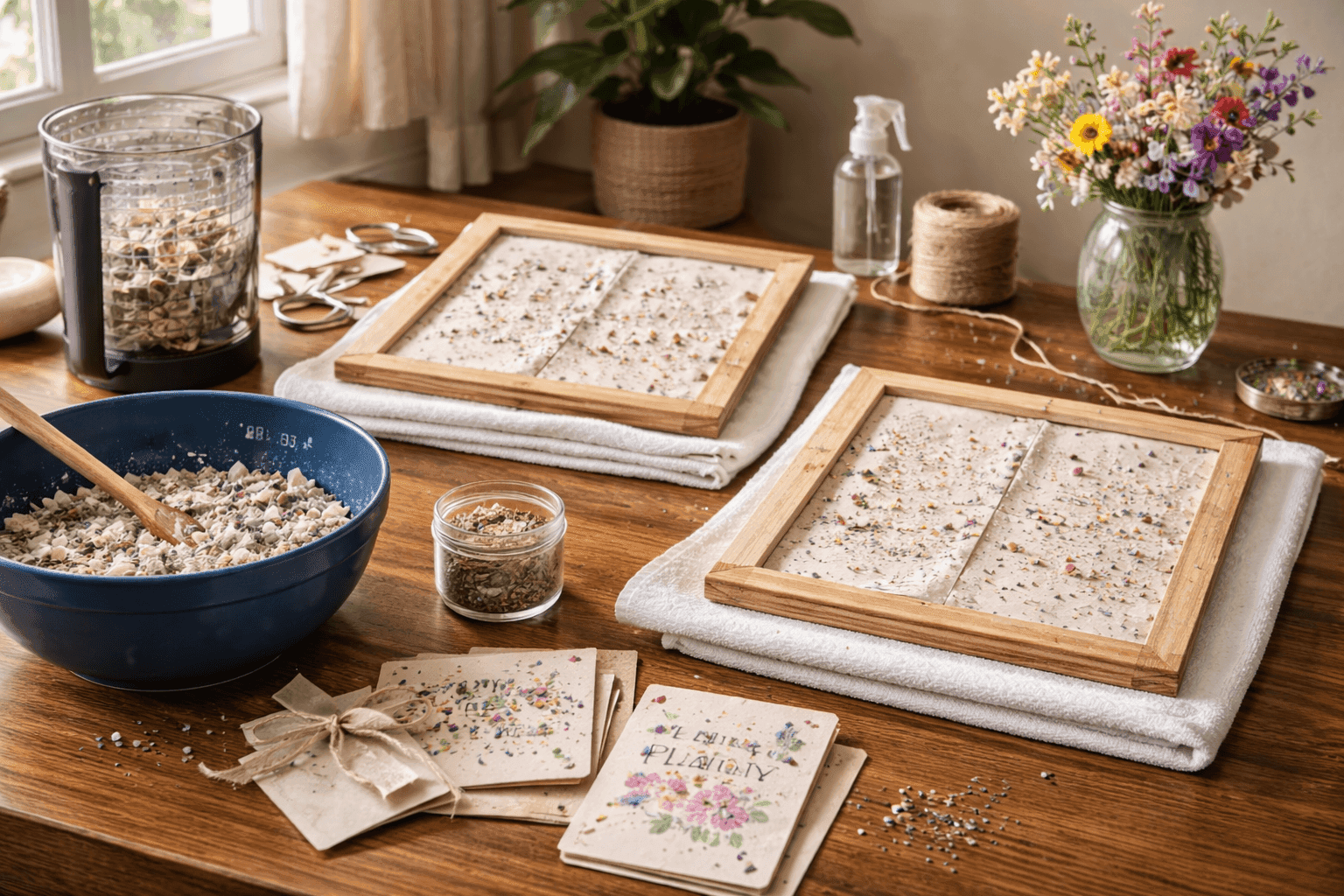
Traditional greeting cards end up in trash or forgotten drawers after being read once, representing wasted paper and missed opportunities for meaningful gestures that extend beyond the initial sentiment. Seed paper cards embedded with wildflower seeds transform disposable stationery into living gifts—recipients plant the entire card after reading your message, watching it sprout into colorful blooms that provide lasting reminders of your thoughtfulness long after typical cards would have been discarded. While boutique seed paper cards sell for $5-8 each at specialty shops, making your own costs $10-15 per batch of 15-20 cards using recycled paper scraps, flower seeds, and basic kitchen supplies you likely already own. This 1-2 hour project produces beautiful rustic-textured stationery perfect for Valentine's Day, Mother's Day, Earth Day, wedding invitations, thank you notes, or any occasion where you want your words to literally blossom into something recipients can nurture and watch grow. The paper-making process itself is meditative and surprisingly simple—blend recycled paper with water until it forms pulp, mix in wildflower seeds, spread the mixture thin on screens to dry, and cut into card shapes once fully dried. The resulting texture is beautifully imperfect with visible seeds adding organic charm that mass-produced cards cannot replicate, creating stationery that feels genuinely handcrafted with intention rather than purchased from racks of identical options.
What You'll Need
- Paper Base ($3-5):
- Recycled paper scraps, old newspapers, or junk mail
- Avoid glossy paper or heavily-inked materials
- White or light-colored paper works best
- Approximately 4-5 sheets make 15-20 cards
- Seeds ($4-6):
- Wildflower seed mix for variety and color
- Individual seeds: poppies, zinnias, cosmos, or marigolds
- 2-3 tablespoons seeds per batch
- Ensure seeds are untreated for planting
- Equipment (mostly free):
- Blender for making pulp
- Large bowl or container for pulp mixture
- Window screen or mesh for drying
- Old towels or felt sheets for absorption
- Sponge for pressing out water
- Optional Additions ($2-4):
- Natural food coloring for tinting paper
- Dried flower petals for decoration
- Essential oils for light scent
- Cookie cutters for shaped cards
Make Seed Paper
- Tear recycled paper into small 1-inch pieces, removing any plastic windows from envelopes or heavily-inked sections that might not break down properly in your blender or affect final paper color negatively.
- Soak torn paper in warm water for 30-60 minutes until completely saturated and soft enough to blend easily—this hydration step is crucial for creating smooth pulp rather than chunky, uneven mixture.
- Blend soaked paper with fresh water (2 parts water to 1 part paper) until it forms smooth pulp consistency like thick oatmeal—blend in small batches if needed to avoid overloading your blender motor.
- Pour pulp into large bowl and mix in wildflower seeds thoroughly, ensuring even distribution so each card section contains adequate seeds for successful germination when planted by recipients later.
- Spread thin layers of seed-embedded pulp onto window screens or mesh surfaces placed over towels, using about ¼ inch thickness—too thick prevents proper drying while too thin creates fragile cards that tear easily.
- Press with sponges to remove excess water, gently squeezing and absorbing moisture without disturbing the pulp layer or pushing seeds to one side unevenly through pressing action.
- Dry completely in warm, well-ventilated areas for 24-48 hours depending on humidity and thickness—rushing this step produces moldy paper that cannot be written on or planted successfully later.
- Cut dried paper sheets into card sizes using scissors or decorative paper cutters, then write messages with markers or pens, adding instructions for planting on the back so recipients know these cards are meant for gardens.
Professional seed paper makers achieve the best results by using specific seed types that germinate reliably without special conditions—wildflower mixes, herbs like basil or cilantro, and hardy annuals like zinnias work beautifully, while finicky seeds requiring cold stratification or specific temperatures frustrate recipients expecting easy growth. Add dried flower petals, herbs, or natural confetti to your pulp mixture for visual interest and texture that makes cards even more special—these decorative elements won't grow but create beautiful organic patterns throughout the paper. For gift-giving, include small instruction cards explaining how to plant seed paper: tear into pieces, cover lightly with ¼ inch soil, keep moist until germination (typically 1-2 weeks), and enjoy blooms in 6-8 weeks depending on seed variety. Store finished seed paper cards in cool, dry locations away from moisture that could trigger premature germination or mold growth before cards are distributed and planted. Consider making seasonal varieties with different seed mixes—spring bulbs for winter cards, summer wildflowers for spring occasions, or herb seeds for cooking enthusiasts—matching the seeds to recipients' interests and planting seasons in their regions. The most meaningful applications include wedding invitations that bloom into anniversary reminders, memorial cards that create living tributes, or thank you notes that literally grow gratitude into something beautiful recipients can nurture while thinking of your thoughtfulness.