Literary Haven: Creating a Cozy Home Library That Invites You to Read
Design a dedicated space for your book collection that balances beauty and function
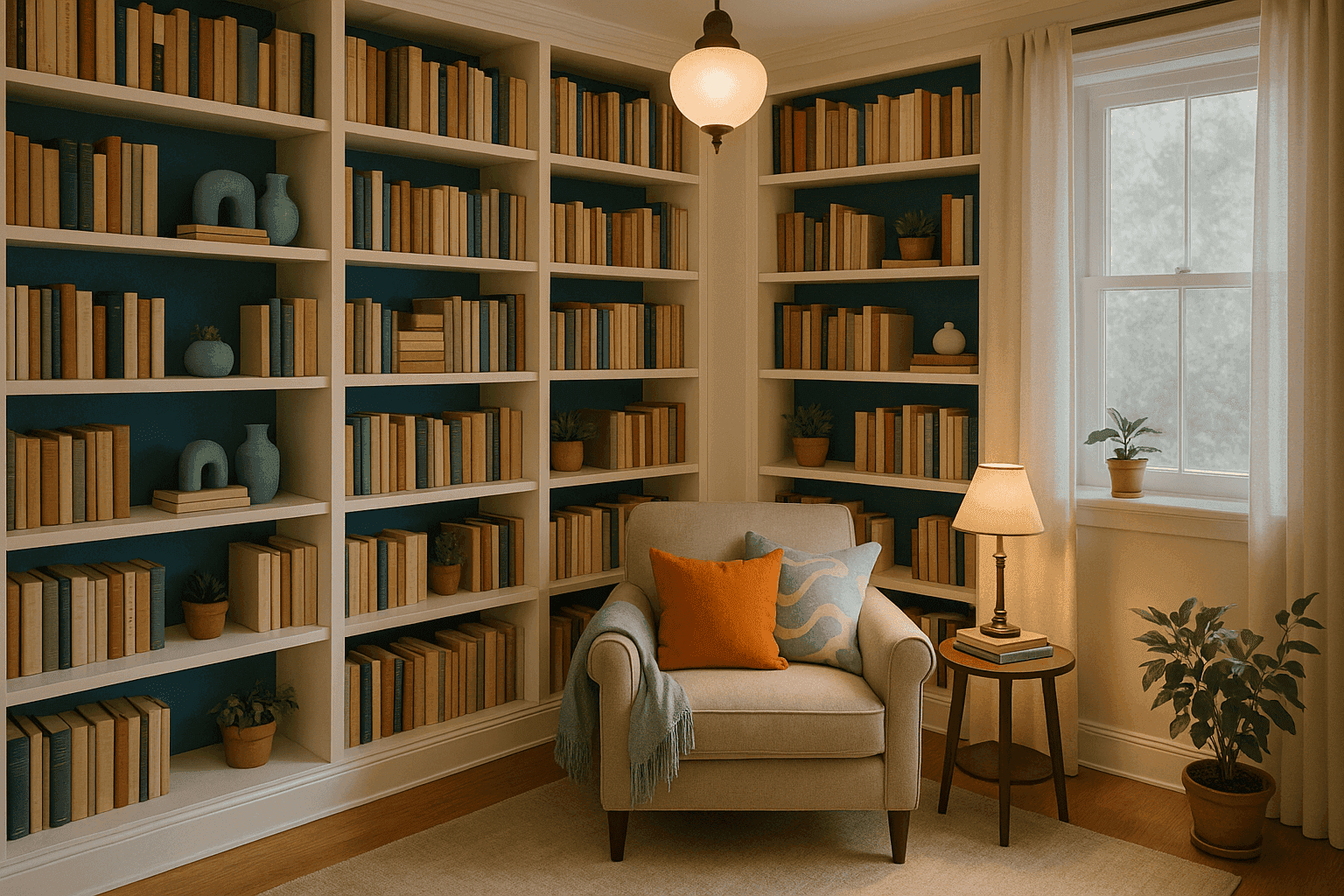
A home library creates a dedicated sanctuary for books and reading that can elevate your entire home. Whether you're working with a full room, a wall in your living space, or even a cozy corner, thoughtfully designed shelving and comfortable seating transform any area into an inviting literary retreat. Beyond simply storing books, a well-designed home library reflects your personal interests, creates a peaceful atmosphere for concentration, and often becomes the most cherished space in the house.
Essential Elements
| • Sturdy, well-designed shelving |
| • Comfortable reading chair or seating area |
| • Task lighting for reading |
| • Ambient lighting for atmosphere |
| • Side table for drinks and books |
| • Soft textiles (throw pillows, blankets) |
| • Decorative bookends or accent pieces |
| • Plants or natural elements |
Design Strategy
- Plan your shelving: Choose between built-in bookcases (most custom look), modular systems (flexible), or freestanding units (portable). Consider the depth carefully—standard books need 8-10" depth, while oversized books require 12" or more.
- Design for your collection: Vary shelf heights to accommodate different book sizes. Include some adjustable shelves for flexibility as your collection grows and changes. Allow approximately 100-120 books per standard 36" wide bookcase.
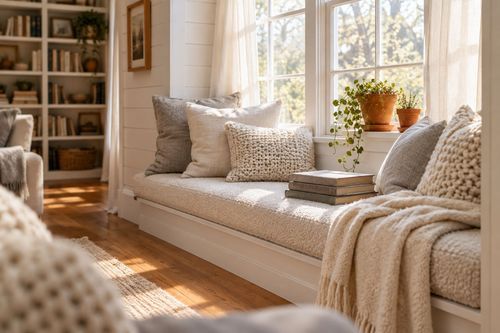
- Create a comfortable reading zone: Position seating near natural light if possible, with a supportive chair or loveseat that encourages extended reading sessions. Include a footrest or ottoman to promote proper posture and comfort.
- Layer your lighting: Incorporate task lighting (reading lamp) positioned to illuminate your book without creating glare, ambient lighting (ceiling fixture or recessed lights) for overall illumination, and accent lighting to highlight special collections or decorative elements.
- Add personal touches: Intersperse shelves with meaningful objects, framed photos, or plants to create visual interest and prevent a monotonous wall of books. Leave some open space (about 10-20%) for displays and breathing room.
For a cohesive, designer-worthy home library, consider arranging your books by color or using uniform, neutral book jackets to create a more curated aesthetic. If building shelving from scratch, extend bookcases to the ceiling when possible—this maximizes storage and creates an architectural feature that draws the eye upward. In smaller spaces, consider painting the shelving the same color as your walls to create a built-in look that doesn't visually overwhelm the room. To prevent damage to valuable books, position shelves away from direct sunlight and exterior walls with temperature fluctuations. Finally, incorporate hidden storage (drawers below shelves or decorative boxes) for less attractive items like electronic chargers or reading glasses.