Let There Be (Better) Light: A Room-by-Room Lighting Guide
The most overlooked design element — and the one with the most impact
Lighting is the design element that has the most dramatic impact on how a room feels and gets the least attention. A beautifully furnished room with bad lighting feels cold and flat. A modest room with layered, warm, well-placed lighting feels inviting and designed. The difference between a hotel room that feels luxurious and an apartment that feels like an apartment is frequently just lighting. Here's how to think about it.
The Three Layers of Lighting
Ambient lighting is the base layer — overall illumination for the room (overhead fixtures, recessed lights). Task lighting is specific to an activity — under-cabinet lights for food prep, a reading lamp beside a chair, vanity lighting in a bathroom. Accent lighting highlights something — art, architectural features, plants, a bookcase. A room that relies only on one overhead fixture has only ambient lighting. Rooms that feel designed and warm almost always have all three layers active simultaneously, at lower intensities than you might expect.
Color Temperature: The Single Most Important Bulb Decision
Color temperature is measured in Kelvin. 2700K is warm white — the color of incandescent bulbs, flattering, cozy, right for bedrooms and living rooms. 3000K is soft white — slightly cooler, good for kitchens and bathrooms. 4000K is neutral/cool white — clinical, good for garages and workspaces, rarely flattering in living areas. 5000K+ is daylight — best for task work requiring color accuracy, rarely appropriate in a home setting. Most homes should be 2700K throughout living areas. The single most impactful lighting upgrade most people can make is replacing every cool or "daylight" bulb with 2700K warm LEDs — the room transformation is immediate and costs almost nothing.
Fixture Swaps That Transform a Room
Builder-grade light fixtures — the basic dome fixtures and boob lights that come standard in most homes — read as generic and dated. Swapping them is one of the fastest upgrades with the biggest visual return. Entry pendants, drum shades, and rattan or aged brass fixtures are currently widely available at accessible price points. The electrical work is a simple swap (turn off the breaker, match the wires by color), and most fixtures install in 30–45 minutes. Prioritize: entry/foyer, dining room, and primary bathroom — these are the spaces visitors see first and where fixture quality has the highest visual impact.
Lamps: The Underused Lighting Tool
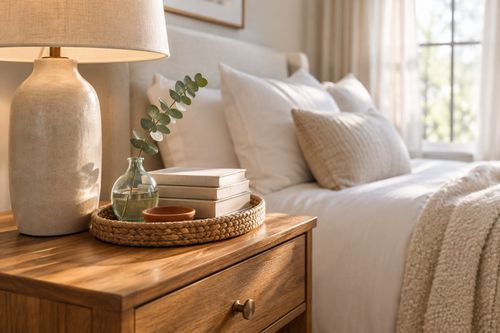
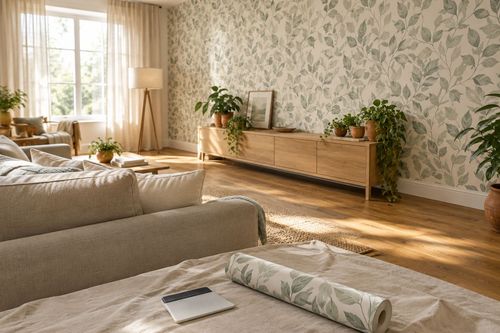
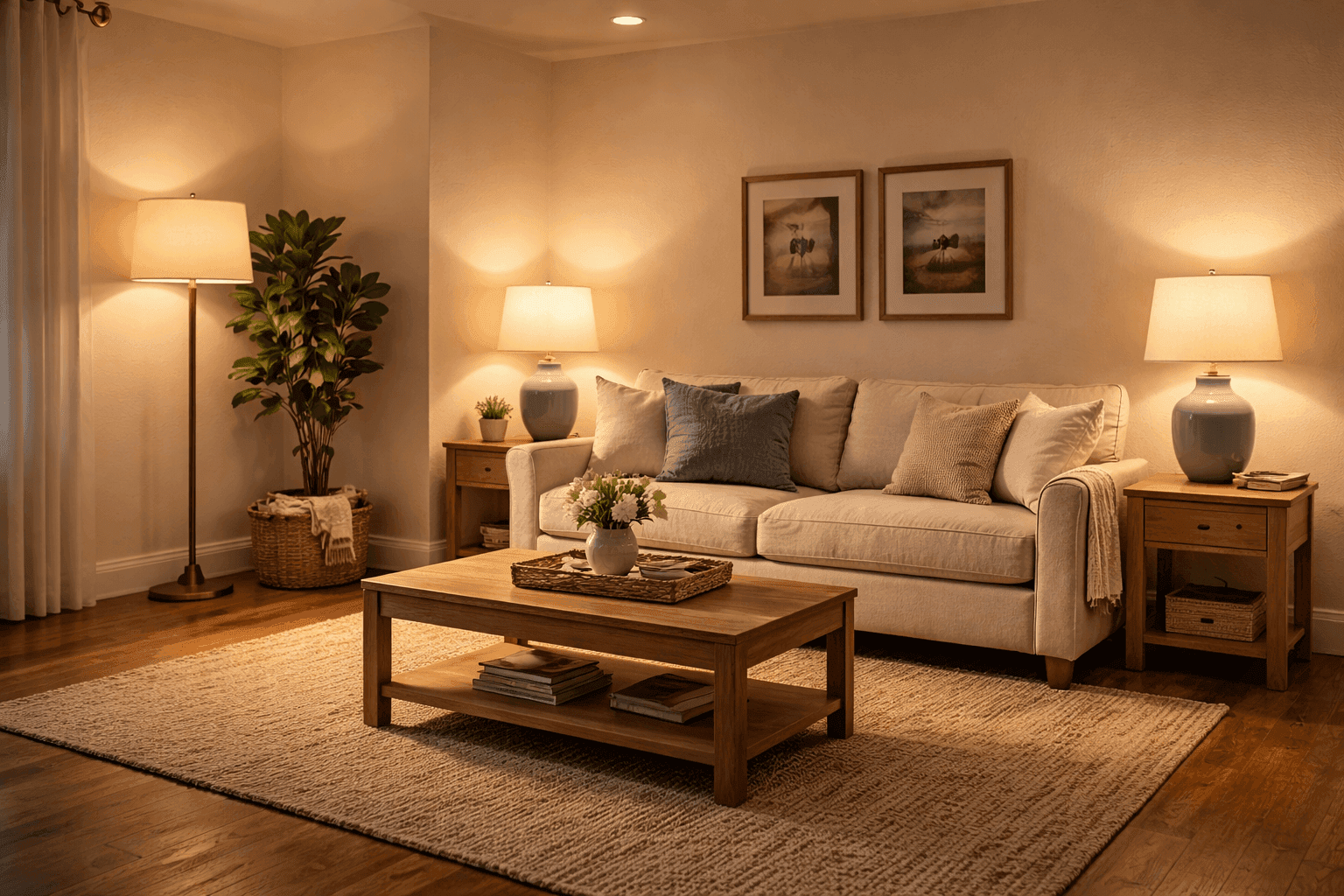
Floor lamps and table lamps serve a design purpose that overhead fixtures cannot — they put light at human scale, creating pools of warmth rather than top-down illumination. A living room with two table lamps and a floor lamp, all at 2700K, looks categorically more inviting than the same room lit only from the ceiling. The height matters: table lamp shades should sit with the bottom of the shade at eye level when you're seated. Floor lamp shades should sit at about 5 feet from the floor in a reading position. These ratios are why some lamps look right and others feel awkward.
Install dimmers on every circuit where it's possible — living rooms, dining rooms, bedrooms, and bathrooms especially. A dimmer turns one room into many moods: bright for cleaning, medium for everyday use, low for evening relaxation. The ability to adjust light level is more valuable than any fixture upgrade because it gives you control over the room's atmosphere moment to moment. Dimmers cost $15–$25 per switch and are a 20-minute install. In terms of daily quality-of-life return per dollar spent, they're one of the best investments you can make in your home.