Kitchen Command: Build a Meal Planning Center That Actually Works
Create a visual meal planning system that ends dinner panic and supports your healthy eating goals
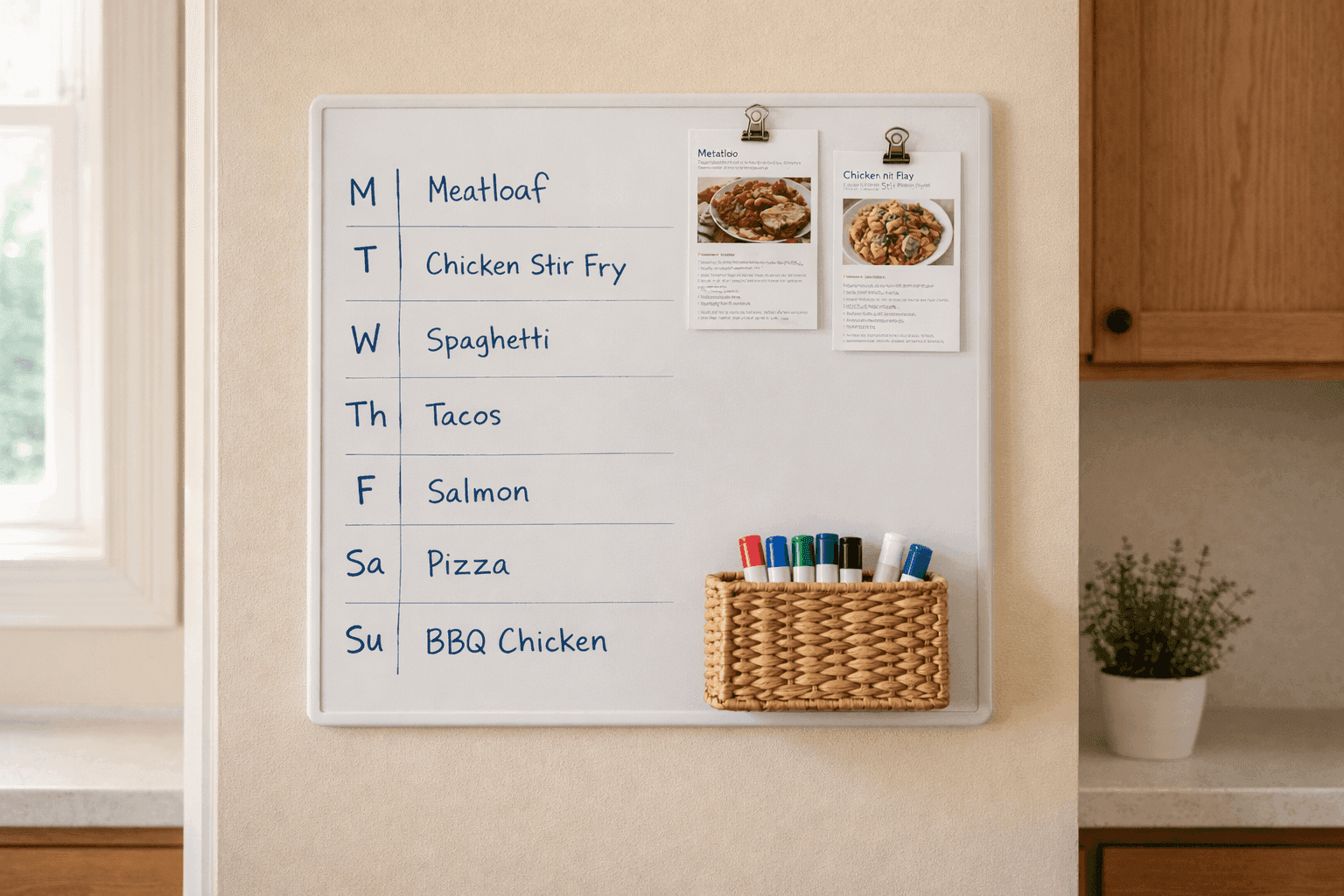
Every Sunday you promise yourself you'll meal plan for the week, but by Tuesday you're standing in front of an open fridge at 6 PM with no idea what to make for dinner and zero motivation to figure it out. The problem isn't willpower or time management—it's that meal planning lives in your head or buried in a notebook somewhere instead of being a visible, functional system that your entire household can actually use. Creating a dedicated meal planning command center takes about an hour to set up and costs $30-50, but it transforms dinner from a daily crisis into a simple routine because everyone can see the plan and nobody has to constantly ask "what's for dinner?" This visible system makes healthy eating goals achievable because you're planning when you're motivated and rational, not making desperate decisions when you're already hungry and exhausted at the end of a long day.
What You'll Need
- Main Board: Magnetic whiteboard or large picture frame with white backing (18x24 inches minimum, $15-25)
- Writing Tools: Dry-erase markers in multiple colors for categorizing meals
- Magnetic Tools: Small magnets, magnetic clips for recipes or shopping lists ($5-10)
- Organization Supplies: Small basket or magnetic pouch for storing markers and eraser
- Optional Sections: Printed template or washi tape to create meal planning grid ($5-8)
- Mounting Hardware: Command strips or wall anchors appropriate for your wall type
- Time Investment: 1 hour setup, 15 minutes weekly maintenance
Step-by-Step Method
- Choose a highly visible location in your kitchen where everyone walks past regularly—not hidden inside a pantry where it becomes invisible and therefore useless
- Create a weekly grid layout directly on your whiteboard using permanent marker or washi tape, with columns for each day and rows for breakfast, lunch, and dinner
- Add a dedicated section for your current grocery list so meal planning immediately connects to shopping instead of being two separate disconnected tasks
- Include space for notes about what needs using up from the fridge or pantry—this prevents waste and makes planning more practical than aspirational
- Mount your board securely at a height where everyone can easily read and write on it, testing that markers don't roll off any attached shelves or ledges
- Attach a small basket or magnetic container nearby to hold markers, an eraser, and recipe cards so everything you need is within arm's reach
- Fill your first week's plan immediately rather than leaving it blank—an empty board stays empty, but once you start using it the habit builds momentum
- Review and update every Sunday during a designated 15-minute planning session that becomes as routine as Sunday grocery shopping itself
Professional meal prep coaches recommend building flexibility directly into your system by designating one night as "flex night" where you either use up leftovers, order takeout guilt-free, or swap meals from other nights if plans change. This prevents the all-or-nothing thinking that makes people abandon meal planning entirely when life inevitably disrupts their perfect schedule. Also consider color-coding meals by prep complexity—green for simple 20-minute meals, yellow for moderate effort, red for elaborate weekend cooking—so you can balance your week realistically rather than planning five complicated dinners for busy weeknights and setting yourself up for failure. The meal planning board that succeeds isn't the prettiest one or the most detailed; it's the one you actually update weekly because it makes your life genuinely easier rather than adding another task to your to-do list.