Instant Refresh: Change Pillow Styles Without Threading A Needle
Transform existing pillows in minutes using cloth napkins and safety pins
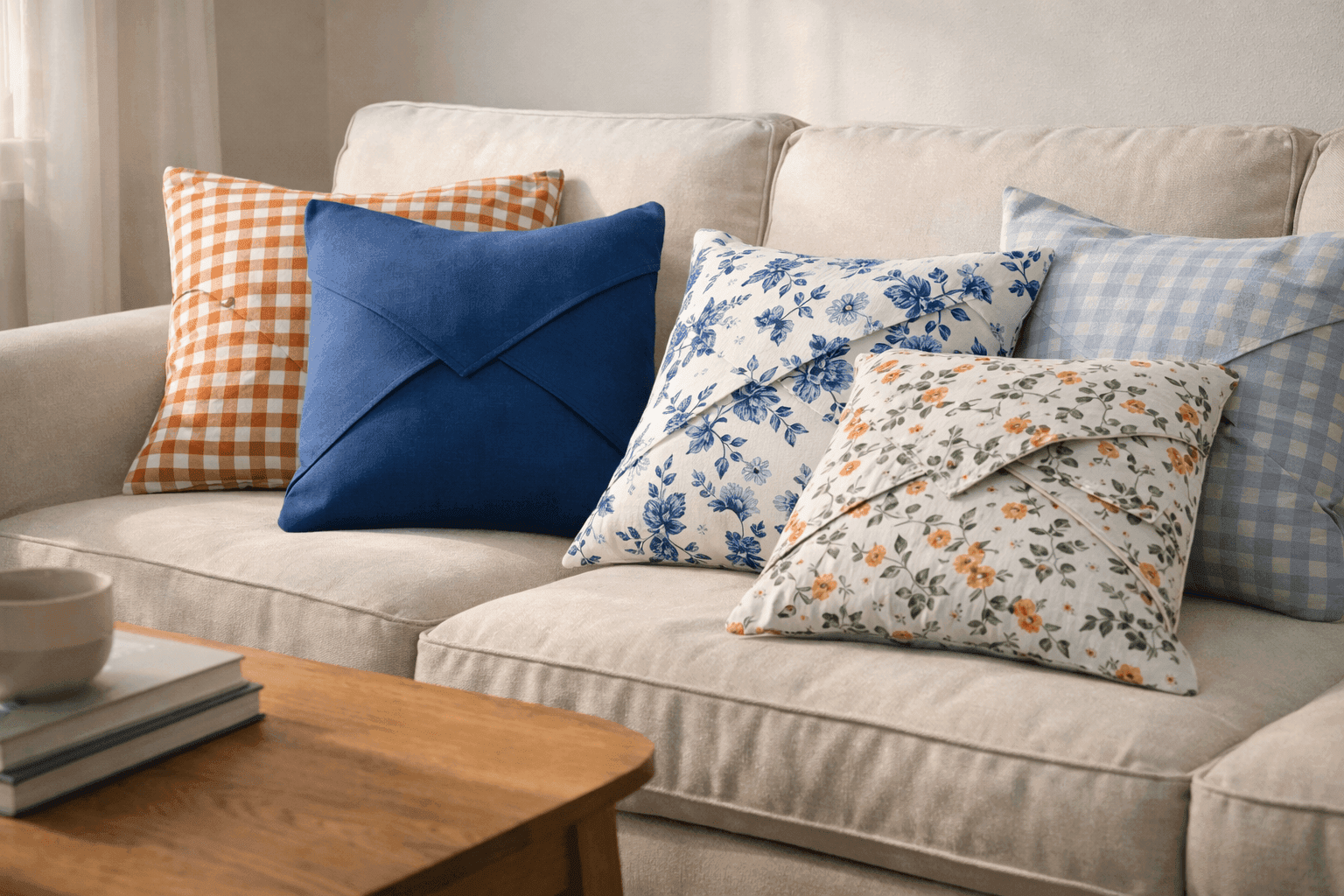
Decorative throw pillows dramatically change room aesthetics, but purchasing new covers for seasonal updates costs $20-40 each while sewing custom covers requires skills and equipment many people simply don't possess. The brilliant no-sew pillow cover hack uses large cloth napkins—typically 20x20 inches—folded envelope-style around existing pillow inserts and secured with strategically placed safety pins hidden from view, creating professional-looking covers in literally five minutes per pillow. This technique costs $8-12 per cover using quality cloth napkins from discount stores, home goods retailers, or even thrift shops, making seasonal décor updates accessible without sewing machines, expensive fabrics, or time-consuming projects that intimidate beginners. The beauty of this method is complete flexibility—change pillow looks seasonally with spring florals, summer brights, fall plaids, and winter textures without permanent commitment or storage challenges since napkins fold flat and take minimal space compared to bulky traditional pillow covers. Beyond seasonal updates, this approach allows testing color schemes or patterns before investing in permanent décor, accommodating rental restrictions that prevent major changes, or simply satisfying the desire for variety without accumulating closets full of pillow covers you'll use only occasionally. The technique works perfectly for standard square throw pillows (18x18 or 20x20 inches), requires zero sewing skills, and produces results that look intentionally styled rather than obviously temporary or crafty when pins are positioned correctly along back seams where they remain invisible from display angles.
What You'll Need
- Cloth Napkins ($8-12 per pillow):
- Two 20x20 inch cloth napkins per pillow cover
- Look for quality fabrics that don't wrinkle excessively
- Choose colors/patterns matching your seasonal décor
- Shop HomeGoods, TJ Maxx, Target, or thrift stores
- Securing Supplies ($2-3):
- 4-6 large safety pins per pillow
- Choose pins matching napkin colors for camouflage
- Larger pins hold fabric more securely
- Existing Pillows:
- Standard throw pillow inserts (18x18 or 20x20 inches)
- Use pillows you already own
- Any fill type works (down, polyester, foam)
- Optional Enhancements:
- Fabric tape for extra security (no-sew)
- Decorative pins if you want visible closures
- Iron for crisp, professional appearance
Create Your Covers
- Iron napkins if needed to remove wrinkles and create crisp, professional appearance—this optional step elevates the finished look from obviously makeshift to intentionally styled in seconds.
- Lay your pillow insert diagonally on top of the first napkin, positioning it so napkin corners extend beyond pillow edges—this diamond orientation creates the envelope fold that wraps around pillows neatly.
- Fold opposite napkin corners up and over the pillow, overlapping them in the center to create the envelope closure—tuck corners snugly rather than loosely for secure coverage without gaps.
- Secure overlapped corners with 2-3 safety pins along the center seam where fabric layers meet, positioning pins horizontally so they lie flat rather than poking up visibly through material.
- Fold remaining two napkin corners over the sides of your pillow, tucking them neatly to create clean edges without bunching or excess fabric creating lumpy, unprofessional appearance.
- Pin these side corners discreetly along back edges where they won't show when pillows are displayed on sofas or beds—strategic pin placement is what makes this technique look polished rather than temporary.
- Flip the pillow to display the smooth napkin side, checking that all pins remain hidden and fabric lies flat without wrinkles or bunching that reveals the no-sew construction method.
- Adjust as needed, repositioning fabric or adding additional pins where gaps or looseness occurs—the entire process takes five minutes per pillow once you've practiced the folding technique once or twice.
Interior designers maximize this technique by purchasing napkin sets in coordinating colors or complementary patterns, creating pillow collections that look curated rather than random—all blues in varying patterns, complementary florals in different scales, or ombre color progressions from light to dark create sophisticated arrangements. For lumbar or rectangular pillows, use standard napkins folded lengthwise or shop for table runners that work similarly to napkins but accommodate non-square dimensions perfectly. The key to professional appearance is precise folding and strategic pinning—take an extra minute ensuring corners tuck neatly and pins hide completely rather than rushing and creating obviously temporary-looking results that undermine the entire aesthetic. Mix no-sew napkin covers with permanent pillow covers in coordinating colors, using the flexible napkin method for pillows you want to change seasonally while maintaining stable anchors that don't shift with décor updates. For outdoor pillows, this technique works beautifully during parties or events, allowing quick decorative updates that you can remove afterward without permanently dedicating outdoor-appropriate fabric to single-use occasions. Store napkin sets by season in labeled bins rather than folding pillow covers back into napkin form between uses—keeping them pillow-ready saves time during seasonal transitions when you're already busy with other décor updates throughout your home.